
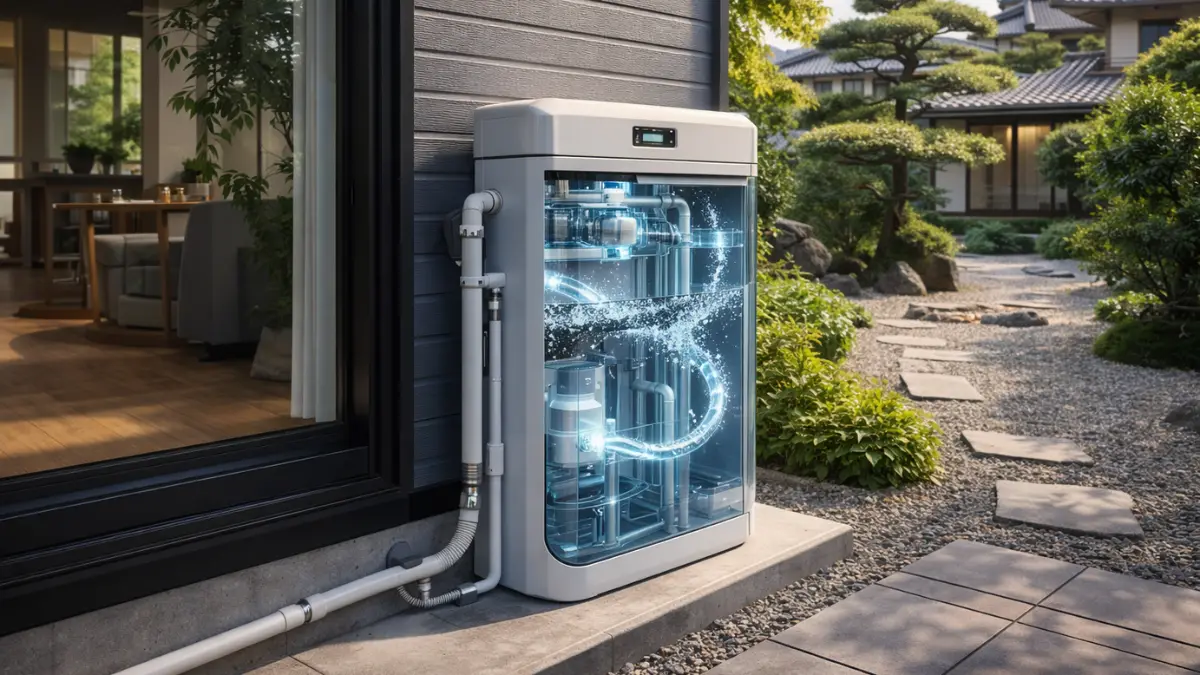
Japanese people have made a significant step in the resolution of the water shortage problem in the future by launching a new household water recycling machine which has the capacity to clean and reuse domestic water. The technology is meant to eliminate reliance on conventional water pipes and offer a green solution to households and rural locations in particular, as well as disaster-prone regions.
The new technology represents the long-term vision of Japan in modernization of infrastructure and the preservation of natural water resources.
A New Way of Using Water In The Home
The technology is made by a Japanese startup, WOTA Corporation, and it enables households to reuse the daily water which can be used in activities like bathing, handwashing, and laundry. The machine purifies this used water on-site and it is safe to be reused instead of draining into the drainage systems.
It is reported that the system is capable of recycling as much as 97 percent of the household water which is a significant decrease in the total consumption.
This is unlike the earlier method of centralized water treatment plants, which operate on its own within the houses or in their environs.
The Water Recycling Machine is Operated in The Following Way
The machine employs several advanced technologies, which are:
- Ultra-permeability filtration membranes.
- Treatment Biological treatment processes
- Infection: chemical and ultraviolet disinfection.
- Real-time surveillance cameras.
These systems eliminate bacteria, contaminants, and other toxic elements as a whole. The water that is treated is of high-quality Japanese safety level and is in line with the international standards that are established by the world health organizations.
What the system is primarily centered on is the greywater or water used in showers, sinks and washing machines, and fresh water can be added to this water provided in case of necessity, and this is where purified rainwater would be used.
Designed In Areas Where Pipelines Are Not Stable
Maintaining aging water pipelines is one of the greatest challenges that Japan is grappling with, especially in areas where population is reducing. The process of repairing the long networks of pipes has become very costly and ineffective.
This recycling system of the household eliminates the long-pipelines, because the water is treated at the point of use. Consequently, households are able to operate with little or no urban water systems.
The technology is particularly useful when it comes to:
- Rural villages
- Remote communities
- Temporary housing areas
- Disaster-affected zones
Effective Trials in Rural Japan
Some rural areas in Japan have already started pilot projects. The system is being tested in real households by local governments to determine the long-term reliability, maintenance requirements as well as the convenience of the user.
There is early evidence that families are able to keep using normal daily water amounts and utilize considerably less water consumption of general types of supply networks.
Authorities think that the model can turn into a lasting remedy for the community where it is no longer a viable option to restore water infrastructure.
Powerful Governmental And Financial Assistance
To accelerate the adoption, WOTA Corporation has accelerated funding programs that target municipalities to install such systems. The Japanese government has also been supportive in that it has encouraged decentralized infrastructure as a future development strategy.
According to experts, such a change will not only save billions in repair and maintenance, but it will also guarantee future generations of stable water supplies.
Comes In Handy In Case of Natural Disasters
Japan is regularly hit by earthquakes, floods, and typhoons, the effects of which usually destroy water pipelines and leave people without clean water.
Since the recycling system is independent, it would be able to keep providing usable water even when there is a failure of the public networks. The company has already created similar portable water units that have been used in emergency shelters in the past in case of disasters.
This contributes to the technology being eco-friendly as well as essential in disaster resilience.
Why This Innovation Is Important To The World
Climate change, urbanization and population pressures have also led to water scarcity as a global problem. Aging infrastructure and increased water demand is a problem facing many countries.
The model of household water recycling in Japan provides a strong illustration of how technology can:
- Reduce water wastage
- Lower infrastructure costs
- Enhance preparedness for disasters
- Support sustainable living
Researchers feel that such systems would be able to be universalized, particularly in the developing countries and in water stressed areas.
Looking Ahead
With water turning out to be among the most valuable commodities in the future, technologies such as recycling machines in the house in Japan have the potential to transform the way houses use water.
Japan is demonstrating that it might not be the long pipelines which can solve the future of water management but more intelligent homes by converting wastewater into usable water at the domestic level.