
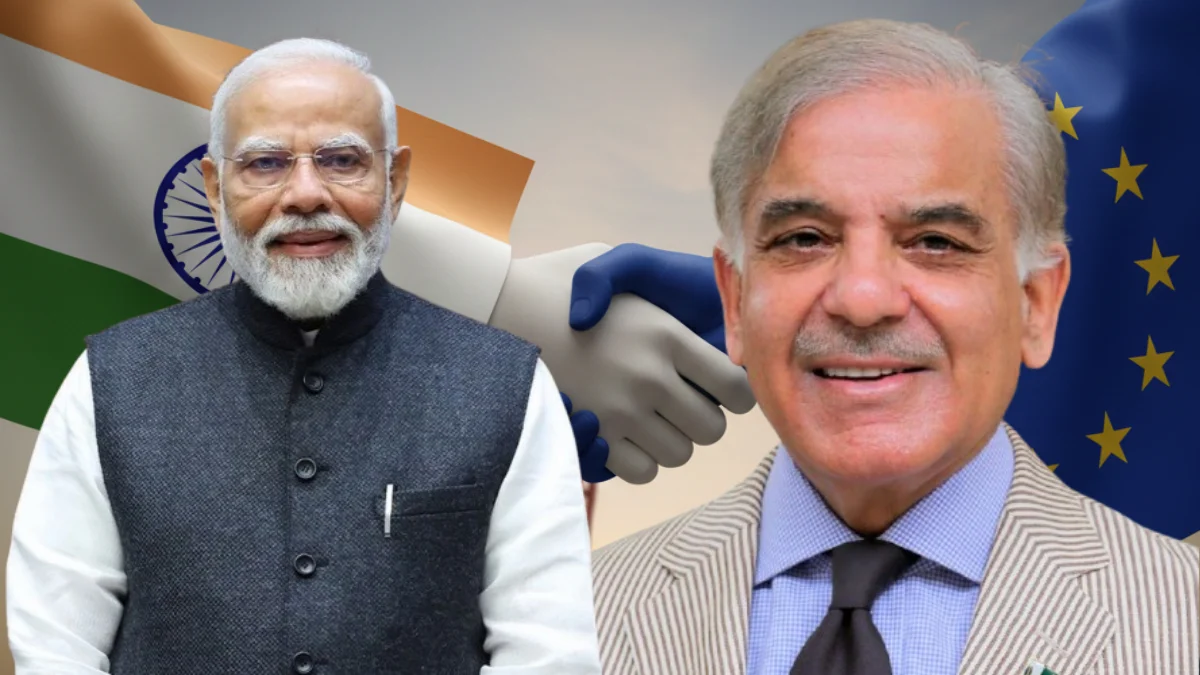
India and EU have closed the deal that is currently being termed as the Mother of All Deals india eu, the pivotal trade alliance which promises to open up the enormous economic possibilities of India and to undermine the long-standing tariff advantage Pakistan has enjoyed in the European markets.
The deal is also being considered as among the biggest trade breakthroughs in decades to India not only in its economic but also geopolitical aspects as Europe considers decoupling supply chains and moving out of unstable trade routes and high-risk territories.
What Is the India-EU Deal and Why Is It So Big?
It is assumed that the India and EU trade agreement will have significant effects on the access of both markets, as two of the largest economic areas of the world, India and EU:
- India is among the emerging swiftly growing major economies.
- One of the biggest consumer markets in the world is the European Union.
Combinations of India and EU create a massive united market, both in terms of population and purchasing power, thus the deal makes a strategic economic bridge between Asia and Europe.
Analysts believe that this accord will see the beginning of a transformation in the exports of India particularly in those sectors doing intensive labour in which Indian exporters have to grapple with tariff barriers.
The Core Benefit of India: India will have easier and cheaper access to Europe
The greatest triumph to the Indian exporters is evident: less or no tariffs in the EU market in major sectors.
This would directly help the Indian industries including:
- Textiles and garments
- Footwear and leather goods
- Gems and jewellery
- Pharmaceuticals
- Engineering goods
- Processed products and chemicals
Over the years, Indian exporters have been subject to EU tariffs that have made their products slightly expensive relative to those of their competitors who have special trade privileges. That imbalance is supposed to be fixed by the new deal, and even give India the edge over the other countries based on size and output capacity.
The Reason Why Pakistan is Concerned: It Loses its EU Trade edge
The trade agreement has raised eyebrows among the Pakistani population since it would seem to diminish the worth of one of its economic breadwinners, preferential treatment by the EU with GSP+.
What is GSP+?
The Pakistani economy has enjoyed reduced (or no) tariffs on much of its export of goods under the GSP+ (Generalised Scheme of Preferences Plus) program by the EU, particularly textiles.
This provided Pakistan with a competitive advantage over its rivals such as India in years in European markets.
However, since now India is also getting the same tariff concessions under the new trade agreement, the leverage of Pakistan is much less important.
Textiles at the Centre of the Battle
The largest effect should be on the textile and apparel sector which is:
- The leading export of Pakistan.
- One of the largest employers of the country.
- One of the important foreign exchange earnings.
According to industry observers, as soon as the Indian products are cheapened in the EU through the introduction of tariff cuts, the European consumers will switch to the Indian suppliers, particularly since India has the capacity to deliver:
- higher production volumes
- wider product variety
- more differentiated supply chains.
Even a slight change in price can shift billions in export orders in the global trade.
Bigger Fear to Pakistan: What comes after 2027
The most important issue that Pakistan faces is that it is not forever that it has GSP+.
It is reported that preferential access in Pakistan may be put under pressure because of:
- Reviews of compliance conditions in the EU.
- Human rights and governance demands.
- Reconcentrating EU trade priorities.
In case the GSP+ benefits of Pakistan become weak or end, the effect may be terrible, especially when India is already well established in the same market.
What India Benefits More Than Trade: Strategic Global Advantage
This is not a deal involving tariffs only- but also the emerging global economic role of India.
India analysts say the deal may assist India:
- attract new European investment.
- enter further into the EU supply chains.
- enhance its status as a secure production center.
- enhance its long-term objective to emerge as an international export power.
With the present global scenario as Europe attempts to cut down on reliance on unreliable suppliers, India is becoming a good alternative.
What the EU Gets in Return
This agreement is also beneficial to Europe.
The EU will have a better access to the increasing consumer market in India of:
- machinery, industrial products.
- luxury cars and parts.
- wines and spirits
- green technology and renewable solutions.
- partnerships in services and financial sectors.
As the middle-class population in India is growing at a significant pace, India is a long-term high-value market to the EU.
Regional Impact: New Trade Race South Asia
This agreement may transform the level of competition in trade within the region and may have an impact on the following countries:
- Pakistan
- Bangladesh
- Sri Lanka
- other textile-sourcing economies at the will of the EU.
In case India emerges as an improved EU supplier, the neighbouring exporters will be pressured to improve on quality, reduce costs and update production to fit in the competition.
What Happens Next?
This agreement is supposed to be done in stages with the tariffs being cut gradually over time following law and policy sanctions.
Nevertheless, the experts of trade believe that the market response might start long before it due to:
- EU importers do sourcing months ahead.
- global brands are fast in changing the supply chains.
- customers like consistent and large-volume suppliers.
To Pakistan, it is simple; the export environment is evolving and the previous merits might cease to be.
Bottom Line
The India and EU so-called Mother of All Deals is being regarded as an economic breakthrough to India- boosting exports, investments, and global supply chain power.
Meanwhile, it also exposes Pakistan to new economic strain, by weakening the worth of the trade preferences, which it has been able to lean on in Europe over the years.
The trade map of South Asia could be re-written as the deal gains momentum and as the new order, which is going to suit India the most.