
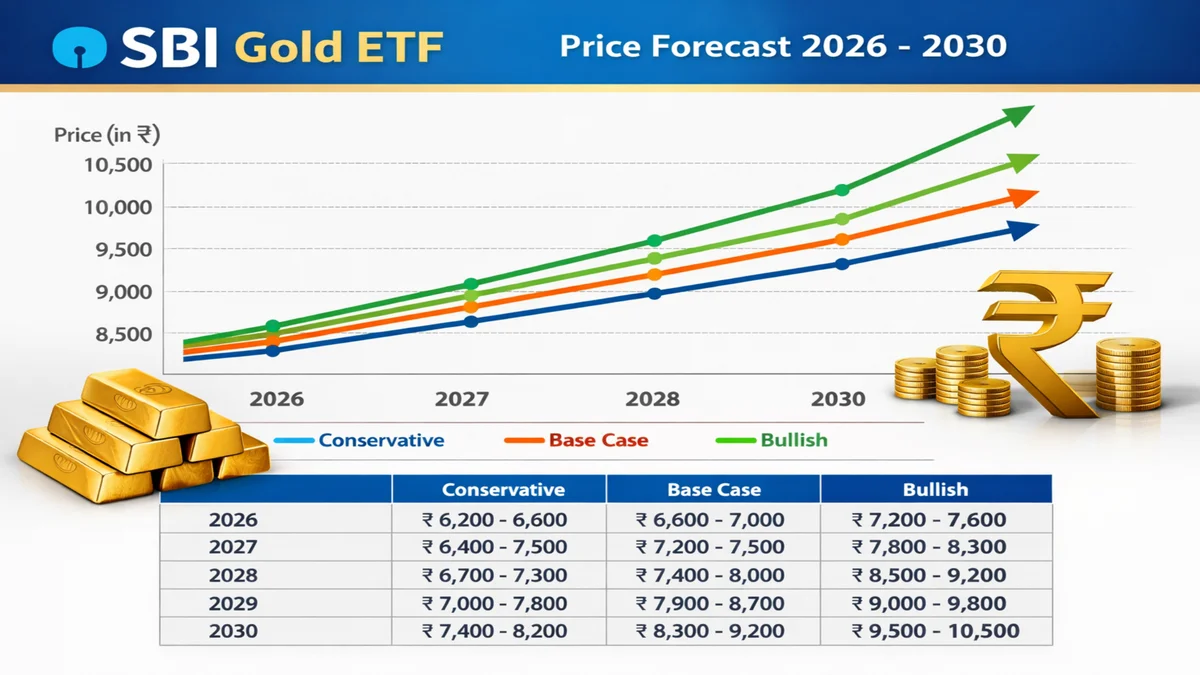
SBI Gold ETF: Investors tracking commodity-linked funds in India are turning attention to the SBI Gold ETF as forecasts for its price performance from 2026 through 2030 begin to circulate. Gold exchange-traded funds remain a popular choice for diversification and hedging against inflation, and updated projections aim to give Indian savers a clearer long-term outlook on this gold-linked investment vehicle.
What Is the SBI Gold ETF and How It Works
The SBI Gold ETF is designed to mirror gold price movements by holding physical bullion or bullion-related assets. Unlike buying physical gold, investors can trade ETF units on stock exchanges, offering liquidity without storage or purity concerns.
Key Fund Basics (As of Early 2026)
- NAV and size: The fund’s Net Asset Value and Assets Under Management have been significant, reflecting substantial investor participation.
- Expense ratio: Typical ETF costs are competitive for investors seeking gold exposure.
- Return history: Gold-linked investments, including this ETF, have delivered strong multi-year returns in past periods.
Price Target Estimates: 2026 to 2030
Analysts project a range of price outcomes for the SBI Gold ETF over the next five years. These targets are influenced by global gold demand, domestic consumption patterns in India, and currency movements.
Forecast Range (₹) — SBI Gold ETF
| Year | Conservative Target | Base Scenario | Bullish Scenario |
| 2026 | 6,200–6,600 | 6,600–7,000 | 7,200–7,600 |
| 2027 | 6,400–6,900 | 7,000–7,500 | 7,800–8,300 |
| 2028 | 6,700–7,300 | 7,400–8,000 | 8,500–9,200 |
| 2029 | 7,000–7,800 | 7,900–8,700 | 9,000–9,800 |
| 2030 | 7,400–8,200 | 8,300–9,200 | 9,500–10,500 |
| (Source: Forecast interpretation) |
These ranges are illustrative and not guaranteed; they reflect how different market scenarios could play out depending on macroeconomic conditions and safe-haven demand for gold.
Drivers Behind the Forecasts
Global Demand and Safe-Haven Appeal
Gold’s role as a hedge against market volatility and inflation underpins long-term price expectations. Central bank purchases and investment demand often support higher valuations, especially during periods of economic uncertainty.
Indian Domestic Factors
In India, cultural affinity for gold and its use in jewellery bolster physical demand, which can influence local pricing. Seasonal buying during festivals and weddings adds occasional short-term uplift to prices.
Currency Movements
The rupee-dollar exchange rate plays a major role in domestic gold pricing. A weaker rupee tends to push local gold prices higher even if international rates are stable, directly affecting gold ETF valuations.
Risks and Market Considerations
Forecast ranges assume that current trends persist. However, rapid changes in global monetary policy, a strengthening rupee or sharp shifts in risk sentiment could materially alter outcomes for the SBI Gold ETF. Volatility in physical gold markets and ETF liquidity are ongoing considerations for investors.
Who This Matters For
Long-term investors, retirement planners and those looking to hedge equity or fixed-income exposures may find these forecasts useful in shaping portfolio strategy. Gold-linked ETF plays, like the SBI Gold ETF, serve both diversification and risk management roles, particularly in inflationary environments.
Final Thoughts
The SBI Gold ETF remains an accessible option for Indian investors seeking exposure to gold without the complications of physical ownership. Forecasts out to 2030 suggest a broad range of possible price paths, reflecting both upside potential and risks tied to global economic forces. Understanding these dynamics can help investors align their investment horizon and risk tolerance with realistic expectations for this commodity-linked ETF.