
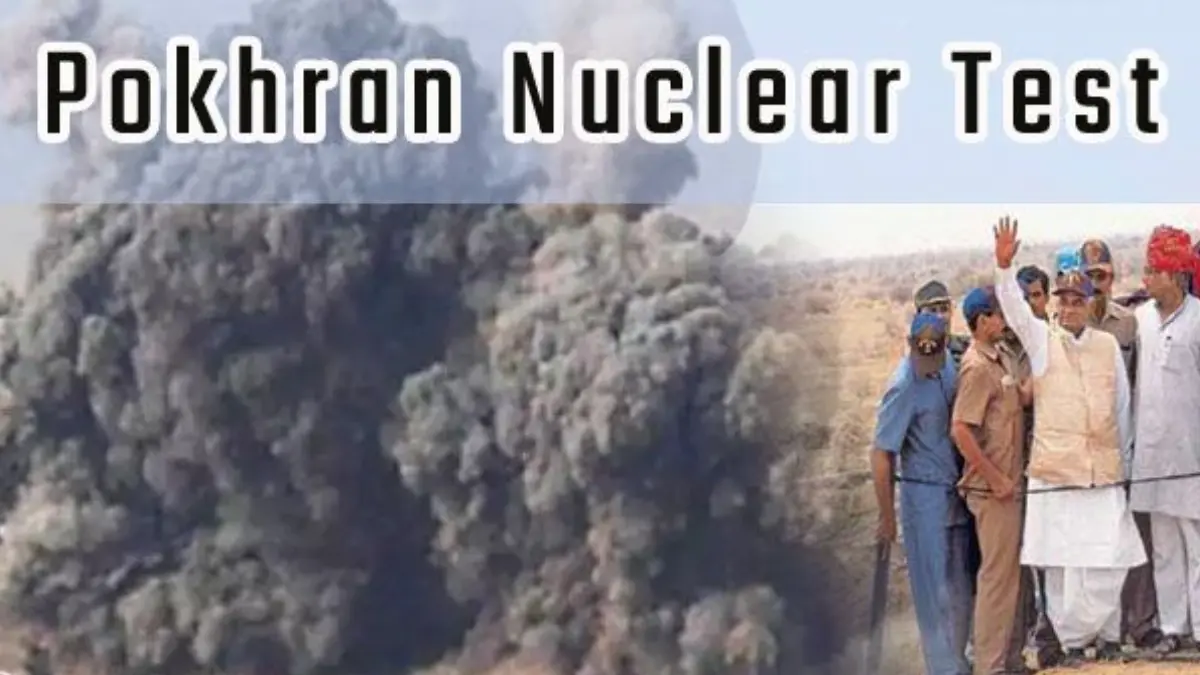
National Technology Day: On a day that bridges India’s storied past with its ambitious future, Prime Minister Narendra Modi paid a stirring tribute to the nation’s scientific community. Commemorating National Technology Day, the Prime Minister revisited the historic summer of 1998, describing the Pokhran nuclear tests not just as a military milestone, but as a shining reflection of India’s “scientific excellence” and “unwavering resolve.”
For many, May 11 remains a date etched in the collective memory of the country. It was on this day twenty-six years ago that the sands of the Thar Desert shook, announcing India’s arrival as a formidable nuclear power.
Beyond the Explosion: A Triumph of Indigenous Talent
In a series of heartfelt messages, PM Modi emphasized that the success of Operation Shakti (Pokhran-II) was a victory for indigenous innovation. At a time when the world was skeptical of India’s capabilities and the country faced significant international pressure, our scientists worked in total secrecy to achieve the impossible.
“We remember the hard work and dedication of our scientists which led to the successful tests in 1998,” the PM noted. He highlighted that the legacy of those tests—spearheaded by the late Dr. APJ Abdul Kalam and the visionary leadership of Atal Bihari Vajpayee—continues to inspire the “Make in India” spirit today.
From Strategic Defense to a Digital Revolution
While the 1998 tests were about establishing a “credible minimum deterrence,” the Prime Minister’s address focused heavily on how that same spirit of inquiry is now fueling India’s modern digital landscape.
The narrative has shifted from nuclear physics to artificial intelligence, semiconductors, and space exploration. The Prime Minister underscored that technology is no longer just a tool for defense; it is the primary engine driving social change, financial inclusion, and economic growth for 1.4 billion people.
Architects of the Future
In a “human-first” approach to his message, the PM spoke directly to the youth. He described the current generation of engineers, coders, and researchers as the “true architects of a developed India.”
The government’s vision for Viksit Bharat (Developed India) by 2047 hinges on the foundations laid in 1998. By celebrating National Technology Day, the administration aims to foster an environment where a young student in a rural village has the same access to cutting-edge technology as a scientist in a metropolitan lab.
A Look Back at the Milestone: Why May 11 Matters
The significance of this day is rooted in three pivotal events that occurred simultaneously in 1998:
- Pokhran-II: The successful detonation of three nuclear devices.
- Hansa-3: The maiden flight of India’s first indigenous two-seater aircraft.
- Trishul Missile: The successful test firing of the short-range surface-to-air missile.
Road Ahead
As India continues to climb the Global Innovation Index, the spirit of Pokhran remains a reminder that “excellence” is not just about the final product—it is about the courage to innovate against the odds.
“Today,” the Prime Minister concluded, “we reiterate our commitment to using technology for the benefit of humanity and to ensure our nation stays on the path of progress and prosperity.”
More from Science & Tech:
- ISRO’s Next Frontier: The countdown for the Gaganyaan mission begins.
- Digital India 2.0: How 5G is transforming rural education.
- The Green Shift: India’s push for indigenous Green Hydrogen technology.