
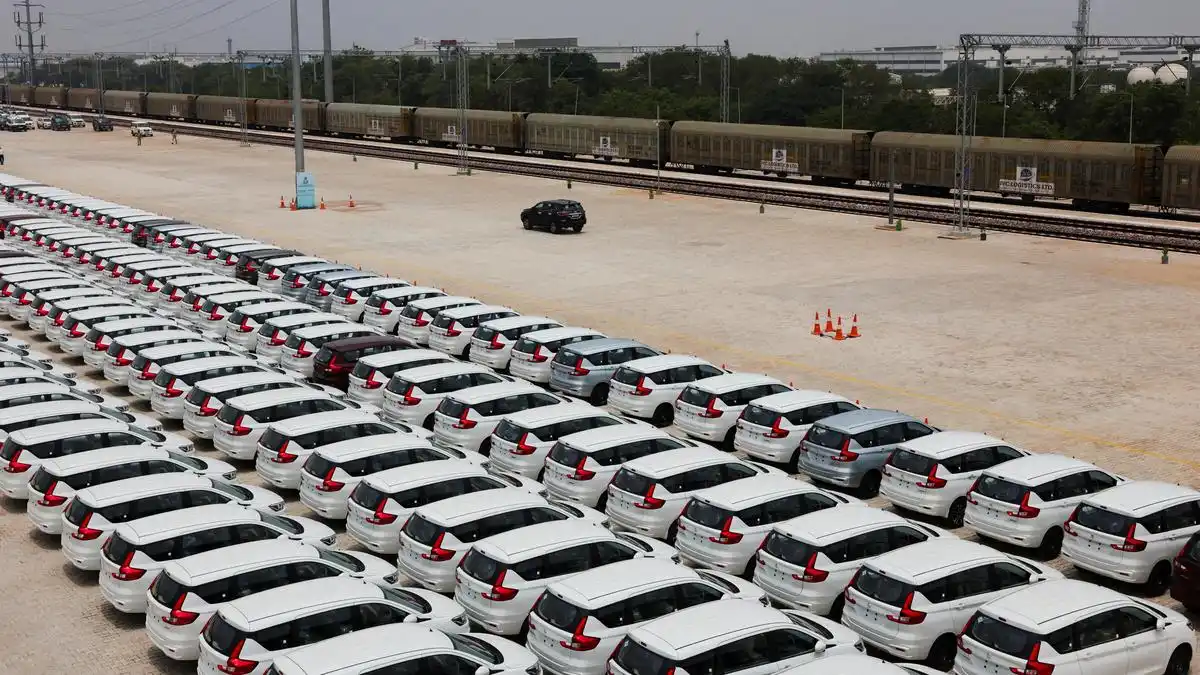
Maruti Suzuki Uses Railways: In a move that cements its lead in green industrial practices, Maruti Suzuki India Limited (MSIL) has officially crossed the 3-million-unit mark for vehicle dispatches via the Indian Railways. This achievement is more than just a logistical win; it represents a decade-long transformation of how India’s largest carmaker gets its products to the people.
A Quantum Leap in Logistics Speed Maruti Suzuki Uses Railways
What is most striking about this milestone is the sheer pace of acceleration. It took the company nearly eight years to ship its first million cars by rail (achieved in 2021). However, the jump from the second to the third million took a mere 21 months.
This rapid scaling highlights a fundamental shift in MSIL’s operations. By moving away from traditional truck-based transport, the company is effectively bypassing road congestion and significantly cutting down the lead time for vehicle deliveries across the country.
Building a “Green” Backbone
At the heart of this success is a massive ₹13,720 million (₹1,372 crore) investment in specialized infrastructure. Maruti Suzuki has transitioned from simply using existing rail networks to building its own “In-plant Railway Sidings.”
Currently, MSIL is the only passenger vehicle manufacturer in India with dedicated tracks inside its production facilities—specifically at the Hansalpur (Gujarat) and Manesar (Haryana) plants.
- The Advantage: Cars roll straight off the assembly line and into specialized high-capacity rakes.
- Future Growth: A third in-plant siding is already under development for the upcoming mega-plant in Kharkhoda, ensuring that as production grows, the carbon footprint doesn’t grow with it.
Environmental Dividend
The shift to rail isn’t just about efficiency; it’s a core pillar of the company’s “Green Logistics” initiative. Moving 3 million vehicles by train has resulted in:
- Significant CO2 Abatement: A massive reduction in carbon emissions compared to road transport.
- Fuel Conservation: Saving millions of liters of fossil fuels that would have been consumed by thousands of truck trips.
- Global Recognition: The Hansalpur siding was recently recognized as the world’s first “Modal Shift Transportation Project” to be registered under the Verra carbon standard, allowing the company to generate carbon credits for its sustainable choices.
Aligning with National Vision
Hisashi Takeuchi, Managing Director & CEO of Maruti Suzuki, noted that this progress aligns perfectly with the Government of India’s PM GatiShakti National Master Plan.
“This milestone is a testament to our commitment to sustainable operations,” Takeuchi said. “By leveraging the power of multimodal logistics, we are not only streamlining our supply chain but also contributing to a greener, less congested India.”
Looking Toward 2030
Maruti Suzuki isn’t slowing down. While rail currently accounts for roughly 26.5% of the company’s outbound logistics, the target for FY 2030-31 is a 35% share. With a network that already spans 600+ cities and 22 major hubs, the company is effectively turning the Indian Railway network into a high-speed artery for the nation’s automotive dreams.
At a Glance: Road to 3 Million
- 2013: MSIL becomes the first automaker to obtain an AFTO (Automobile Freight Train Operator) license.
- November 2021: 1 Million units reached.
- June 2024: 2 Million units reached.
- May 2026: 3 Million units reached.
- The Fleet: High-capacity rakes now transport everything from the Swift and Baleno to the Grand Vitara and Brezza.