
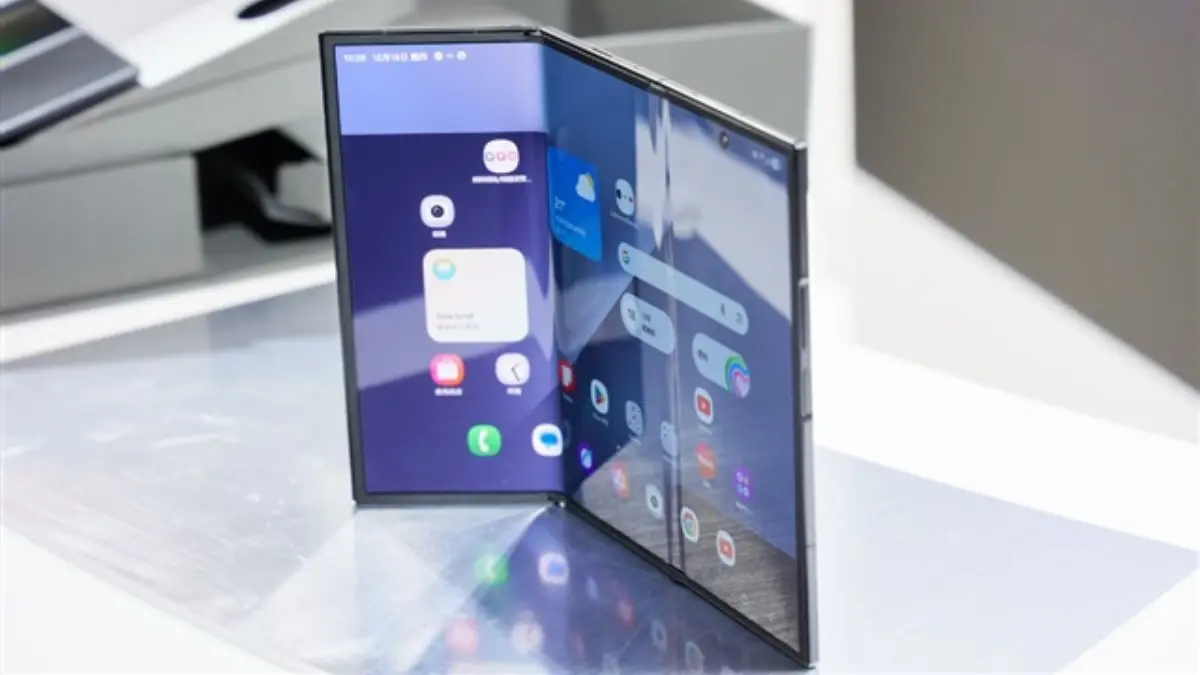
Apple Foldable: Apple’s upcoming entry is set to completely supercharge the global demand for OLED TDDI (Touch and Display Driver Integration) silicon chips. For a tech sector looking for its next big growth catalyst, this move could not have come at a better time.
Apple Foldable
The Tech Keeping the Crease Seamless
To understand why this is such a massive win for component builders, you have to look at the unique engineering challenges of a folding screen. Traditional smartphones use separate chips to handle the display pixels and the touch sensitivity layer.
Foldable devices do not have that luxury. Space is at an absolute premium inside a chassis that has to fold completely flat, and every milliwatt of battery power matters.
That is where TDDI chips come into play. By blending the touch controllers and display drivers onto a single piece of silicon, manufacturers can drastically reduce the physical footprint of the display electronics. This integration is vital for maintaining crisp touch responsiveness right across a flexible display panel’s physical crease without draining the battery.
Inside Apple’s Massive Supply Chain Rollout
While rival smartphone makers have been quietly scaling back their production goals due to high material costs, Apple is taking the opposite approach. The company is signaling immense confidence in its new form factor, instructing its component network to prepare for a heavy initial launch.
- A Audacious Initial Print Run: Upstream suppliers are currently prepping components to support an initial manufacturing run of roughly 10 million foldable units.
- The Vietnam Production Nexus: To ensure tight quality control, Samsung Display has reportedly locked down the exclusive assembly rights for these highly delicate panels. The work will be handled at its specialized back-end module facility in Vietnam, where initial yield rates are already tracking at an impressive 80%.
- Ditching the Polarizer: The upcoming device is expected to pioneer a specialized Color Filter on Encapsulation (CoE) technique. By printing a microscopic color filter directly onto the screen’s protective layer, Apple can remove the traditional, bulky polariser plastic entirely. The result? A significantly thinner display layer that lets more light through while drawing less power.
What This Means for the Broader Market
When Apple enters a new product category, it doesn’t just launch a device—it alters the economics of the entire manufacturing industry.
Right now, foldable phones are still viewed by many everyday consumers as an expensive novelty. A high-volume product launch on this scale forces factories to optimize their production lines, scale up raw material sourcing, and bring down overall defect rates.
Industry analysts expect that the device—internally referred to under premium branding tiers like the “iPhone Ultra“—will sport an expansive 7.8-inch inner flexible canvas alongside a highly functional 5.5-inch external cover screen. By placing massive, predictable orders for advanced TDDI architecture, Apple is single-handedly breathing fresh life into an otherwise quiet hardware landscape, setting the stage for a highly competitive 2027.