
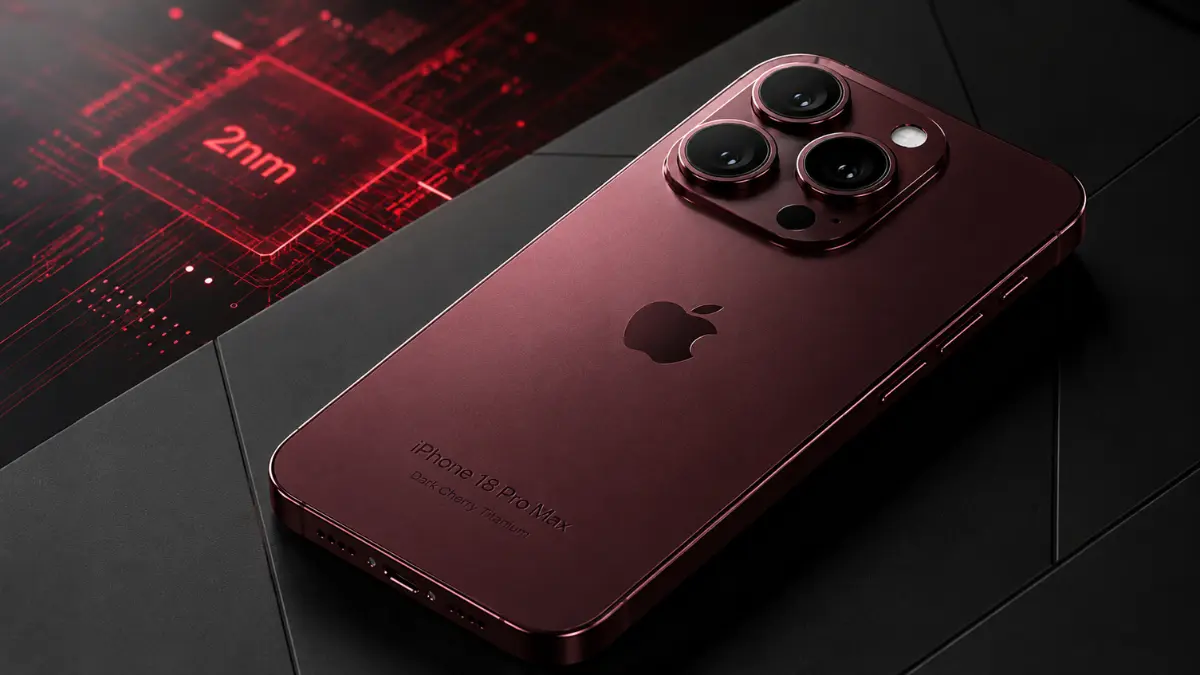
iPhone 18 Pro Max: Apple is pulling off a quiet masterclass in market manipulation. Instead of throwing everything at a single flagship launch every autumn, the tech giant is splitting its focus, upgrading its entry-level gear, and locking down the world’s most advanced silicon for its top-tier devices.
From cutting-edge 2-nanometer (2nm) chip architectures to a $599 laptop that is currently flying off shelves faster than factories can build them, Cupertino is proving it can dominate both the ultra-luxury and the budget tech spaces at the same exact time.
The Leaked Blueprint: iPhone 18 Pro Moves to 2nm Silicon
The biggest news coming out of Apple’s supply chain revolves around the upcoming A20 Pro chipset. According to recent component orders, Apple has secured TSMC’s highly anticipated 2nm manufacturing node for its next-generation Pro line.
In simple terms, shrinking the gaps inside the chip down to 2nm allows Apple to squeeze billions more transistors onto the same tiny slice of silicon. Early factory projections suggest the A20 Pro will offer a 15% jump in processing speeds while cutting overall energy consumption by nearly 30%. This extra headroom is exactly how Apple plans to power intensive, on-device AI tools without overheating your pocket.
The New Release Cadence: Premium First, Budget Later
To maximize profit and give its wild new designs room to breathe, Apple is reportedly changing how it schedules its smartphone launches. We are looking at a two-wave release cycle:
- September Window: Reserved exclusively for the ultra-premium tier—including the iPhone 18 Pro, iPhone 18 Pro Max, and a heavily rumored, high-end foldable iPhone Ultra.
- Spring Window: The standard, baseline iPhone 18 and a new, value-focused “18e” variant will be held back until early the following year to keep factory production steady and component costs low.
To handle heavier local AI workloads, the entire premium lineup is expected to jump to a uniform 12GB of RAM, paired with an in-house C2 5G modem built to extend battery life on weak cellular signals.
Under the Hood: How Apple Quietly Fixed the iPhone 17’s Power Dilemma
While the tech world looks ahead to the 2nm future, supply chain audits have revealed how Apple managed the power demands of the current iPhone 17 generation. Rather than making the phones thicker and heavier to fit massive batteries, Apple took a much smarter, space-saving approach.
The Internal Diet: To preserve a slim, lightweight design, Apple stripped away non-essential internal clutter. For instance, they removed the bulky, capacitive structural mounts under the physical camera controls, substituting them with ultra-thin, direct-contact sensors.
By reclaiming those tiny fractions of millimeters inside the chassis, Apple freed up just enough physical room to maximize battery density. Combined with the power efficiencies of the 3nm A19 chip, the iPhone 17 easily clears a full day of heavy use without feeling like a brick in your hand.
The $599 Disruption: MacBook Neo Sales Double Overnight
The biggest surprise of the year doesn’t involve a phone at all. It’s the MacBook Neo, a highly disruptive, budget-focused 13-inch laptop that has completely caught the industry off guard.
By taking the incredibly fast A18 Pro chip directly out of its flagship smartphones and dropping it into a sleek, fanless aluminum laptop body running full macOS, Apple managed to lower the entry price of a brand-new Mac to just $599 (and an even lower $499 for students).
The market response has been massive. According to recent supply chain data, the MacBook Neo shipped an incredible 1.1 million units during its initial launch window, comfortably outselling its more expensive siblings.
| Apple Laptop Model | Estimated Debut Quarter Shipments | Retail Base Price |
| MacBook Neo (A18 Pro) | 1.1 Million Units | $599 USD |
| MacBook Air (M5) | 900,000 Units | $999 USD |
| MacBook Pro (M5) | 550,000 Units | $1,599 USD |
Because retail demand completely outpaced initial supply, Apple has officially doubled its production targets for the rest of the year. Component orders have been aggressively raised from 5 million units to 10 million units to prevent global backorders.
This unexpected pivot has sent shockwaves through the PC industry, forcing competitors like Dell and Acer to quickly discount their own mid-range laptops to try and keep up with Apple’s sub-$700 hardware takeover.