
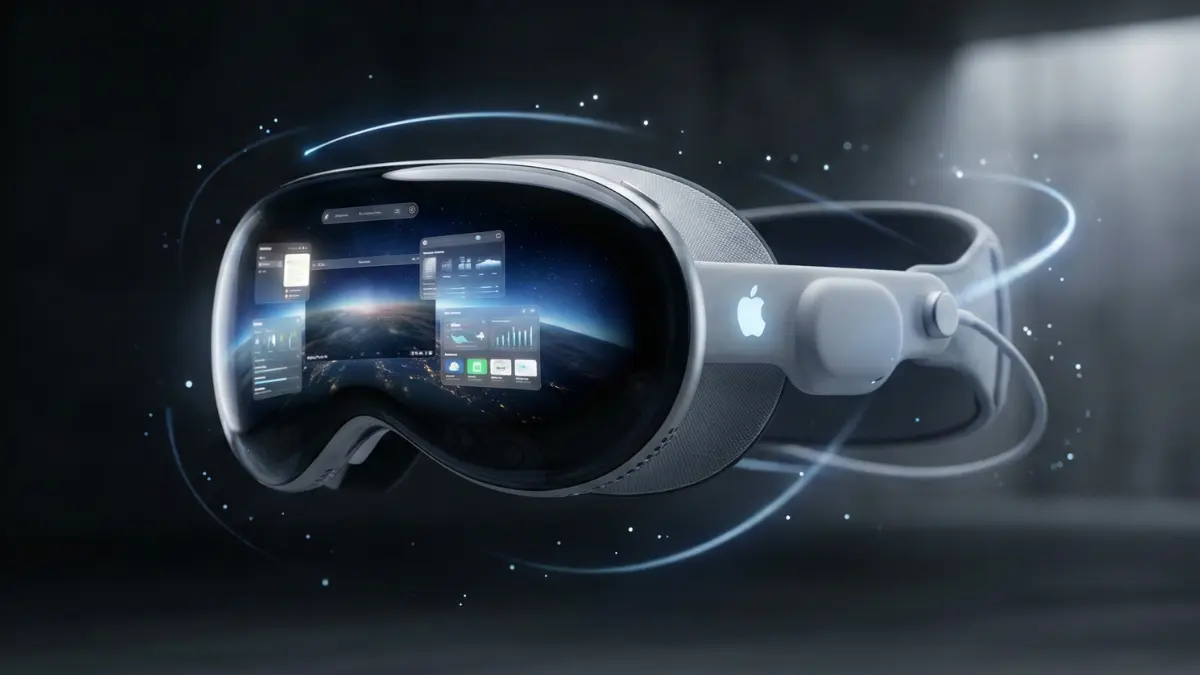
Apple’s push into spatial computing continues to spark debate, curiosity, and excitement—especially among traditional PC users. With the arrival of the Apple Vision Pro M5, Apple is promising faster performance, sharper visuals, and a more refined mixed-reality experience. But does it truly make sense for users who have spent years working on Windows PCs and multi-monitor setups?
Here’s a closer look at the Vision Pro M5 from a PC user’s perspective—and what it really means for the future of everyday computing.
A New Chapter in Apple’s Vision Pro Lineup
The Apple Vision Pro was never meant to be just another VR headset. Apple positions it as a spatial computer, blending digital content with the real world using advanced sensors, eye tracking, hand gestures, and voice input.
The new M5-powered version builds on that foundation with meaningful internal upgrades rather than a dramatic redesign. On the outside, it still looks familiar. On the inside, however, Apple claims noticeable gains in speed, graphics processing, and AI-driven responsiveness.
Apple M5 Chip: Faster, Smoother, and More Capable
At the heart of the Vision Pro M5 is Apple’s latest custom silicon—the Apple M5 chip. This processor brings a clear improvement in overall performance compared to earlier models.
Key performance highlights include:
- Faster app launches and smoother transitions between virtual environments
- Improved GPU performance for sharper visuals and more stable frame rates
- Enhanced AI processing for eye tracking, hand gestures, and spatial awareness
- Better thermal efficiency, allowing longer sessions without performance dips
For PC users accustomed to powerful desktops or gaming laptops, the M5 finally makes the Vision Pro feel less experimental and more like a serious computing machine.
Using Vision Pro M5 as a PC User
Virtual Desktop Experience
One of the most interesting use cases for PC users is using the Vision Pro as a virtual monitor setup. The headset can project a massive, ultra-sharp virtual display that floats in front of you, easily replacing a multi-monitor desk arrangement.
Text clarity is impressive, spreadsheets are readable, and video playback looks stunning. For productivity, this is where the Vision Pro starts to feel genuinely useful rather than futuristic novelty.
Input Still Feels Different
However, the learning curve is real. PC users rely heavily on keyboards, mice, and precise cursor control. While the Vision Pro supports external keyboards and trackpads, navigating primarily through eye tracking and gestures takes time to feel natural.
It works—but it doesn’t always feel faster than traditional input methods.
Comfort and Long-Term Use
Apple has made improvements to comfort with better weight distribution and strap design, but the Vision Pro M5 is still a head-mounted computer. For short creative sessions, meetings, or media consumption, it’s impressive. For all-day office work, many PC users may still prefer a laptop or desktop setup.
In short:
- Great for focused sessions
- Less ideal for extended, all-day workloads
Software and Ecosystem: Still an Apple-First World
For PC users, one of the biggest limitations is software compatibility. While the Vision Pro supports virtual desktop streaming and select third-party apps, the experience shines brightest within Apple’s ecosystem.
Native Windows applications don’t yet feel fully at home in a spatial environment. Until more developers build apps specifically optimized for mixed reality productivity, PC users may see the Vision Pro as a powerful companion, not a full replacement.
Who Is the Apple Vision Pro M5 Really For?
The Vision Pro M5 makes one thing clear: Apple isn’t targeting casual users yet. This device is best suited for:
- Tech enthusiasts exploring next-generation computing
- Creators, designers, and developers working in 3D environments
- Professionals experimenting with immersive workflows
- Early adopters willing to adapt to new interaction methods
For traditional PC users, it offers a glimpse of the future—but not a complete escape from keyboards, desks, and monitors just yet.
The Bigger Picture: Is This the Future of Computing?
The Apple Vision Pro M5 doesn’t try to replace PCs overnight. Instead, it introduces a new way to think about screens, workspaces, and interaction. It shows what computing could look like in the next decade—less flat, more immersive, and deeply personal.
For now, PC users may view it as an exciting secondary device. But as hardware improves and software catches up, spatial computing could eventually become as normal as laptops are today.
Final Verdict
The Apple Vision Pro M5 is bold, powerful, and undeniably impressive. For PC users, it’s not yet a must-buy—but it is a serious signal of where computing is headed.
And once you experience a massive virtual workspace floating effortlessly in front of you, going back to a traditional screen suddenly feels… a little old-fashioned.