
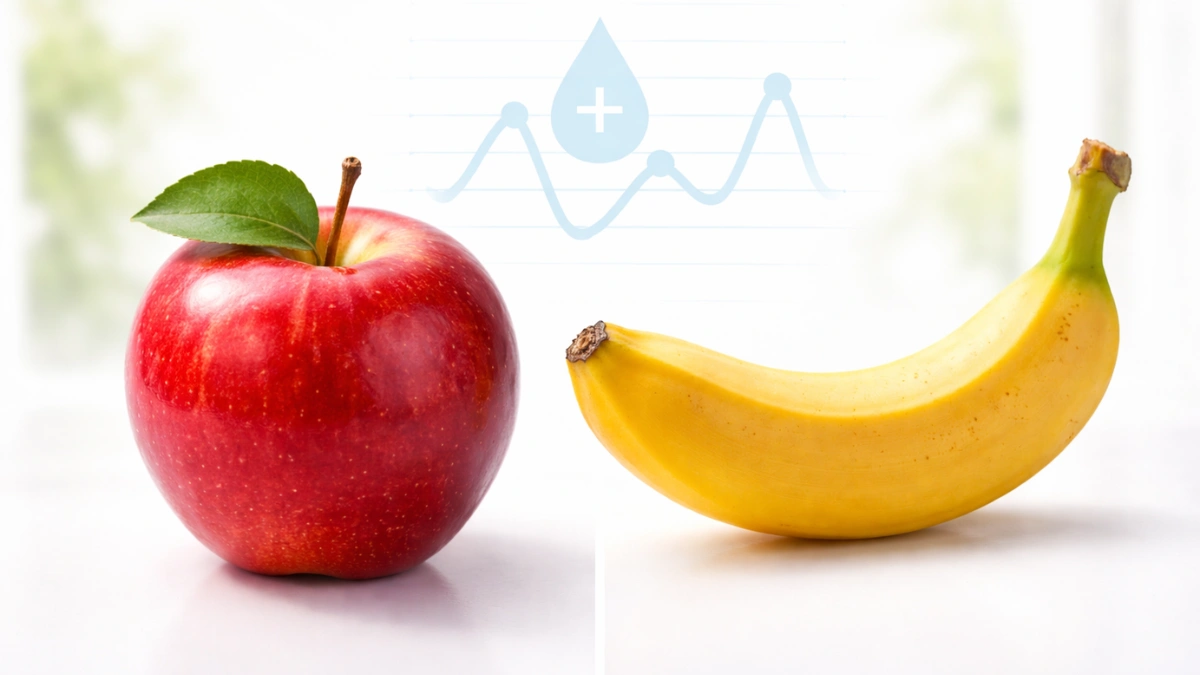
Apples vs Bananas: In the world of healthy eating, fruits often get mixed reactions—especially from people trying to manage blood sugar levels. Apples and bananas, two of the most commonly eaten fruits worldwide, are often compared because of their natural sugar content. But does one cause fewer blood sugar spikes than the other?
Nutrition experts say Fruits for diabetes control the answer isn’t as simple as picking a “good” or “bad” fruit. Instead, it comes down to fiber, ripeness, and how you eat them.
Why Blood Sugar Response Matters
Best Fruit for Blood Sugar levels rise when carbohydrates break down into glucose in the body. Foods that digest quickly can cause sharp spikes, while fiber-rich foods slow digestion and help keep glucose levels more stable.
That’s why understanding how fruits affect blood sugar is important—especially for people with diabetes, prediabetes, or those aiming for steady energy throughout the day.
Apples: A Fiber-Rich Choice for Steady Energy
Apples are often praised for their high fiber content, particularly soluble fiber known as pectin.
Nutritional Highlights of Apples
- Moderate natural sugar
- Around 4 grams of fiber in a medium apple
- Rich in antioxidants and vitamin C
The fiber in apples slows down digestion, which means sugar enters the bloodstream more gradually. This helps prevent sudden spikes in blood glucose and keeps you feeling full for longer.
Another benefit is that apples have a low to moderate glycaemic index, making them a reliable fruit option for people focused on blood sugar control.
Bananas: Nutritious but Influenced by Ripeness
Bananas are energy-dense and packed with essential nutrients, especially potassium, which supports heart and muscle function.
Nutritional Highlights of Bananas
- Slightly higher carbohydrates than apples
- About 3 grams of fiber in a medium banana
- Naturally energising
However, bananas change as they ripen. Green or slightly unripe bananas contain resistant starch, which behaves like fiber and has a gentler effect on blood sugar. As bananas turn yellow and develop brown spots, this starch converts into sugar, increasing their impact on blood glucose levels.
This means ripe bananas may raise blood sugar more quickly than apples, especially when eaten alone.
Apples vs Bananas for Blood Sugar
When compared side by side:
- Apples tend to have a slower and more controlled effect on blood sugar due to higher fiber.
- Bananas, especially ripe ones, may cause a faster rise in glucose but provide quick energy.
That said, neither fruit is unhealthy. The difference lies in portion size, ripeness, and food pairing.
How to Eat Fruit Without Spiking Blood Sugar
Health experts recommend focusing on eating habits rather than avoiding fruit altogether.
Smart Tips for Better Blood Sugar Control
- Pair fruit with protein or healthy fats (nuts, peanut butter, yogurt)
- Avoid eating fruit alone on an empty stomach
- Choose whole fruits instead of juices or smoothies
- Watch portion sizes, especially with ripe bananas
These small adjustments can significantly reduce blood sugar spikes while allowing you to enjoy fruit regularly.
The Bigger Nutrition Picture
Both apples and bananas offer important health benefits beyond blood sugar:
- Support digestion and gut health
- Provide vitamins, minerals, and antioxidants
- Help reduce cravings for processed sweets
Whole fruits are far healthier than sugary snacks or refined carbohydrates, making them a smart addition to most diets.
Final Verdict
There is no clear winner in the apples vs bananas debate. Apples may have a slight advantage for blood sugar control due to their fiber content, but bananas—especially when eaten in moderation—are equally nutritious.
The key is balance. When eaten mindfully and paired with other healthy foods, both apples and bananas can fit comfortably into a blood-sugar-friendly diet.