
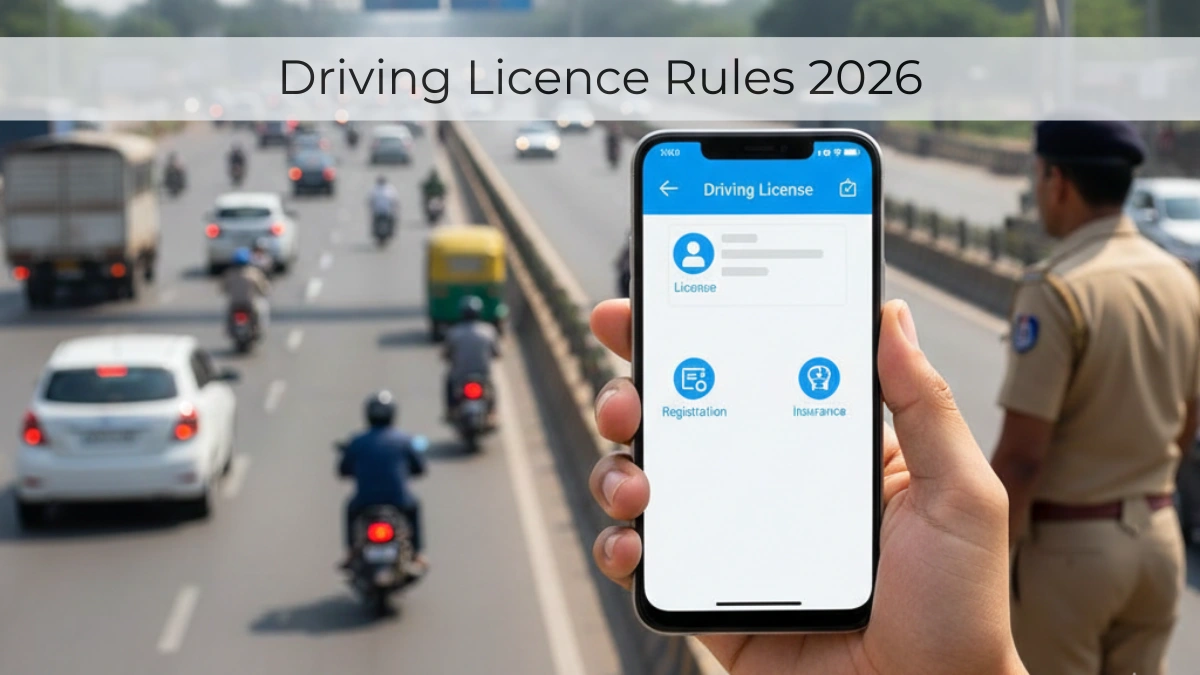
Driving Licence Rules 2026:India’s transport authorities have rolled out a substantive revision of driving licence rules under the Motor Vehicles framework for 2026, aiming to modernise the system, improve road safety, and make licence services more transparent and accessible for ordinary citizens. The changes affect driver applicants, existing licence holders, and enforcement agencies nationwide.
Why the Rules Are Changing
Road safety continues to be a major policy focus in India, with rising traffic volumes and accident rates prompting the Ministry of Road Transport and Highways (MoRTH) to overhaul long-standing practices. The 2026 revisions are designed to ensure that competent, well-trained drivers are on the roads, reduce bureaucratic hurdles, curb corruption, and strengthen enforcement. Digital systems and clearer processes are central to these changes.
Major Updates Under Driving Licence Rules 2026
1. Stricter Training and Testing Standards
The new rules put emphasis on practical and real-world evaluation of driver skills. Drivers seeking a licence will now be assessed on factors such as lane discipline, hazard recognition, and real road conditions — beyond simple manoeuvres that were typical of earlier tests. Driving schools and training programmes are expected to play a more prominent role in structured learning.
Key shifts include:
- Enhanced practical evaluation components for licence tests.
- Mandatory, structured instruction before testing.
These changes aim to build competence among new drivers and enhance on-road readiness.
2. Digital Licences and Online Services
In a major digital push, licences stored and accessed online will now carry the same legal weight as physical cards. Smart digital licences — integrated with national databases — will make verification faster and reduce fraud.
Renewal, document submission, status tracking, and updates are increasingly possible via official government portals, reducing dependency on physical visits to Regional Transport Offices (RTOs).
3. Penalties, Traffic Violations and Enforcement
One of the most discussed changes relates to traffic violations and licence suspension:
- Drivers who commit five or more traffic offences within a single year may face suspension or revocation of their driving licence. The new threshold applies from January 1, 2026.
- Offences counted include speeding, jumping signals, not wearing helmets or seat-belts, illegal parking, and other regulated violations.
- Authorities must give drivers an opportunity to be heard before suspension decisions.
This marks a shift from past practice, where accumulated minor traffic violations seldom led directly to licence revocation.
4. Renewal and Compliance Simplified
Renewals have become more online-centric:
- Most tasks — from submission of forms to payment of fees — can now be done digitally.
- Physical RTO visits are required only in specific cases, such as biometric checks or medical assessments.
The intent is to cut wait times, reduce administrative friction, and limit the need for intermediaries.
Who Is Affected
The driving licence rules 2026 changes have broad implications:
- New applicants will need to prepare for enhanced training and practical testing.
- Existing licence holders must adapt to digital renewal norms and keep licence details up-to-date online.
- Traffic violators face stricter consequences, with habitual non-compliance potentially affecting the right to drive.
Drivers or learners unaware of the updated framework risk penalties for procedural lapses or simplified enforcement under the new provisions.
Conclusion: A Step Toward Safer and More Efficient Roads
The driving licence rules 2026 represent a significant policy shift for India’s transport ecosystem. By blending digital transformation, tougher training and testing standards, and a more stringent approach to traffic violations, the government seeks to build a safer, more accountable driving culture.
For drivers — whether new, renewing, or seasoned — understanding these updates and acting early to comply will be essential for avoiding penalties and ensuring lawful road use in 2026 and beyond.