
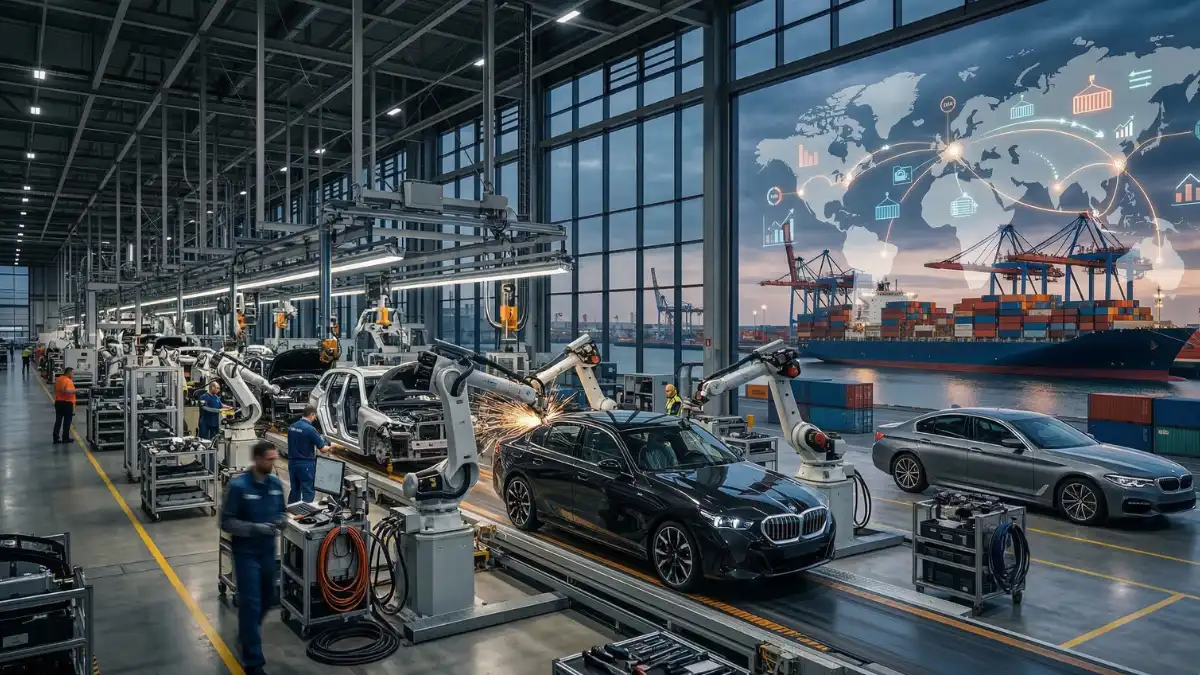
German luxury automaker BMW has warned that rising global tariffs and intense competition in key markets could keep its automotive profit margins largely unchanged in 2026. The company’s latest outlook highlights how geopolitical tensions, trade restrictions, and slowing demand—especially in China—are creating fresh challenges for the global auto industry.
BMW said it expects its automotive operating margin to remain between 4% and 6% in 2026, roughly in line with recent years. While the company continues to invest heavily in new electric vehicles and next-generation technology, higher trade costs are expected to limit profitability growth in the near term.
Global Tariffs Increasing Cost Pressure
Trade tariffs have become a major concern for automakers operating across multiple international markets. BMW expects tariffs to reduce its automotive profit margin by around 1.25 percentage points this year.
These additional costs come from several directions:
- Import duties on vehicles sold in the United States
- European tariffs affecting electric vehicles made in China
- Rising costs across global supply chains for parts and components
Although BMW manufactures many vehicles locally—including at its major production facility in Spartanburg, South Carolina—the company still relies on a complex global supply network. Any increase in cross-border taxes or restrictions can significantly impact production costs.
Earnings Outlook Shows Slight Decline
BMW also expects earnings before tax to decline between 5% and 9.9% in 2026, continuing a cautious financial trend seen across the auto sector.
The company reported around €10.2 billion in pre-tax profit in 2025, already lower compared to previous peak years. Despite these pressures, BMW expects its vehicle deliveries in 2026 to remain largely stable, indicating steady but not rapid growth.
Industry analysts say many automakers are currently focusing on cost control while navigating expensive investments in electrification and digital technology.
China Market Remains a Key Challenge
China, BMW’s largest single market, remains a major area of concern. Sales in the country fell about 12.5% in 2025, reflecting slowing demand and increasing competition from local electric vehicle brands.
Chinese automakers have been rapidly expanding with competitively priced EVs and advanced software features. This has made the market far more competitive for global luxury brands.
BMW expects sales in China to stabilize in 2026, but the company acknowledges that strong competition will continue to affect growth.
New Electric Models to Drive Future Growth
Despite short-term challenges, BMW is continuing its long-term transformation toward electric mobility. The company is preparing to launch a new generation of vehicles built on its “Neue Klasse” platform.
This next-generation architecture will focus on:
- Advanced electric powertrains
- Improved battery efficiency and range
- Next-level digital features and connectivity
- A redesigned vehicle software ecosystem
BMW plans to introduce around 40 new or updated models within the next two years, covering both electric and combustion vehicles.
The automaker believes these new models will help strengthen its global position as the industry shifts toward electrification.
Global Auto Industry Facing a Transition
BMW’s cautious forecast reflects wider challenges facing the automotive industry. Automakers worldwide are dealing with:
- Rising production costs
- Rapid EV development expenses
- Trade disputes and tariffs
- Slower demand in some major markets
While demand for premium vehicles remains relatively strong, companies must balance profitability with the massive investments required for the electric future.
Conclusion
BMW’s latest outlook shows that while the company remains financially strong, global tariffs and market competition are expected to limit profit growth in the near term. With new electric vehicles and technological innovation on the horizon, the automaker is betting that its next generation of models will help drive stronger performance in the coming years.
For now, however, BMW and the wider auto industry must navigate a complex landscape shaped by trade tensions, economic uncertainty, and the race toward electrification.