
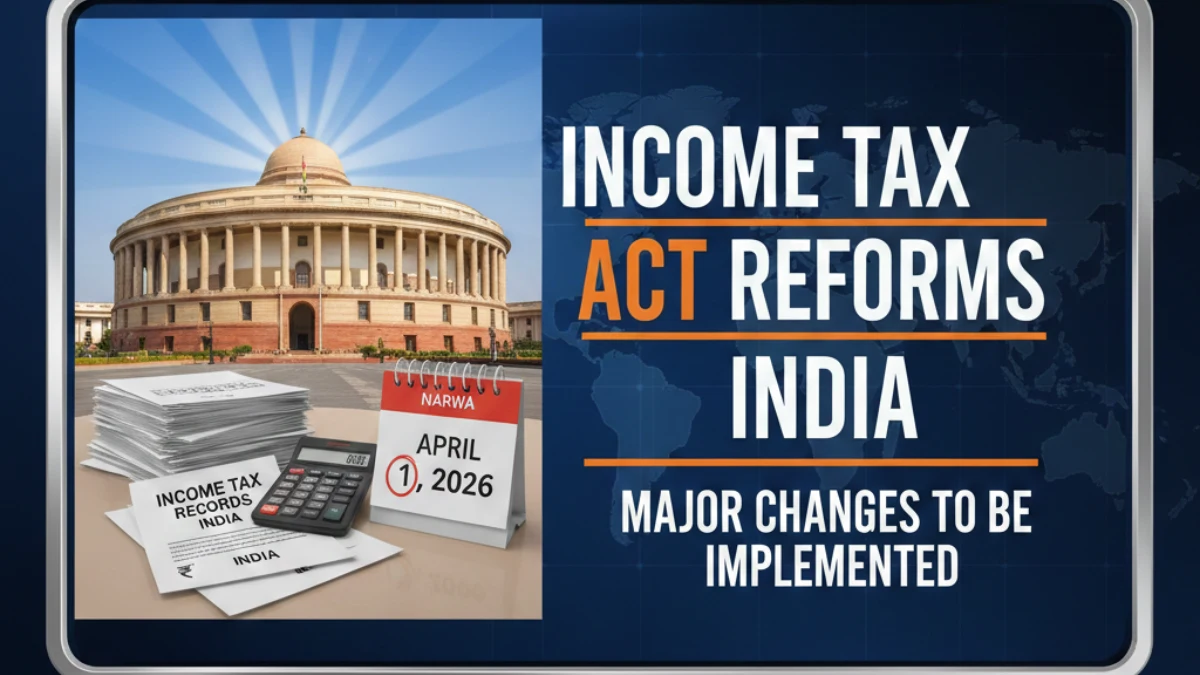
India’s tax framework is entering a major transformation as the Income Tax Act reforms, set to come into force on April 1, 2026, replace decades-old rules and aim to make compliance easier for taxpayers and businesses.
The overhaul comes after years of criticism that the existing law — based on the Income Tax Act of 1961 — had become too complex and difficult to navigate. The revised Income Tax Act, 2025, officially notified by the government, introduces a streamlined legal structure, clearer language, and modern procedures for digital compliance.
A Shift from the 1961 Law to Modern Tax Code
The original Income Tax Act, enacted in 1961, provided the foundation for personal and corporate taxation in India for more than six decades. While it helped build the country’s tax base, frequent amendments and layered provisions made it unwieldy for taxpayers and administrators alike.
Under the new statute, which received presidential assent in August 2025, the government has pared down the number of sections from more than 800 to 536 sections across 23 chapters and 16 schedules. The reduction aims to eliminate outdated clauses and simplify interpretation.
Key Changes in Structure and Compliance
Unified Tax Year
One of the most significant shifts is the replacement of separate concepts like “Previous Year” and “Assessment Year” with a single Tax Year, aligning income calculation and tax liability within the same financial cycle from April 1 to March 31. This change is expected to reduce confusion, especially for first-time filers.
Streamlined Filing and Forms
The new Act introduces more straightforward tax return forms that are shorter and logically organized. This move aims to reduce dependency on tax professionals for basic return filing, particularly for salaried individuals and small taxpayers.
Digital compliance mechanisms also get a boost, with more reliance on e-filing, automated data matching, and quicker refunds, all designed to reduce manual intervention and improve transparency.
What Taxpayers Can Expect
Rationalised TCS and TDS Rules
Changes to Tax Collected at Source (TCS) provisions aim to make tax collection more sensible without burdening taxpayers unnecessarily. For instance, higher TCS thresholds on foreign remittances help individuals planning education or travel abroad by improving cash flow.
Continued Tax Rates and Slabs
Despite structural reforms, the government has kept personal income tax rates and slabs broadly unchanged to avoid disruption to household finances. Taxpayers familiar with current exemptions and slabs will find many familiar elements retained.
Potential for Reduced Litigation
A clearer legal text and fewer interpretational gaps are expected to reduce tax disputes over time. Experts believe that better clarity could lead to fewer appeals and more consistent rulings, benefiting both taxpayers and the tax department.
Why This Matters
The revised Income Tax Act affects millions of individual taxpayers, businesses, and professionals across India. By simplifying an already complicated tax law, the government hopes to encourage voluntary compliance and reduce the administrative burden on both taxpayers and tax officials.
The changes also reflect broader economic trends, with increased digitalisation and efforts to align India’s tax system with global best practices.
Final Thoughts
As the Income Tax Act reforms take effect from April 1, 2026, taxpayers should prepare early by familiarising themselves with the new terminology, updated filing procedures, and broader compliance requirements. While many core principles remain familiar, the streamlined structure and digital-forward approach mark a significant step toward a more accessible and transparent tax regime in India.