


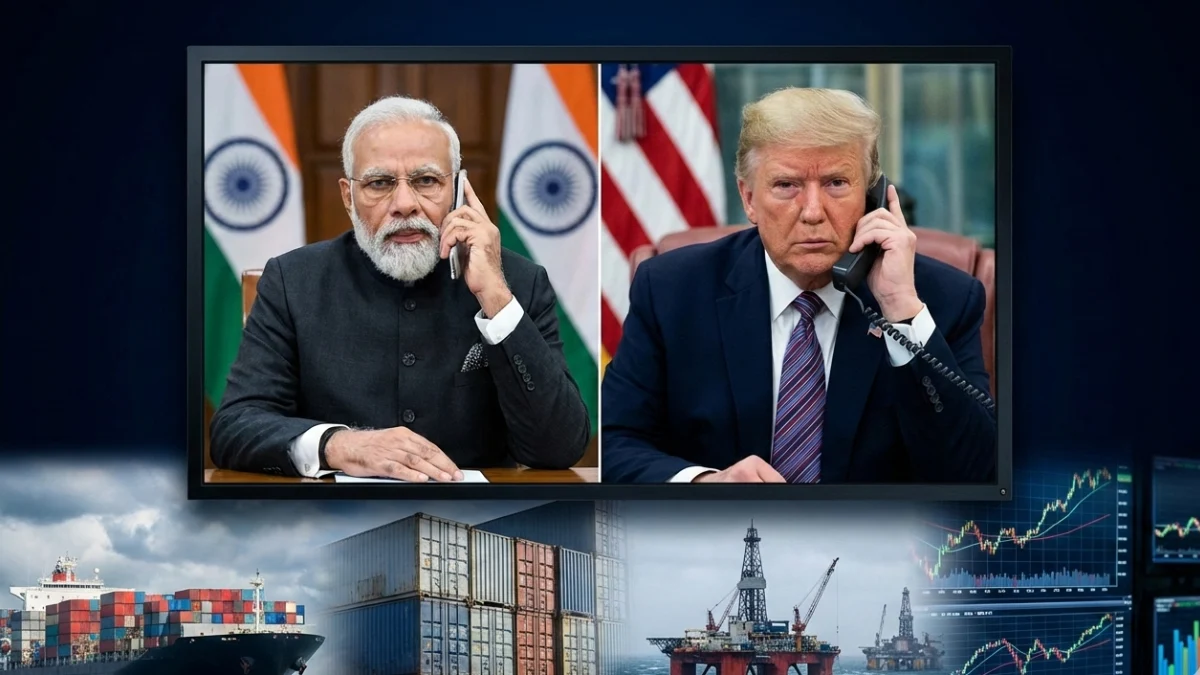


The move by the US President Donald Trump to announce a new trade deal with India after he had a direct phone call with the Indian Prime Minister, Narendra Modi has seen India and the United States take a bold step towards making economic cooperation a stronger bond between both countries. The deal represents a significant change in bilateral trade relations, lowering of tariffs, allowing more access to the markets, and a new strategic cooperation at the heart of it.
The news has attracted the attention of the entire world, since it does not only affect the trade between the two countries but also influences the overall geopolitical and economic orientation.
Notable Visual: US Removes Tariffs on Indian Goods
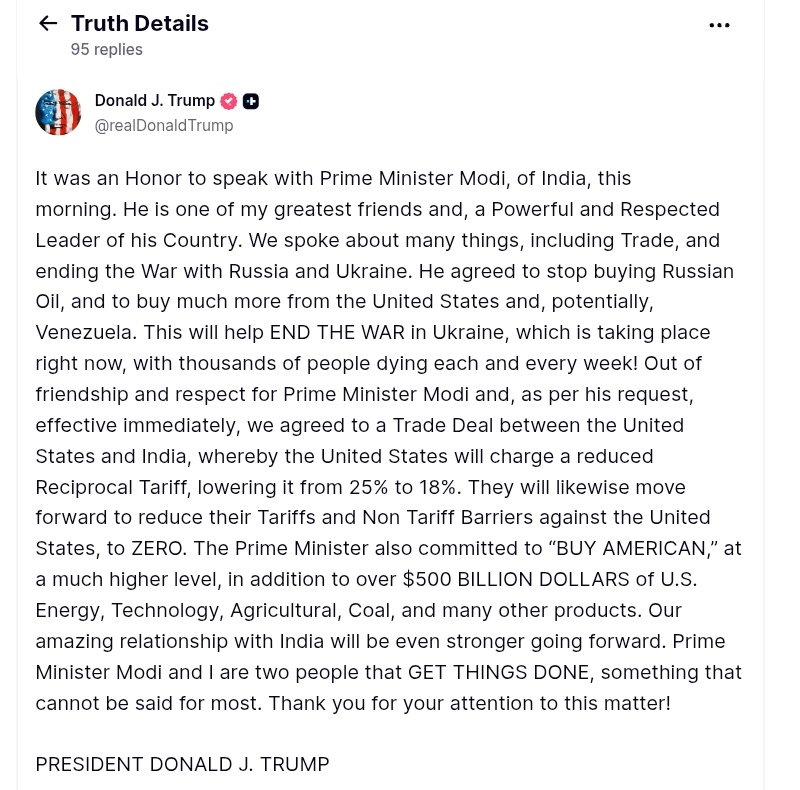
One of the greatest consequences of the agreement is that the US tariff cut on Indian goods reduce to 18 percent, a cut from the previous 25 percent. The relocation is likely to have instant benefits to Indian manufacturers and exporters, especially those in the engineering products category, textile, auto parts, and industrial products.
President Trump made the announcement to the public claiming the deal as a fair and reciprocal agreement which serves American interests but enhances the relationship with India.
To the Indian exporters, the tariff reduction is a relief that has come after months of indecision and competitiveness is regained in the critical US market.

The Centre Stage of Energy Cooperation
One of the key pillars of the new knowledge was the energy trade. As part of the agreement:
- India will make huge imports of US oil, gas, and products related to energy.
- The reliance on politically sensitive sources of energy is likely to be decreased due to new long-term supply arrangements.
- Diversified supply chains are the goal of both sides in order to enhance energy security.
According to the US authorities, the energy aspect of the project complies with the overall global policy of Washington, and India sees it as a move in the direction of stable and consistent energy supply.
India to Reduce Protection of US Products
The trade reset is unilateral. India has agreed to reduce tariffs and non-tariff protection of a number of US products enhancing market opportunities to American firms in various industries.
This involves the possibility of tariff cuts in some categories, increased regulation co-operation and simplified access of US agricultural, technology and industrial products to the Indian market.
Both sides have billed the arrangement as a compromise that gives credit to domestic concerns and is capable of spurring long-term expansion.
Modi the Prime Minister Accepts The Deal
The development was welcomed by Prime Minister Narendra Modi who described the dialogue with President Trump as a productive and visionary one. In an official statement, he was pleased that Indian products would now pay reduced tariffs in the US and that the step was a good one in the Indian industry and the employment sector.
Another aspect highlighted by PM Modi was that India US economic relations 2026 would open up new opportunities to businesses, workers, and investors in both countries and strengthen the strategic relationship between New Delhi and Washington.
Markets React Positively
The news caused a favorable reaction in financial markets:
- Indian equity indices went up.
- Rupee emerged stronger against the US dollar.
- Stocks of export orientation were experiencing new purchasing interest.
According to the market experts, the deal will eliminate one of the biggest trade overhangs and enhance investor confidence particularly at a time when world trade is under fire because of geopolitical uncertainties.
Why This Deal Matters
The India-US new trade deal accord holds some importance, due to a number of reasons:
It is an indication of a new beginning in trade relations in years after years of tension because of tariffs.
- It enhances the role of India as one of the US economic partners in Asia.
- It increases self-confidence of exporters and multinational investors.
- It brings together economic cooperation and wider strategies and geopolitics.
Analysts believe that the deal would form the basis of a more extensive system of trade in the future that would include digital trade, technology cooperation, and supply-chain resilience.
What Comes Next
As much as the general outline of the deal is publicized, there are more substantial negotiations and legalities in progress. The trade officials of the two countries will be expected to work on implementation schedules, industry based commitments, and compliance systems over the next few weeks.
Even though these are some of the details awaited, the very announcement is a strong text that India and the US are dedicated to further enhancing their economic relations and leaving the new trade deal differences of the past behind.
Conclusion
The new trade deal agreement between India and the US that was announced following the Modi Trump call is not merely a tariff change. It represents a new readiness of both countries to cooperate on the economic level, deal with differences in a pragmatic way and develop cooperation in a fast-evolving international environment.
Businesses and investors across the Atlantic will scrutinize the implementation process, as it proceeds, hoping that this agreement would provide long-term advantages.