
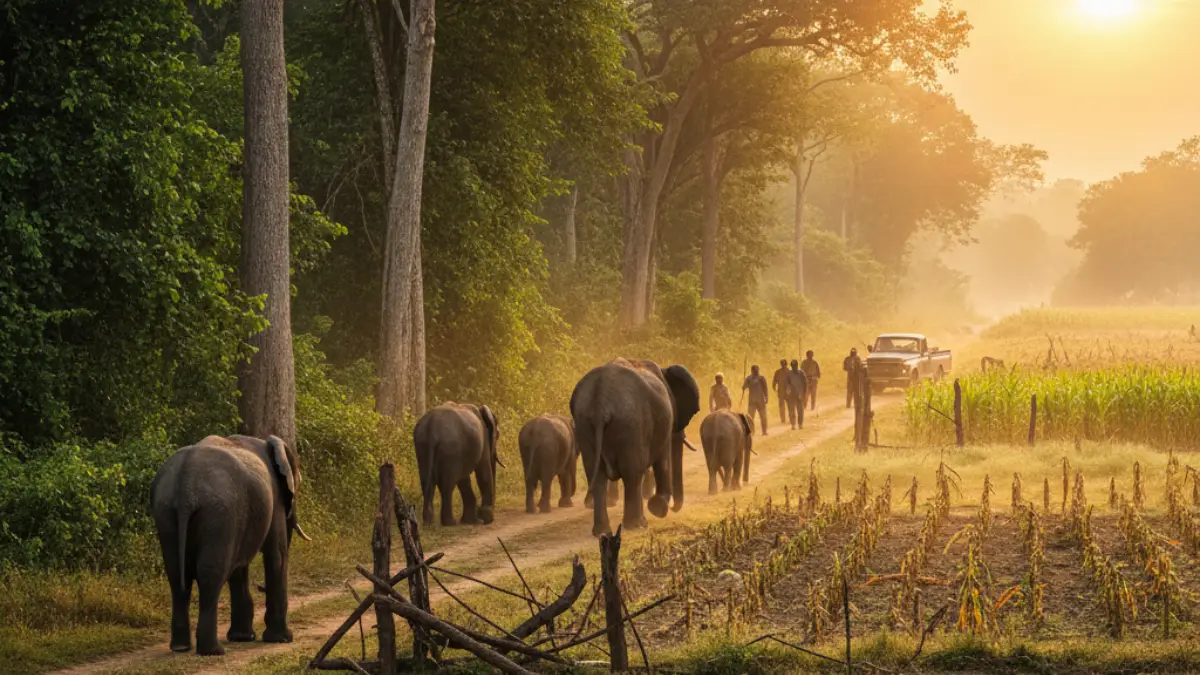
A bold conservation push to protect and restore more than 100000 elephants across Africa is being celebrated as a landmark effort to heal damaged ecosystems. Supporters say the initiative could revive forests, boost biodiversity, and reverse decades of wildlife decline. However, critics warn that without careful planning, the plan may trigger ecological damage and serious human consequences.
As Africa’s elephant population slowly recovers in certain regions, the debate highlights a deeper question: Can large-scale conservation succeed without harming people and landscapes along the way?
100000 Elephants as “Ecosystem Engineers”
Elephants are often described by scientists as ecosystem engineers because of the powerful role they play in shaping natural environments. As they move through forests and grasslands, elephants uproot shrubs, knock down old trees, and disperse seeds over long distances through their dung.
Conservationists argue that restoring elephant populations can help:
- Open dense forests and allow sunlight to reach new plant growth
- Improve seed dispersal for dozens of tree species
- Create habitats for birds, insects, and smaller mammals
- Restore natural ecological cycles disrupted by poaching
Supporters believe that bringing elephants back to landscapes where they once thrived could strengthen Africa’s forests and help ecosystems adapt to climate change.
A Rapidly Expanding Conservation Strategy
The proposed conservation efforts include relocating elephants, expanding protected areas, and reconnecting fragmented habitats through wildlife corridors. Several international organizations and donors see this as a “nature-positive” solution that combines wildlife protection with long-term environmental restoration.
In theory, healthier elephant populations could attract eco-tourism, generate conservation funding, and raise global awareness about Africa’s wildlife heritage.
But conservation on this scale is far more complex than it appears.
Rising Human–Elephant Conflict
For many rural communities, elephants are not symbols of hope — they are a daily threat.
Farmers living near forests and reserves report increasing incidents of elephants:
- Destroying crops overnight
- Damaging homes, wells, and fencing
- Entering villages in search of food and water
In some areas, a single elephant can wipe out an entire season’s harvest in just a few hours. Families often stay awake at night, using noise or fire to scare animals away, risking injury or worse.
Human–elephant conflict has already resulted in injuries, deaths, and deep resentment, particularly where compensation systems are weak or nonexistent.
Ecological Concerns From Scientists
While elephants benefit ecosystems at natural population levels, scientists warn that placing too many animals into limited or fenced areas can backfire.
Ecologists point out that:
- High elephant densities can strip bark from trees and prevent forest regeneration
- Continuous trampling can compact soil and damage water sources
- Overbrowsing may reduce plant diversity instead of increasing it
In restricted landscapes where elephants cannot migrate freely, their natural behavior may accelerate forest degradation rather than restoration.
Experts stress that location, population density, and land size matter just as much as conservation intent.
Communities Left Out of the Conversation
One of the strongest criticisms of large-scale elephant restoration is the lack of local involvement.
Many conservation decisions are made at national or international levels, while the people living closest to wildlife are rarely consulted. These communities often bear the economic and safety costs but receive few direct benefits.
Conservation specialists increasingly argue that successful wildlife protection must include:
- Community participation in planning and decision-making
- Fair compensation for crop and property losses
- Investment in early-warning systems and protective infrastructure
- Shared benefits from tourism and conservation funding
Without local support, even the most ambitious conservation efforts risk long-term failure.
Finding a Sustainable Balance
Saving elephants remains a global priority, but experts agree it cannot be achieved through numbers alone. The real challenge lies in balancing wildlife recovery with human safety, livelihoods, and ecological stability.
As one conservation scientist noted, protecting elephants is not just about saving animals — it is about designing landscapes where people and wildlife can coexist.
The future of Africa’s elephants may depend not on how many are saved, but on how wisely conservation choices are made.