


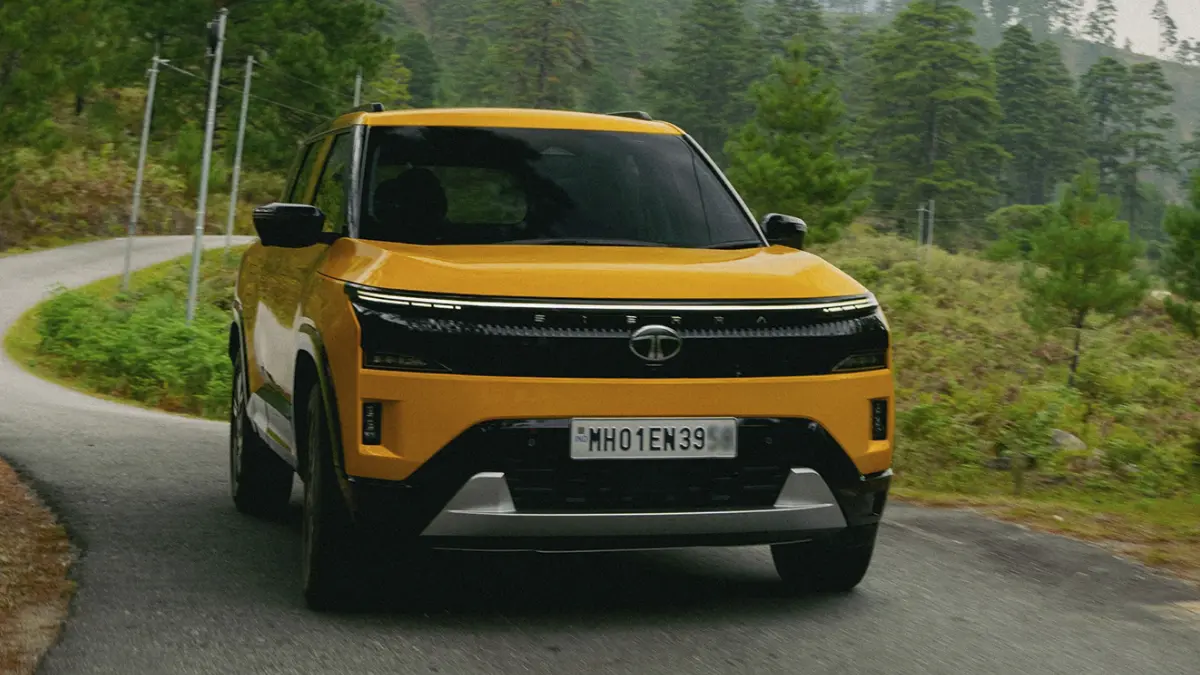


Tata Motors is taking a leap. By partnering with Silicon Valley’s Excelfore, the upcoming Tata Sierra won’t just be a car—it will be a living, breathing tech ecosystem that gets better while parked in your driveway.
Think about your smartphone for a second. When there’s a bug, or when the manufacturer wants to roll out a cool new feature, you don’t take it to a store. You simply plug it in, go to sleep, and wake up to an updated device.
For decades, the automotive industry has struggled to replicate that seamless experience. If your car’s infotainment system glitched or a sensor needed recalibrating, it meant carving out hours of your day for a frustrating visit to the dealership.
But the rules of the game are changing. Tata Motors Passenger Vehicles has officially teamed up with tech giant Excelfore to deploy a massive, production-scale over-the-air (OTA) update and remote diagnostics platform. The star of the show? The highly anticipated new Tata Sierra.
Here is a deep dive into why this partnership is such a big deal—not just for the industry, but for whoever gets behind the wheel.
Beyond the Metal: Welcome to the ‘SDV’ Era
To understand the weight of this news, we have to talk about how cars are built today. Usually, advanced software is slapped onto a vehicle as an afterthought.
The new Tata Sierra flips that script. It has been designed from scratch as a Software-Defined Vehicle (SDV). This means that OTA updates and deep, service-oriented diagnostics aren’t just optional luxury add-ons; they are the very DNA of the vehicle.
What’s particularly fascinating is that this tech isn’t exclusively reserved for electric vehicles (EVs). Shrinath Acharya, CEO of Excelfore, stressed that the Sierra is proof that combustion engine (ICE) vehicles can join the SDV revolution. Through smart OTA orchestration, traditional gas-powered cars can be just as “smart” as their electric counterparts.
Under the Hood Tata Sierra: How the Magic Happens
So, how exactly is Excelfore making this happen? The platform is built on Excelfore’s proven eSync OTA solution and runs smoothly on Amazon Web Services (AWS) IoT Core.
It’s an incredibly robust system designed to handle the heavy lifting of modern automotive computing. Here is what the platform is constantly doing behind the scenes:
- Smart, Sized-Down Downloads: Instead of downloading massive software files that drain bandwidth, the system uses “differential delivery.” It only downloads the exact lines of code that have changed.
- Fail-Safe Updates: We’ve all had a device “brick” during an update. The Excelfore system features automated rollback and recovery. If an update fails halfway through, the car safely reverts to the previous working version.
- Full-Brain Coordination: A modern car has dozens of mini-computers called Electronic Control Units (ECUs) controlling everything from the brakes to the air conditioning. This platform can manage and update multiple ECUs simultaneously without them stepping on each other’s toes.
- A Two-Way Street: The vehicle doesn’t just receive data; it talks back. Continuous cloud-to-vehicle communication allows Tata to monitor the car’s health remotely and proactively spot issues before they leave you stranded.
Breaking Free from the “Walled Garden”
If there is one major takeaway from Tata’s strategy here, it’s their commitment to playing nice with others.
When companies like Tesla pioneered OTA updates, they built completely closed, proprietary systems. Tata Motors is doing the exact opposite. They are heavily relying on open industry standards. Their OTA infrastructure strictly follows the eSync Alliance specifications, and their remote diagnostics use the ASAM Service-Oriented Vehicle Diagnostics (SOVD) standard.
Why does this matter? It prevents “vendor lock-in.” By using open standards, Tata ensures that parts and software from different suppliers can all seamlessly talk to each other. If Tata decides to use a different brake manufacturer five years from now, the software won’t crash. It ensures longevity, keeps manufacturing costs competitive, and ultimately saves the buyer money.
Excelfore is the perfect partner for this open-source mindset. Originally founded in Silicon Valley, their tech is currently keeping over 19 million vehicles globally up to date, working hand-in-hand with major cloud providers like AWS, Azure, and Google Cloud.
What This Means for You, the Driver
Let’s get away from tech jargon for a minute. What does an SDV like the Tata Sierra actually mean for your daily life?
- The End of the Waiting Room: Say goodbye to the dealership waiting room and its stale coffee. Most routine software bugs or diagnostic checks can now be resolved from the cloud while you sleep.
- A Car That Actually Gets Better: Historically, a car is at its absolute best the moment you drive it off the lot. After that, it only degrades. An SDV, however, can appreciate its capability. Tata could push an update next year that improves your fuel efficiency, tweaks the suspension feel, or unlocks a brand-new dashboard feature.
The new Tata Sierra isn’t just a nostalgic revival of a classic nameplate; it is a very clear signal that Tata Motors is ready to lead the charge into the software-defined future.