


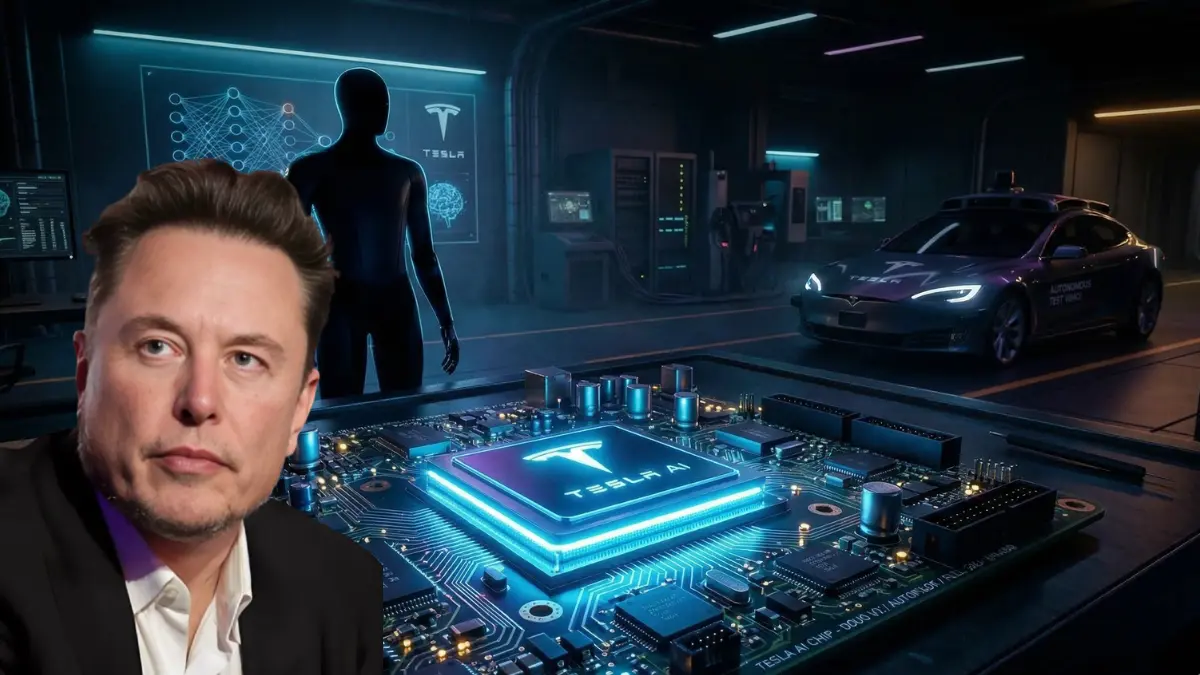


Tesla Ai6: A bold step toward AI-powered vehicles, robots, and data centers
Tesla is once again pushing the boundaries of artificial intelligence. The company’s CEO, Elon Musk, has revealed that Tesla aims to finalize the design of its next-generation AI6 chip by December 2026—a move that could reshape the company’s future in autonomous driving and robotics.
What Makes the AI6 Chip So Important?
The AI6 chip is Tesla’s sixth-generation custom-built AI processor, designed entirely in-house to handle complex artificial intelligence tasks.
Unlike traditional automotive chips, AI6 is being built to power multiple advanced systems, including:
- Full Self-Driving (FSD) technology
- Tesla’s upcoming robotaxi network
- The humanoid robot Optimus
- High-performance AI data centers
This chip is expected to deliver a massive boost in processing power and efficiency, making it one of Tesla’s most ambitious hardware projects to date.
Understanding the December “Tape-Out” Target
Tesla is aiming to reach what’s known in the semiconductor world as the “tape-out” stage by December.
In simple terms, tape-out means:
- The chip’s design is fully completed
- It is ready to be sent for manufacturing
- Any further changes become extremely costly and time-consuming
Hitting this milestone on time is critical. It determines how quickly Tesla can move toward production and deployment.
Interestingly, Musk has hinted that AI itself may help design the chip faster, potentially speeding up development timelines in ways the industry hasn’t seen before.
Strategic Partnership with Samsung
To bring AI6 to life, Tesla is working with Samsung Electronics in a major long-term partnership.
Key highlights of the collaboration:
- A reported $16.5 billion manufacturing agreement
- Use of cutting-edge 2-nanometer chip technology
- Production expected at Samsung’s advanced facilities in Texas
This partnership shows Tesla’s commitment to securing reliable, high-end manufacturing while maintaining control over chip design.
When Will Tesla AI6 Become a Reality?
Even if Tesla meets its December design goal, the journey doesn’t end there. Semiconductor production is a complex, multi-stage process.
Here’s the expected timeline:
- Design finalization: December 2026
- Mass production: Likely in the second half of 2027
- Real-world deployment: Around 2027–2028
This timeline reflects the challenges of manufacturing next-generation chips at scale.
Why AI6 Could Be a Game-Changer
Tesla’s AI6 chip isn’t just about better performance—it’s about strategic independence and future growth.
Powering Full Self-Driving
AI6 could significantly improve Tesla’s autonomous driving capabilities, enabling faster and more accurate real-time decisions on the road.
Advancing Humanoid Robotics
The chip will likely serve as the brain behind Tesla’s Optimus robot, helping it perform complex tasks with greater efficiency.
Reducing Reliance on External Suppliers
By designing its own chips, Tesla can reduce dependence on companies like Nvidia and optimize hardware specifically for its needs.
Supporting AI Infrastructure
AI6 is also expected to play a role in Tesla’s growing AI data centers, which are crucial for training advanced machine learning models.
The Bigger Picture: Tesla’s AI Future
Tesla’s aggressive push into custom silicon highlights a larger industry trend—companies are no longer just software-driven; they are becoming AI-first ecosystems.
With AI6, Tesla is positioning itself not only as an automaker but as a serious player in the global AI race, competing with tech giants across multiple sectors.
Final Thoughts
Tesla’s plan to finalize the AI6 chip design by December signals a bold and calculated move toward the future. While challenges in chip manufacturing and timelines remain, the company’s focus on innovation, vertical integration, and AI-driven development gives it a strong edge.
If everything goes as planned, AI6 could become the foundation for Tesla’s next generation of self-driving cars, intelligent robots, and AI-powered systems—marking a new chapter in the company’s evolution.