


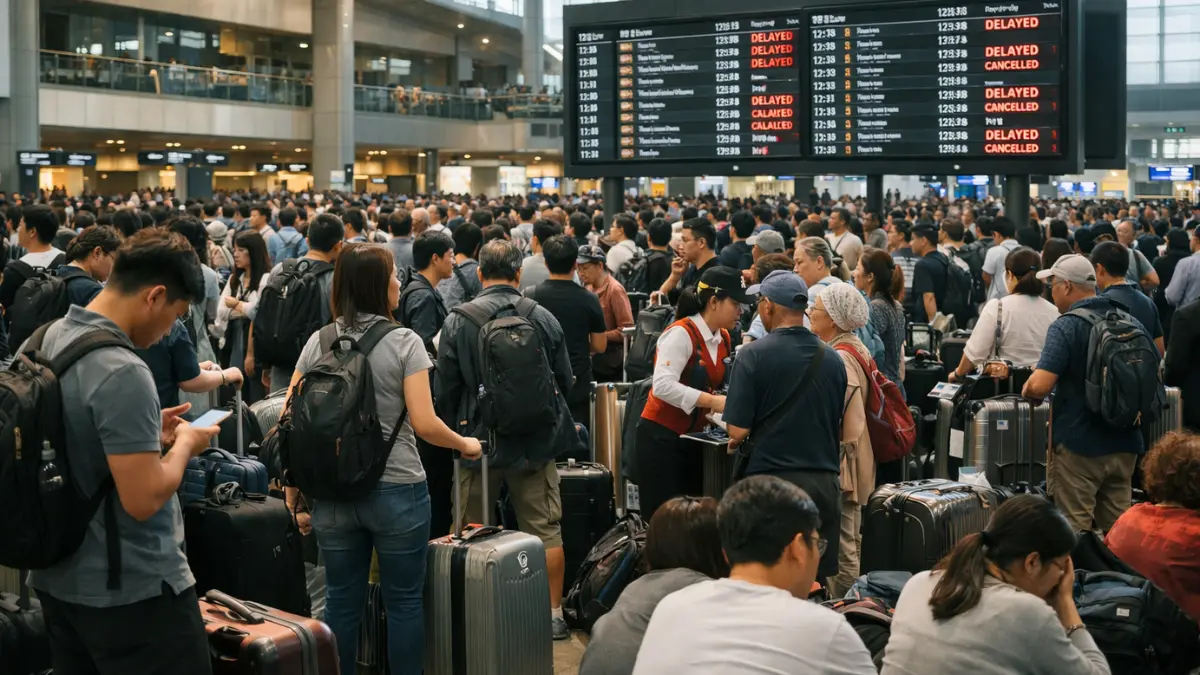


Asia has suffered the brunt of flight disruptions which have stranded thousands of passengers in the region and caused havoc to travel plans. Reportedly, aviation disruption tracking showed that airlines in Thailand, Singapore, Japan, UAE, Hong Kong, India, China and Malaysia had delayed flights of 3,340 and above and had no less than 60 cancellations during a period of operations.
The inconvenience has been experienced in domestic and international services, resulting in long queues at the check-in counters, filled waiting areas, and numerous rebooking cases in the busiest airports in the region.
The Air Travel Network in Asia comes into a Chain Reaction
What started as a few tardy arrivals soon developed into a domino effect on the entire network with delayed arrivals causing delayed departures- affecting connecting flights and creating knock-on disruption in several countries.
There is a high level of interconnection of air travel systems. Delays at large hubs are contagious and spread rapidly, as aircraft rotation schedules and crew duty schedules, and airport slot schedules are affected.
Major Countries and Airports That Are Most Affected
The interference has been reported in various major aviation centers with lots of traffic such as:
India
There was severe congestion at major airports in India with the Indira Gandhi international airport in Delhi being one of the worst hit. There were late departures and connection disruptions to several services affecting passengers going to Southeast Asia, Middle East and East Asia.
Singapore
Singapore Changi Airport, which is among the most significant international transit stations in Asia, experienced hundreds of delays, which affected the travellers who have flights to Australia, Europe, and the Middle East significantly.
UAE
In Dubai, major delays and cancellations were also witnessed at the international airport. As the city of Dubai is used as a transit station by the world, delays in this city normally impact on the intercontinental flights.
Japan
Disruption was noted in the airports of Japan including Tokyo Haneda. Japanese airports are frequently susceptible to chain delays at the busiest times of the year, due to winter operational pressures and tight schedules.
Hong Kong
The Hong Kong International Airport had also a high number of delays that affected regional flights and long-haul flights.
Other airports said to have been affected are Kuala Lumpur, Shanghai Hongqiao, Phuket and Urumqi, indicating the broad geographical distribution of the disruption.
Airlines Straining Under Pressure
Delays are Spreading
There were various airlines that were subjected to operational pressure within the window of the disruption. According to the report, there were delays in major carriers (high frequency routes) in the Asian region, which included:
- Cathay Pacific
- Emirates
- Singapore Airlines
- Air India
- IndiGo
- China Southern Airlines
- Japan Airlines / ANA
Large-scale delays are as harmful as cancellations, even in the case where they are not extensive, causing missed connections, baggage hold-ups, and schedule unbalances in the aircraft.
Hundreds of Flights Cancelled Because of Why
Although each of the individual airlines might have had other problems, industry analysts note that there are usually common culprits of such massive disruptions as this:
1) High Passenger Load
Asia is experiencing high travelling demand particularly during weekends and holiday periods. When timetables are tight, the situation may result in overcrowding of the airport within a short duration.
2) Tight Flight Scheduling
A lot of airlines work with a near-maximization of aircraft utilization. This means that there is very little buffer time in between arrivals and departures- in other words a single defective flight can cause delays of several services.
3) Crew Duty Limitations
In cases where delays are too long, the pilots and cabin crew might exceed the legally stipulated duty-time limits which compels airlines to proceed with further delays or cancel flights unless the replacement crew is on board.
4) Ground Handling and Airport Slots Bottlenecks
The operations can be slowed down even at major hubs even when flights are ready due to limited runway slots, gate availability, and baggage handling capacity.
Customers Report Lengthy Waits, Disorientation and Rebooking Pressure
To travellers the inconvenience amounted to:
- Lengthy queues at airports.
- Unexpected closing and opening of gates and late boarding announcement.
- Missed connecting flights
- Problem with telephone access to support lines of airlines.
- Mixed up rebooking and compensation policies.
The immigration regulations, expenses of transit hotels and visa restrictions in case of unplanned overnights especially hit many passengers travelling internationally.
What Travelers Should Do in the Case of a Delayed Flight or Cancelled Flight
In the event that you are affected by such inconveniences, travel advisors suggest:
Check official sources
Avail airline applications and airport websites instead of using third-party trackers.
Find other solutions in advance
In case of a major delay in the flight, demand alternate routing as soon as possible the sooner the better, the more likely you have a chance to secure seats.
Keep proof of expenses
Keep receipts of meals, taxis or hotels. A lot of airlines reimburse costs that meet the requirements based on the cause of delay and the terms of ticket purchase.
Know your rights
Pay is based on country and airline policy. Regulations can be based on the country of departure and registration of airline in case of international trips.
Bigger Picture: Aviation Expansion in Asia Meets the Reality of Operations
This interference is a sign of an increasing problem that is becoming the pace of rising air travel demands in Asia compared to capacity, in certain areas.
Airports and airlines have to strike a balance as the thousands of passengers increases:
- fleet availability
- crew strength
- maintenance scheduling
- airport infrastructural constraints.
- operating weather and season disturbances.
According to experts, enhanced contingency planning, enhanced communication equipment, and increased ground staffing will be major to ensuring that the aviation system in Asia remains resilient in 2026 and beyond.
Conclusion
Having more than 3,340 delays and at least 60 cancellations in major hubs, the recent disruption episode demonstrates how easily the aviation network in Asia can be affected when several points of pressure coincide at once.
To travellers, real-time tracking, bookings flexibility and prompt re bookings is best security especially when it comes to international connections.