


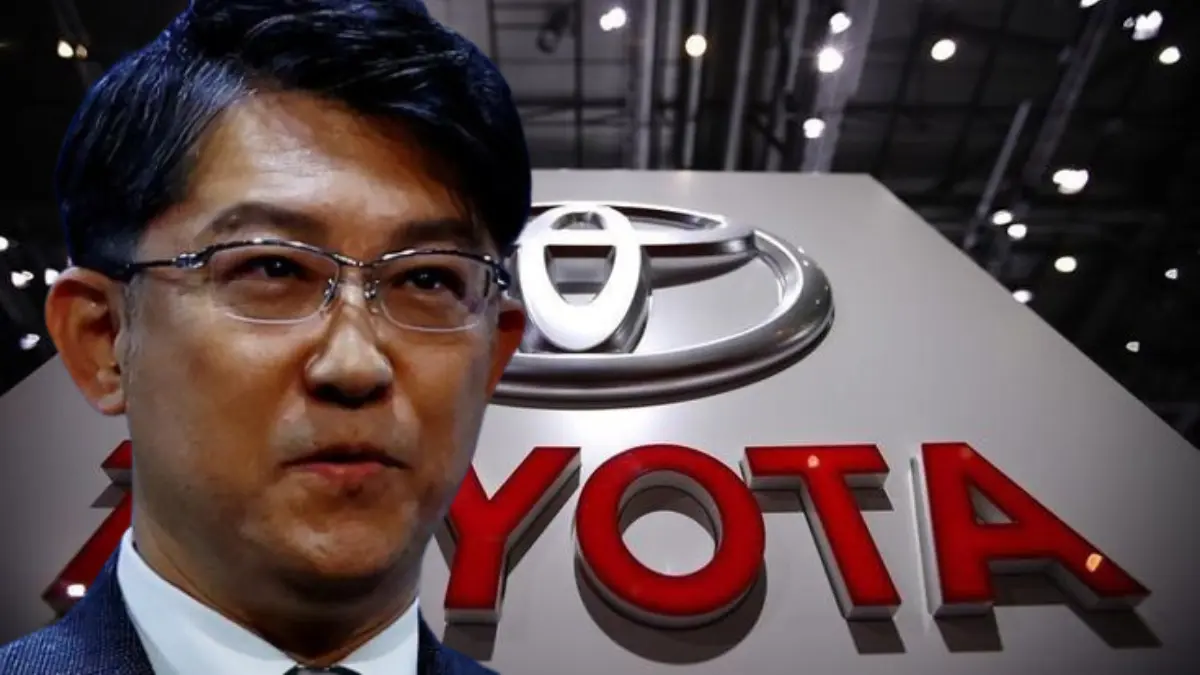


Toyota Ceo Sato Warning: World’s Largest Carmaker Signals Urgent Need for Change
A Record Year—But Not a Comfortable One
Toyota Motor Corporation has once again proven its dominance by topping global car sales charts for the sixth year in a row. On paper, everything looks strong—millions of vehicles sold, steady profits, and unmatched global reach.
But behind the success, a very different message is emerging from the company’s leadership.
Instead of celebrating, Toyota’s top executives are raising concerns about the future—warning that the company’s long-term survival is not guaranteed.
A Rare and Honest Toyota CEO Sato Warning
Koji Sato, the outgoing CEO, delivered a surprisingly direct message to stakeholders. He emphasized that the automotive industry is undergoing a massive shift, and even the strongest players are not immune.
His warning was simple but powerful:
If the company does not adapt quickly, it risks falling behind.
For a brand known for stability and long-term planning, this kind of statement signals just how serious the situation has become.
Also Read: 2026 Toyota Fortuner Render Reveals Bold New Look Based on Spy Shots
The Electric Vehicle Race Is Intensifying
One of the biggest challenges Toyota faces today is the rapid rise of electric vehicles (EVs)—especially from competitors in China.
Chinese automakers are moving fast with:
- Affordable EV models
- Advanced battery technology
- Quick innovation cycles
While Toyota has long focused on hybrid technology, the global shift toward fully electric vehicles is accelerating faster than expected. This puts pressure on the company to rethink its strategy and move quicker in the EV space.
A Changing Industry, Not Just a Trend
The auto industry is not just evolving—it is transforming.
Today’s cars are no longer just machines; they are becoming software-driven platforms. Features like:
- Connected services
- Autonomous driving
- Over-the-air updates
are redefining what consumers expect.
For traditional manufacturers like Toyota, this means competing not only with car companies but also with tech-focused players entering the mobility space.
Supply Chain Pressure and Internal Challenges
Toyota’s strength has always been its efficient production system and strong supplier network. However, recent disruptions have exposed weak points.
The company is now pushing for:
- Faster production cycles
- Better coordination with suppliers
- More flexibility in operations
These changes are essential to keep up with the fast-moving global market.
Profit Today vs. Survival Tomorrow
Despite strong profits, Toyota faces a difficult balancing act.
On one side:
- Heavy investments in EVs and new technologies
- Rising global competition
- Increasing regulatory pressure
On the other:
- The need to maintain profitability and shareholder confidence
This tension between short-term success and long-term survival is at the heart of Toyota’s current strategy.
Leadership Change Reflects a New Direction
The company has announced a leadership shift, with Koji Sato stepping aside to make way for new management.
This move is seen as a step toward:
- Stronger financial discipline
- Faster decision-making
- A more aggressive approach to future technologies
Leadership changes often signal deeper transformation—and Toyota appears ready for one.
The Bigger Reality: No One Is Safe
Toyota CEO Sato warning is not just about one company—it reflects a global industry shift.
Even the world’s largest carmaker is acknowledging that:
- Market leadership can change quickly
- Innovation speed matters more than size
- Adaptation is no longer optional
This is a defining moment not just for Toyota, but for the entire automotive world.
Final Thoughts
Toyota CEO Sato warning message is clear: success today does not guarantee success tomorrow.
The company has the resources, experience, and global presence to stay on top—but only if it evolves at the pace the industry now demands.
In a world driven by electrification and technology, survival will depend on how fast even giants can move.