


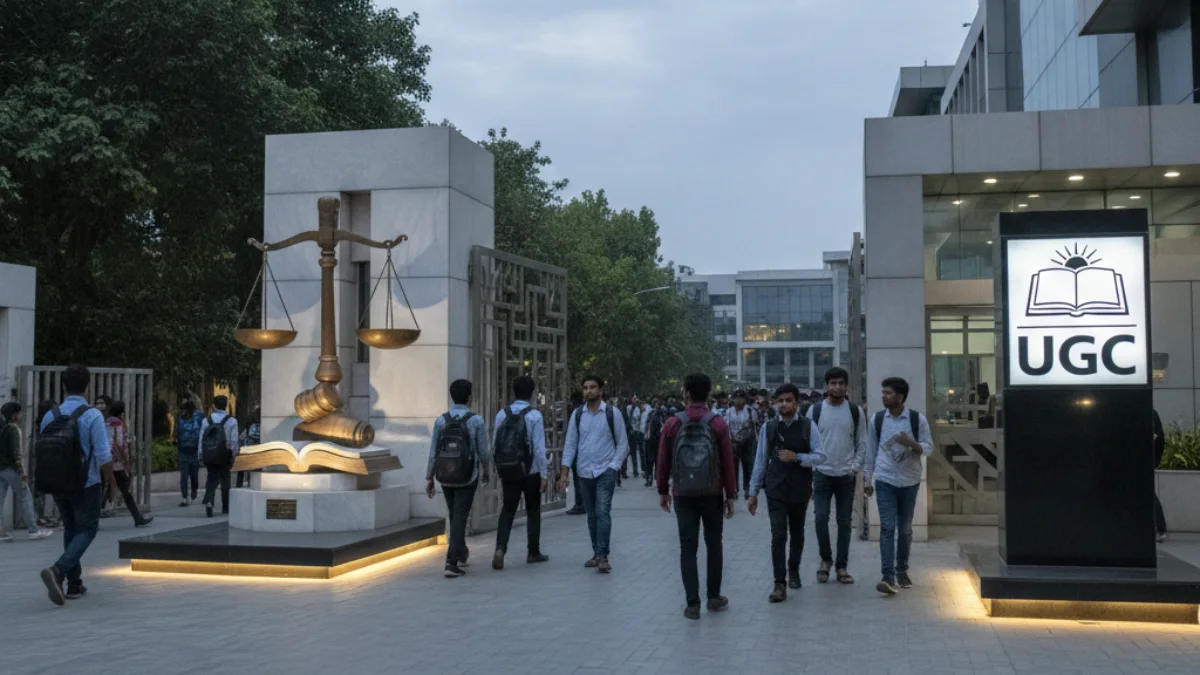


The proposed new UGC Guidelines aimed at curbing campus discrimination have been challenged in the courts but advocates of caste-neutral rules argue that they will undermine protection of the marginalized students.
Another legal and social controversy has sprung out concerning the UGC Equity Regulations 2026 issued by the University Grants Commission (UGC) when the Supreme Court suspended their application after being petitioned against on the basis that the regulations are unilateral and can be misused.
But the people who assisted in the formation of these guidelines claim it is the reverse: these regulations never were supposed to be caste-neutral, as discrimination in Indian campuses is not caste-neutral in real life.
Lawyer and activist Disha Wadekar, who has been part of the campaign to support such rules, discussed in an interview why a caste-neutral policy would make the rules meaningless, and unable to tackle the institutional character of caste-based discrimination in higher education.
What Are The UGC Guidelines 2026?
The UGC has recently proposed the Promotion of Equity in Higher Education Institutions Regulations, 2026 with an aim of establishing a more robust law that can discourage discrimination in universities and colleges.
The rules aim at establishing institutional protection like:
- Institutional equity Committees.
- Equal opportunity centres (EOCs).
- Better-defined complaint and inquiry procedures.
- Clear roles to be played by universities to have a safe learning environment.
According to those who support this, this has been long overdue considering that the current mechanisms that were in place did not always react positively to the complaint of discrimination.
Caste-Neutral Argument Is Being Overshadowed
The main opposition is the way in which the regulations identify caste discrimination.
The regulations are mainly aware of caste-based discrimination against:
- Scheduled Castes (SC)
- Scheduled Tribes (ST)
- Other Backward Classes (OBC)
In this definition, petitioners have claimed that it is unfair since not all communities are represented in the same fashion- particularly students that belong to the general group.
They allege that this puts a reverse discrimination case and is against constitutional equality.
Defense Counsel Position: Discrimination Is not Equal in Society
The basic argument of Wadekar is the following:
A caste-neutral law assumes discrimination affects everyone in the same way—but India’s caste system does not operate equally.
She argues that caste discrimination is a structural and historical fact and not interpersonal strife. She says that the rules of the UGC were tailored to overcome this imbalance.
She clarified that once the rules are made caste-neutral then they would lose their meaning since there are already general grievance rules that any student can use if he or she is harassed, bullied or treated unfairly.
Why UGC Rules Need To Be Defended, According To Its Supporters
According to social justice organizations and student activists, the regulations have been heavily defended as:
- Campus-based discrimination is not a theoretical thing.
Students belonging to marginalised groups of people are generally prejudiced against in:
- grading
- hostel access
- lab opportunities
- classroom humiliation
- social exclusion
Caste neutral laws are sometimes regarded as a balanced language by their supporters, but in reality they undermine the protection of those groups which experience systemic disadvantage.
Opposition Voices: ‘Risk of Misuse’ and One Sided Protection
Critics and petitioners assert, on the contrary, that:
- The laws are subject to abuse to resolve individual conflicts.
- definitions may be too broad
- institutions might develop the fear of disciplinary action.
- complaints might wrongly target students.
According to them, the UGC Rules needs to guarantee:
- stronger due process
- guarantees against spurious charges.
- equality in the eyes of the law of everyone in the school.
The Bigger Picture: Equity vs Equality in Indian Education
The question that stands in the center of this discussion is larger:
Should the law apply equally to all or unequal realities?
Proponents argue that the UGC rules constitute equity, i.e., specific safeguarding of the population which has been historically deprived of just access.
Opponents demand formal equality in which all groups are treated equally before the law.
The final ruling by the Supreme Court is expected to influence the establishments of Indian institutions to define discrimination, inclusion, and the rights of students in the coming years.
What Happens Next?
For now:
- UGC Equity Regulations 2026 are still in place.
- Universities have to be guided by previous guidelines.
The Supreme Court will determine:
- rules may be pursued as they are,
- require amendments,
- or be replaced entirely.
To date, the regulations have been a hotspot in the education policy of India, that borders on law, identity, campus reality and constitutional interpretation.
Bottom Line
This is the advocate of these regulations to argue that caste-neutral rules can be heard as just, but in a caste-based society, its neutrality usually turns into a different kind of denial. It is now up to the Supreme Court to determine whether to be identity blind in the law- or recognise it to help bring justice.