


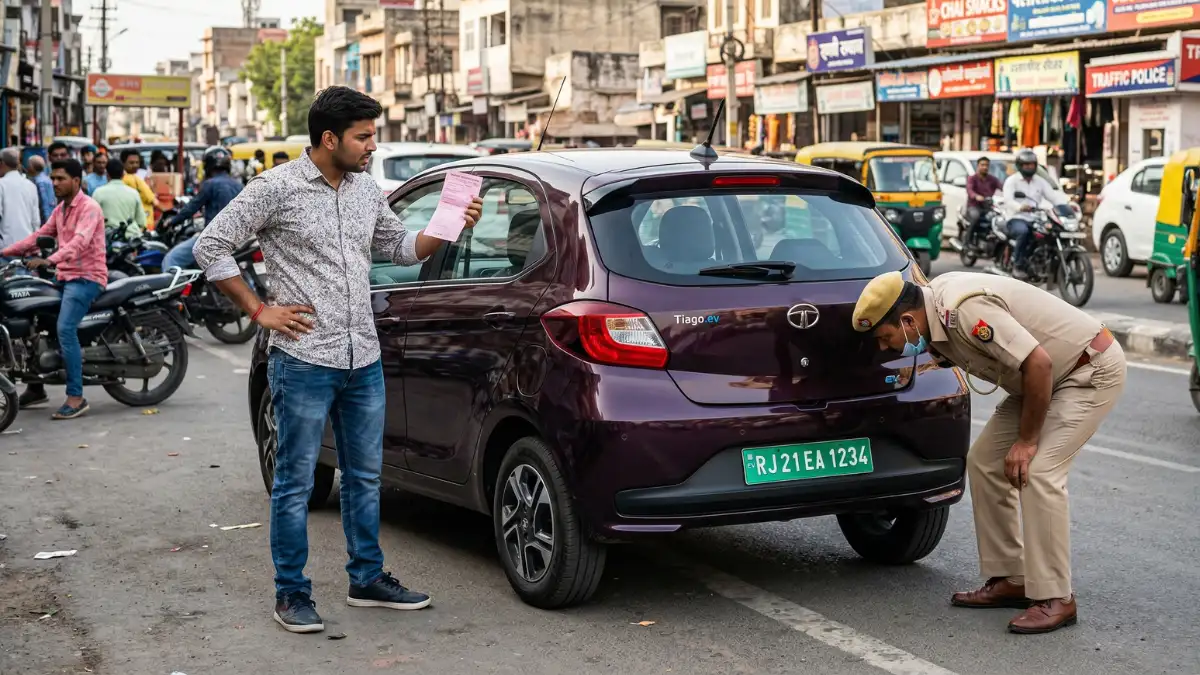


Tata Tiago EV: Imagine doing your part for the environment. You invest in an electric vehicle, wave goodbye to the gas pump, and cruise around knowing your car produces zero tailpipe emissions. Now, imagine getting pulled over by traffic police and being handed a penalty for—you guessed it—failing a pollution check.
It sounds like a comedy sketch, but for one electric vehicle owner in India, it was a highly frustrating reality. A recent video capturing this bizarre encounter has gone viral across social media, sparking a mix of outrage, amusement, and a serious debate about how our traffic enforcement systems are struggling to keep pace with modern technology.
Here is a closer look at what happened, why these system glitches are occurring, and what you need to know if you find yourself in the same absurd situation.
Tata Tiago EV Roadside Standoff in Rajasthan
The viral incident, which reportedly took place in the Nagaur district of Rajasthan, unfolded during a routine traffic stop. In the video clip, the owner of a Tata Tiago.EV is seen engaged in a heated back-and-forth with local traffic police.
The core of the dispute? The officer demanded to see the vehicle’s Pollution Under Control (PUC) certificate.
Naturally, the driver argued that his car is entirely battery-powered. It doesn’t run on petrol or diesel, it doesn’t burn combustible fuel, and most importantly, it literally lacks an exhaust pipe. Despite the logical explanation, the situation escalated, the fine was issued, and the internet was quick to jump on the sheer irony of a “green” car being penalized for pollution.
The Science vs. The System
To understand how a zero-emission vehicle gets flagged for emissions, we have to look past the humor and examine the administrative machinery behind traffic enforcement.
Legally and scientifically, electric vehicles do not require a PUC certificate. The Ministry of Road Transport and Highways (MoRTH) mandates PUCs specifically to measure carbon monoxide and hydrocarbon outputs from internal combustion engines (ICE). Since EVs run on lithium-ion battery packs and electric motors, producing these gases is physically impossible.
So, why did the officer issue the ticket? The issue boils down to three main systemic flaws:
- Legacy Enforcement Habits: For decades, the checklist for a traffic stop has been drilled into officers: License, Registration, Insurance, and PUC. With the rapid influx of EVs on the road, ground-level training hasn’t always caught up. When a car like the Tata Tiago Ev—which exists in both traditional petrol and electric variants—rolls up, visual identification can sometimes fail.
- Database Disconnects: Traffic authorities rely heavily on digitized databases like Vahan. If a Regional Transport Office (RTO) makes a clerical error during a vehicle’s initial registration—perhaps forgetting to explicitly categorize its fuel type as “Electric”—the system automatically treats it as a standard fuel-burning car.
- Algorithmic Blind Spots: Many modern fines are issued via Automated Number Plate Recognition (ANPR) cameras. If the software lacks a robust override filter for green-plate vehicles, the algorithm will simply scan the plate, see a missing PUC record, and dispatch a fine without human oversight.
What to Do If You Get a “Ghost” Fine
While this incident happened in Rajasthan, similar mix-ups have been reported across the country as the EV transition accelerates. If you are an tata tiago EV owner and suddenly find a pollution challan attached to your registration, here is the best way to handle it:
1. Don’t escalate on the road: If an officer insists on writing the ticket despite your explanations, accept it calmly. Arguing on the shoulder of a busy road rarely resolves administrative glitches and only raises tempers.
2. Take the dispute online: Head to the official Parivahan e-Challan portal. Do not pay the fine, as paying it serves as an admission of guilt.
3. File a formal grievance: Submit a dispute against that specific ticket number. You will need to upload a clear copy of your vehicle’s Registration Certificate (RC). Ensure the section listing your fuel type as “Battery/Electric” is clearly visible.
4. Wait for the auto-cancellation: Transport authorities are increasingly aware of these teething problems in the system. Once a grievance officer reviews your RC, these erroneous fines are almost always canceled without further hassle.
Growing Pains in a Greener World
The viral “tata tiago EV pollution fine” is a humorous, if slightly annoying, symptom of a society in transition. As governments push aggressively for electric mobility to combat climate change, the digital infrastructure and the personnel enforcing the rules must evolve just as quickly.
Upgrading our automated systems to recognize and filter out green-license plates from emissions compliance checks is a necessary next step. Until those software patches and training updates are fully rolled out, tata tiago EV owners might just have to treat these bizarre encounters as a quirky badge of honor in the shift toward a greener future.