
CX: The early 1990s were an absolute high-water mark for car enthusiasts. It was a unique, fleeting moment in time where old-school analog purity crashed headfirst into the dawn of high-tech digital chassis management, twin-turbocharging, and obsessive Japanese engineering.
To really appreciate how much the ground shifted back then, we dug deep into the archives to revisit one of the most legendary four-way comparison tests ever staged in the twisty backroads of the Carolina hill country: The 1992 cars Chevrolet Corvette, the Lotus Elan, the Mazda RX-7, and the Nissan 300ZX Turbo.
Here is exactly how that high-stakes battle shook out once the tire smoke cleared, and why this specific era still captures our collective imagination today.
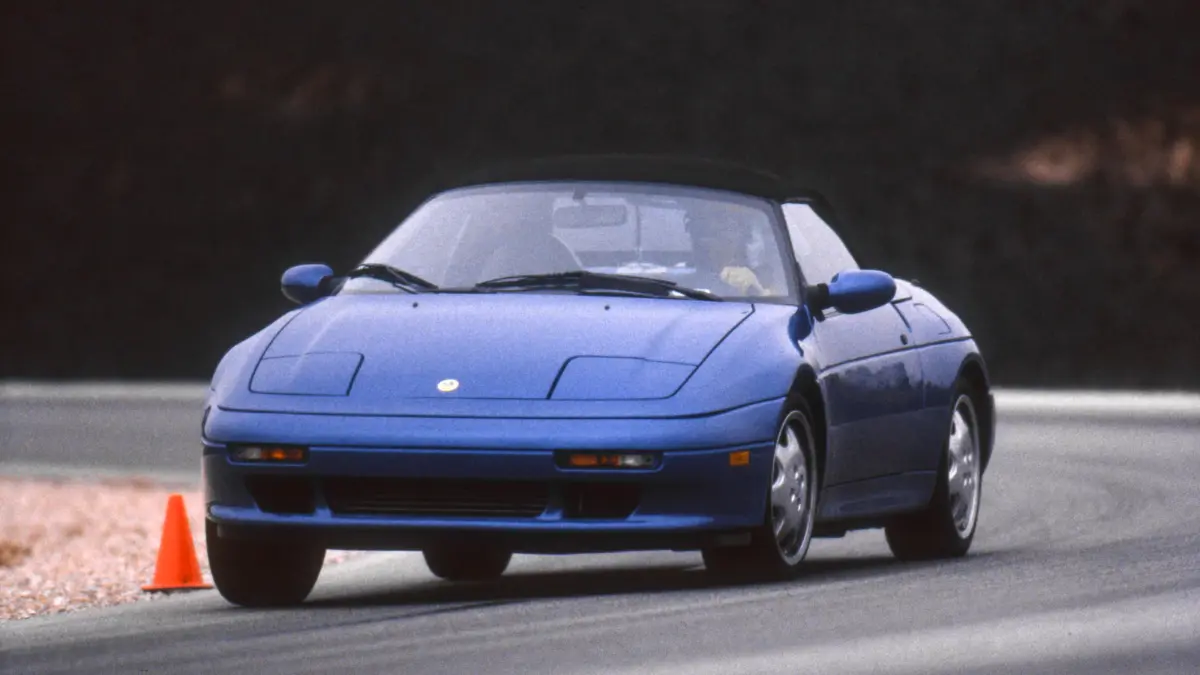
THE 4TH PLACE CONTENDER: LOTUS ELAN (THE RARITY QUOTIENT)
- The Highs: Head-turning turbo-doorstop styling, an effortless drop-top experience, and a remarkably slick shifter.
- The Lows: A buzzy four-cylinder soundtrack, a premium price tag, and less raw muscle than its rivals.
The Lotus Elan stood out as the odd-one-out for a lot more reasons than just its British pedigree. Tipping the scales at a featherweight 2,452 pounds—a staggering 350 pounds lighter than the next-lightest Mazda—the Elan prioritized the traditional lightweight approach to going fast.
Powered by an Isuzu-sourced, turbocharged 1.6-liter four-cylinder engine, its most controversial trait was its front-wheel-drive layout. While purists initially scoffed, the suspension wizards at Hethel worked absolute magic. On the road, it proved to be a nimble, corner-carving roadster that rarely betrayed its front-drive architecture. With only about 300 units sold in the U.S. at the time, it won the crown for pure rarity and visual intrigue, even if it lacked the sheer muscle needed to climb higher on the podium.
THE 3RD PLACE CONTENDER: CHEVROLET CORVETTE C4 (AMERICAN BIG IRON)
- The Highs: A high-torque, muscle-bound V-8, surprisingly compliant optional electronic suspension, and timeless chiseled looks.
- The Lows: Massive, awkward rocker sills that make entry a chore, microscopic analog gauges, and a cabin prone to creaks over rough pavement.
The 1992 Corvette represented the classic, unyielding American philosophy: there is no substitute for displacement. Everything about the C4 felt oversized compared to its import rivals—boasting a massive 5.7-liter LT1 V-8 engine pushing 300 horsepower, immense 275-series Goodyear Eagle GS-C tires, and a body footprint nine inches longer than the nimble Nissan.
On the drag strip, the Corvette reigned supreme, rocketing through the quarter-mile in a blistering 13.6 seconds at 104 mph, making it the quickest straight-line car of the group. The updated LT1 engine pulled aggressively all the way to its 5,500-rpm redline while singing an unmistakable V-8 exhaust note. However, despite generating immense lateral grip on the skidpad, the Corvette suffered on real-world roads. Its stiff chassis tended to tramline in truck grooves, and the interior refinement simply couldn’t match the sophistication of its Japanese peers.
THE RUNNER-UP: MAZDA RX-7 FD (THE PURIST’S WEAPON)
- The Highs: Feels incredibly lean, mean, lightweight, and absolutely born to dance on a racetrack.
- The Lows: An unforgivingly harsh ride quality, highly complex sequential turbo plumbing, and tight cockpit quarters.
In 1992, Mazda threw down the gauntlet by making the third-generation (FD) RX-7 smaller, lighter, and more powerful than the car it replaced. It was a masterclass in compromise-free sports car design. Stripped of unnecessary gimmicks, the FD RX-7 focused entirely on driver connection and lightweight agility.
Its sequential twin-turbocharged rotary engine delivered power with a razor-sharp response, and its low center of gravity made it an absolute weapon on twisty asphalt. It wanted to rotate, it loved to rev, and it looked like a million dollars. What kept it from the top spot wasn’t its performance, but its singular focus; as a daily driver, the uncompromisingly stiff suspension and cramped interior made it a pretty taxing companion for long-distance road trips.
THE CHAMPION: NISSAN 300ZX TURBO (THE PINNACLE OF THE SEGMENT)
- The Highs: Blistering twin-turbo velocity, surgical handling precision, and exceptional grand-touring hospitality.
- The Lows: A hefty curb weight (3,501 lbs) and a notoriously crowded, complex engine bay.
Securing its crown as a multi-time comparison test winner, the Nissan 300ZX Turbo represented the absolute zenith of the sports-car art form in 1992. Nissan’s flagship was a tour de force of technology, utilizing a 3.0-liter twin-turbocharged, 24-valve V-6 engine alongside the advanced “Super HICAS” four-wheel steering system.
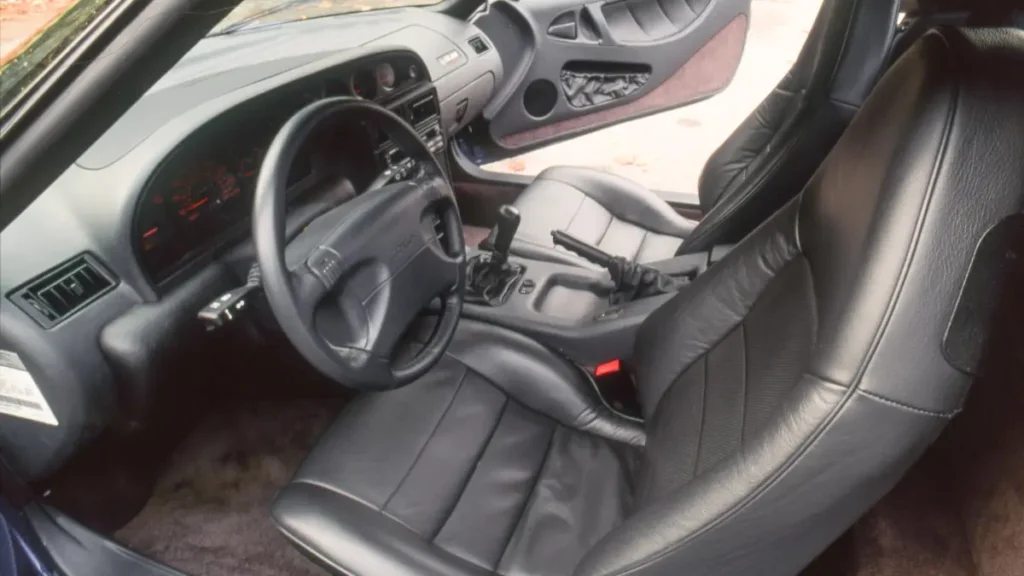
Unlike older turbocharged cars that suffered from sudden boost lag, the Z built its power with seamless, progressive urgency, pulling all the way to a computer-limited top speed of 153 mph. Despite weighing a hefty 3,501 pounds, the 300ZX masked its mass beautifully, displaying unmatched stability through the corners. Combined with an isolated, rattle-free cabin, excellent grand-touring comfort, and world-class steering precision, it proved that a sports car could offer exotic-level performance without sacrificing everyday luxury.
PERFORMANCE BREAKDOWN AT A GLANCE
- Nissan 300ZX Turbo: 3.0L Twin-Turbo V-6 | 300 hp | 14.1 sec @ 99 mph (1/4 Mile) | The Ultimate All-Rounder
- Mazda RX-7 (FD): 1.3L Twin-Rotor Turbo | 255 hp | 14.0 sec @ 100 mph (1/4 Mile) | The Pure Track Weapon
- Chevrolet Corvette: 5.7L LT1 V-8 | 300 hp | 13.6 sec @ 104 mph (1/4 Mile) | The Straight-Line Muscle
- Lotus Elan: 1.6L Turbo Inline-4 | 162 hp | 15.0 sec @ 93 mph (1/4 Mile) | The Agile Maverick
CONCLUSION: WHY THIS BATTLE STILL MATTERS TODAY CX
Looking back at this 1992 showcase reminds us of a time when manufacturers took radically different paths to achieve automotive excellence. Chevrolet relied on displacement and massive tire contact patches. Lotus bet on low mass and unique front-drive packaging. Mazda chased engineering purity through rotary power and weight reduction. Nissan conquered all by fusing high-tech chassis electronics with twin-turbocharged sophistication.
While modern sports cars boast double the horsepower, they often lack the distinct sensory experiences provided by this legendary class of ’92. The Nissan 300ZX Turbo won the day because it refused to compromise on performance or daily livability—a formula that remains the gold standard for sports cars today.