
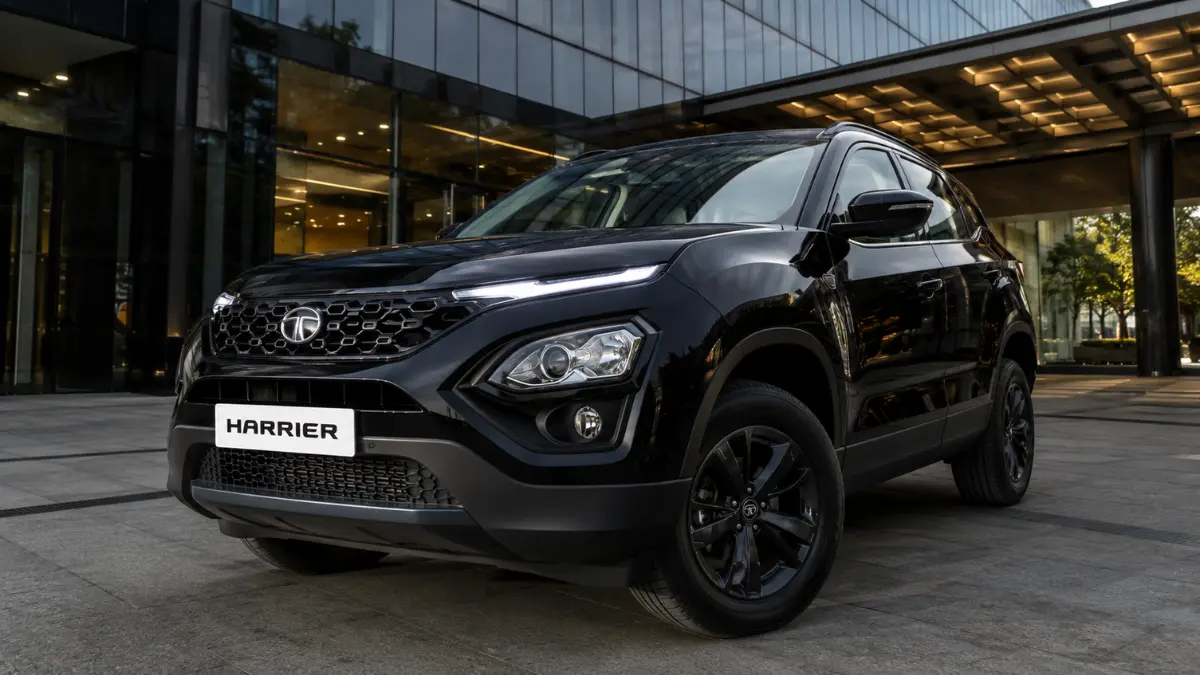
2022 Tata Harrier: Purchasing a flagship SUV should feel like a major milestone, but for one buyer in Himachal Pradesh, it quickly transformed into a stressful saga of highway breakdowns and recurring mechanical issues.
In a landmark decision, a regional Consumer Disputes Redressal Commission has ruled heavily in favor of the consumer. It ordered Tata Motors to either provide a brand-new, defect-free replacement vehicle or fully refund the purchase price of a 2022 Tata Harrier, citing undeniable proof of an inherent factory defect.
2022 Tata Harrier Case
When a Premium Dream SUV Becomes a Nightmare
The dispute traces back to May 2022, when Dr. Krishan Lal Kapoor, a resident of Palampur, took delivery of a premium Tata Harrier XZA+ Dark Edition from JKR Motors Pvt Ltd. The vehicle carried a premium price tag of ₹21,40,775.
Trouble started almost immediately. Within the first 1,000 kilometers, the SUV developed severe steering wheel vibrations and a strange knocking noise. While the dealership replaced the power steering assembly under warranty, it was only a temporary fix for a much deeper issue.
The breaking point arrived on the highway. In August 2023, while traveling along the Hamirpur-Sujanpur highway, the Harrier’s timing belt snapped out of nowhere. The engine lost all power instantly, leaving Dr. Kapoor and his family stranded on the roadside for hours waiting for a tow truck.
The vehicle was repaired and returned, only for history to repeat itself. In March 2024, at just 26,700 kilometers, the replacement timing belt snapped again, killing the engine mid-drive and leaving the family stranded a second time.
Smoking Gun: The Independent Engineering Report
Faced with repeated failures, the matter went before the consumer commission. Tata Motors and its dealership fought back against the “lemon car” claims. Their primary defense was that because the car had successfully driven over 30,000 kilometers total, it couldn’t possibly suffer from an inherent manufacturing defect. They argued that any component wear was likely due to driving style and local road conditions.
To get to the truth, the commission appointed an independent automotive expert to examine the engine layout. The engineer’s technical findings ultimately dismantled the manufacturer’s defense:
- Life Expectancy: Under normal driving conditions, a standard automotive timing belt is engineered to last anywhere from 90,000 km to 100,000 km.
- The Real Defect: Going through two separate timing belt failures before even crossing the 30,000 km mark is structurally anomalous.
- The Root Cause: The expert discovered that a vital timing bracket assembly was misaligned straight from the factory. Because this base structure was crooked, it subjected every replacement belt to extreme, uneven friction, causing them to shred prematurely.
Since the manufacturer could not provide any equivalent engineering data to disprove the expert’s report, the commission accepted the alignment defect as hard fact.
The Commission’s Ruling: Breaking Down the Payout
The consumer commission pulled no punches in its final assessment, explicitly stating that no customer can be forced to drive a vehicle that is “structurally defective and potentially life-threatening.”
Because a snapped timing belt can instantly lock up an engine at high speeds—potentially causing catastrophic multi-car accidents—the court ruled that simple warranty patches were no longer acceptable.
The court laid down a strict financial mandate for Tata Motors:
| Penalty Breakdown | Legal Terms & Payouts |
| Main Remedy | Supply a brand-new, defect-free replacement of the same or upgraded Harrier model OR issue a full cash refund of ₹21,40,775. |
| Accrued Interest | If the cash refund option is taken, Tata must pay 9% annual interest, calculated from the exact day the complaint was first filed. |
| Mental Agony Damages | ₹100,000 compensation for the harassment and dangerous highway situations the family faced. |
| Legal Costs | ₹15,000 to cover the consumer’s private court and litigation fees. |
Why This Case Matters to Every Car Owner
This ruling is a massive victory for consumer advocacy across the automotive landscape. For years, manufacturers have shielded themselves behind the fine print of a standard warranty, arguing that as long as they keep replacing broken parts for free, they have fulfilled their legal obligation.
This decision sets a vital counter-precedent: if a vehicle has a fundamental engineering flaw built into its chassis or engine block from day one, patching the symptoms over and over again isn’t enough. When a vehicle proves to be inherently unsafe, the consumer has every legal right to reject the car completely.