


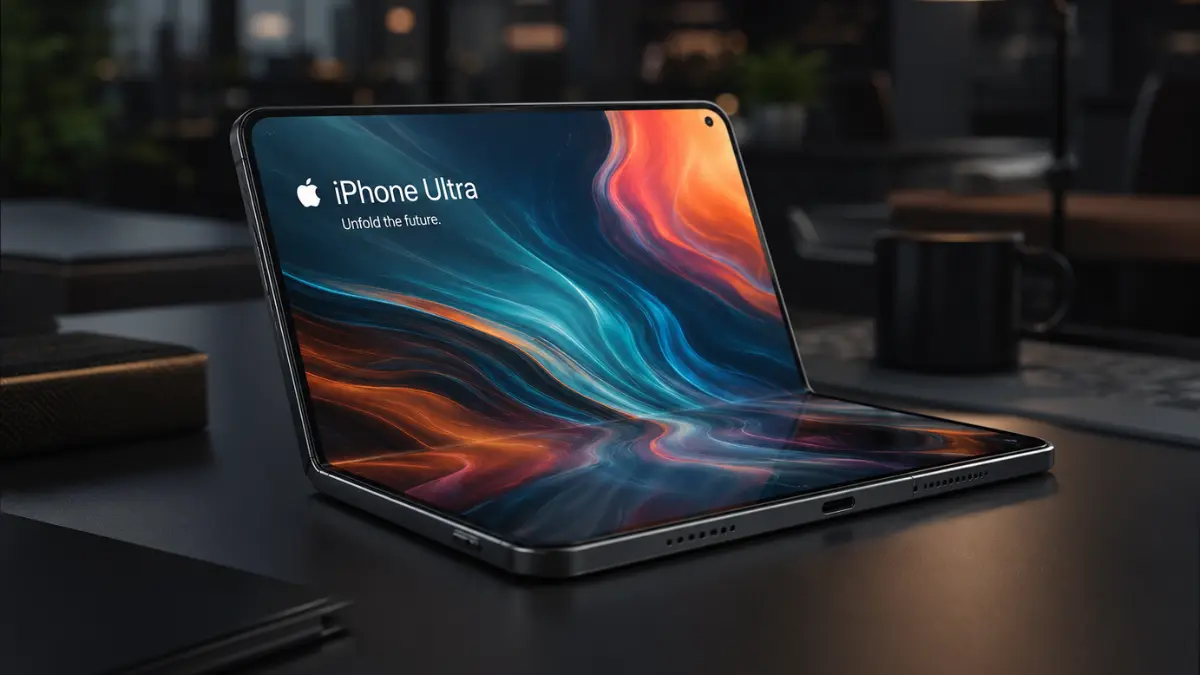


Apple iPhone Ultra: In 2026, Apple is finally expected to step into the ring with its heavily rumored first foldable, widely referred to as the iPhone Ultra.
Waiting to defend the crown is Samsung’s next-generation powerhouse: the Galaxy Z Fold 8 Wide.
While both of these devices are targeting the absolute premium tier of the market, they are bringing completely different philosophies to the table. If you are holding out for your next major smartphone upgrade, here is a deep dive into how these two upcoming titans compare.
Two Completely Different Design Philosophies
If there is one thing that sets these two giants apart right out of the gate, it is how they are approaching the physical build of a folding phone.
Samsung is playing the refinement game. With years of real-world testing under its belt, the Galaxy Z Fold 8 Wide is expected to take everything great about the Fold series and polish it further. Leaks suggest a much thinner overall body, a wider, more traditional front-cover display (hence the “Wide” moniker), and a reinforced hinge built for everyday abuse.
Apple, on the other hand, is playing the perfection game. Reports from the supply chain indicate that Apple has delayed its entry into the foldable space specifically to solve the industry’s biggest annoyance: the screen crease. The iPhone Ultra is rumored to feature a virtually invisible display crease, a highly complex titanium chassis, and an ultra-slim profile that feels completely seamless in the hand.
The Display Wars Apple iPhone Ultra
When you are buying a foldable, you are paying for the screens. Both companies are pushing display technology to the absolute limit, but they are prioritizing different screen experiences.
| Feature | Galaxy Z Fold 8 Wide | Apple iPhone Ultra |
| Inner Display | ~8.2-inch Dynamic AMOLED | 7.8-inch Flexible OLED |
| Cover Display | Wider, traditional phone aspect ratio | 5.5-inch standard aspect ratio |
| Refresh Rate | 120Hz LTPO | 120Hz ProMotion |
| Primary Focus | Maximizing workspace | Eliminating the center crease |
Under the Hood: Power and Performance
Both of these devices will be absolute beasts when it comes to performance, though they achieve that power in very different ways.
Samsung’s Galaxy Z Fold 8 Wide is expected to house Qualcomm’s next flagship Snapdragon processor. Because Samsung heavily promotes the Fold as a multitasking, desktop-replacement device, expect it to be packed with up to 16GB of high-speed RAM to keep dozens of apps running smoothly side-by-side.
Apple’s iPhone Ultra will almost certainly be powered by a next-generation Apple Silicon chip. Apple rarely competes on raw RAM numbers; instead, they rely on the tight integration between their custom hardware and iOS to deliver incredibly smooth, power-efficient performance.
The Camera Experience
Foldables have historically lagged slightly behind traditional flagship phones in the camera department due to space constraints, but that gap is closing rapidly.
Samsung is expected to equip the Z Fold 8 Wide with a massive 200-megapixel primary sensor, flanked by a high-end ultrawide and a dedicated telephoto lens. It is a versatile setup designed to capture everything from sweeping landscapes to detailed zoom shots.
Apple’s camera details are still heavily guarded, but industry insiders expect a premium multi-lens array that mirrors the current iPhone Pro lineup. More importantly, Apple is expected to lean heavily into AI-powered image processing and computational photography to pull breathtaking details out of a thinner camera module.
Software and the AI Frontier
Hardware is only half the story. The true deciding factor for most users will be what happens when you turn the screen on.
Samsung’s One UI is arguably the most mature foldable software on the market today. It offers a desktop-style taskbar, brilliant multi-window support, and full integration with the S-Pen. Combine that with a newly expanded suite of Galaxy AI features—like real-time translation and advanced photo editing—and it becomes a true productivity machine.
Apple’s challenge is adapting iOS for a folding canvas. Reports indicate that Apple is redesigning how multitasking and app continuity work specifically for the iPhone Ultra. When you move an app from the front screen to the inner display, the transition will be completely fluid. Furthermore, the iPhone Ultra will serve as a massive showcase for the next evolution of Apple Intelligence, deeply integrating AI into how you write, work, and communicate.
The Verdict: Which One Should You Wait For?
Even though they will likely launch at similarly astronomical price points, these two phones are built for very different people.
- You should wait for the Galaxy Z Fold 8 Wide if: You are a power user who wants a proven, highly customizable productivity machine that seamlessly bridges the gap between a phone and a tablet.
- You should wait for the Apple iPhone Ultra if: You are deeply embedded in the Apple ecosystem and want a flawlessly designed, premium status device where hardware and software just work together seamlessly, without a crease in sight.
Whichever side of the fence you sit on, 2026 is shaping up to be the most exciting year for smartphone design in over a decade.