
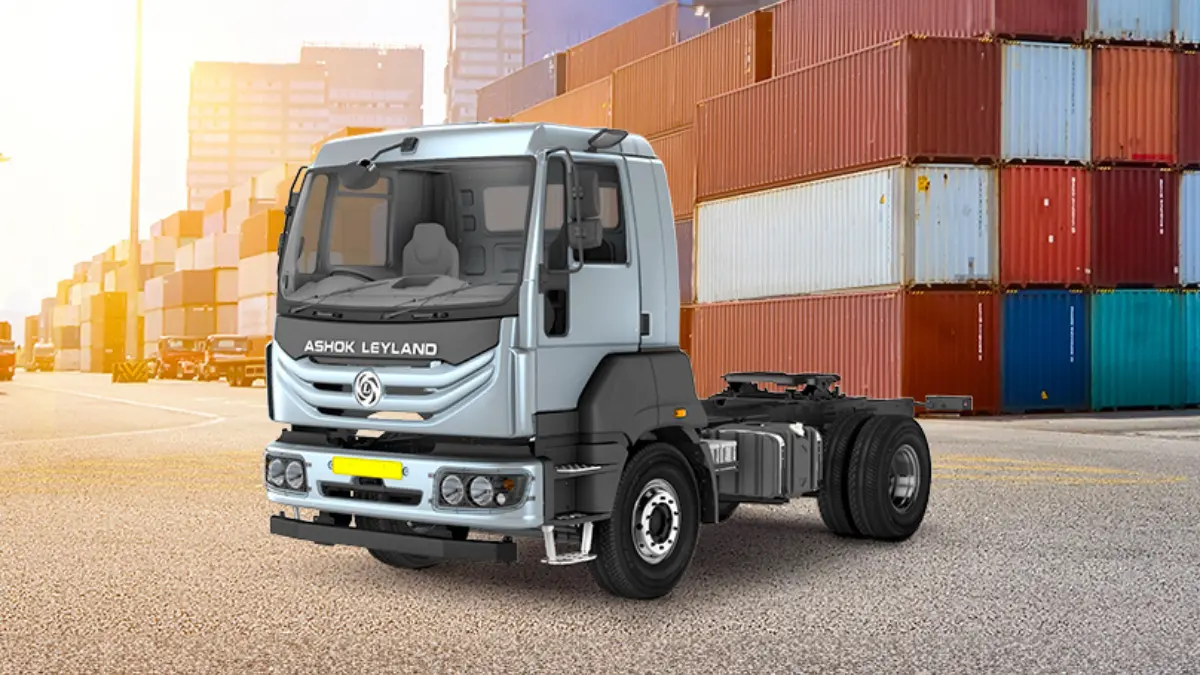
In the face of mounting geopolitical uncertainty in West Asia, Indian automotive giant Ashok Leyland is sending a clear message to the markets: it is business as usual. While many global players are treading cautiously, the Chennai-based manufacturer has signaled a robust expansion strategy, backed by resilient demand in the Gulf and a fresh wave of product innovation.
Resilience in the Gulf: Demand Holds Firm
Despite the complex geopolitical landscape currently unfolding, Ashok Leyland reported that its order books in the Gulf Cooperation Council (GCC) markets remain untouched. Amandeep Singh, President of LCV, International Operations, and Defense at Ashok Leyland, addressed the elephant in the room during a recent media briefing, noting that the company has seen zero order cancellations.
“The demand in Middle East countries is very strong and continues to hold,” Singh confirmed. While the company acknowledged that production at its Ras Al Khaimah (RAK) facility in the UAE dipped slightly in March due to “logistic issues” in sourcing components, the sentiment remains overwhelmingly positive. The company views these as temporary supply-side hurdles rather than a fundamental shift in market appetite.
A Strategic Footprint in Saudi Arabia
Perhaps the most significant signal of long-term commitment is Ashok Leyland’s move to establish a new assembly plant in Saudi Arabia. This isn’t just about capacity; it’s about proximity. By diversifying its manufacturing base beyond the RAK hub, the company is insulating itself against regional supply chain shocks and positioning itself at the heart of the Kingdom’s growing industrial sector.
The logic is simple: the shorter the distance between the plant and the customer, the faster the “bounce back” after a disruption. With most components shipped from India, the company expects to normalize operations within days once local logistics stabilize.
Also Read: The BMW Slowdown: What the 3.5% Sales Dip Tells Us About the Global Economy
The Innovation Edge: The ‘Twin-Fuel’ Revolution
The headline of the week, however, is the technical evolution of the Light Commercial Vehicle (LCV) segment. Ashok Leyland has officially pulled the wraps off the Twin-Fuel variants of its popular DOST and DOST+ XL models.
In an era where fuel price volatility can make or break a small business, these vehicles offer a strategic escape hatch. The dual-system allows operators to switch seamlessly between CNG (Compressed Natural Gas) and Petrol. This hybrid approach doesn’t just lower the carbon footprint; it eliminates “range anxiety,” allowing drivers to venture into areas where CNG infrastructure might still be thin on the ground.
The Shift to Green: Looking Toward FY27
The timing of this launch is no coincidence. Ashok Leyland is coming off a powerhouse FY26, boasting a record revenue of ₹11,534 crore. As the company enters FY27, it is pivoting toward a future that is increasingly electric and versatile.
Singh noted that the current global energy climate might actually fast-track the world’s transition to Electric Vehicles (EVs). With its subsidiary, Switch Mobility, already securing a dominant market share in the 2-to-4-tonne category, Ashok Leyland is effectively playing both sides of the coin—perfecting internal combustion flexibility today while leading the EV charge for tomorrow.
The Road Ahead
For investors and industry watchers, the takeaway is clear: Ashok Leyland is not just reacting to the market; it is anticipating it. By combining aggressive regional expansion with a pragmatic approach to fuel technology, the company is building a roadmap that is as resilient as the trucks it manufactures.
- Analyzing the Surge: Why Indian CV Manufacturers are Winning in the GCC
- Switch Mobility: The Silent Revolution in Urban Freight
- Saudi Vision 2030: A Catalyst for the Global Automotive Supply Chain