


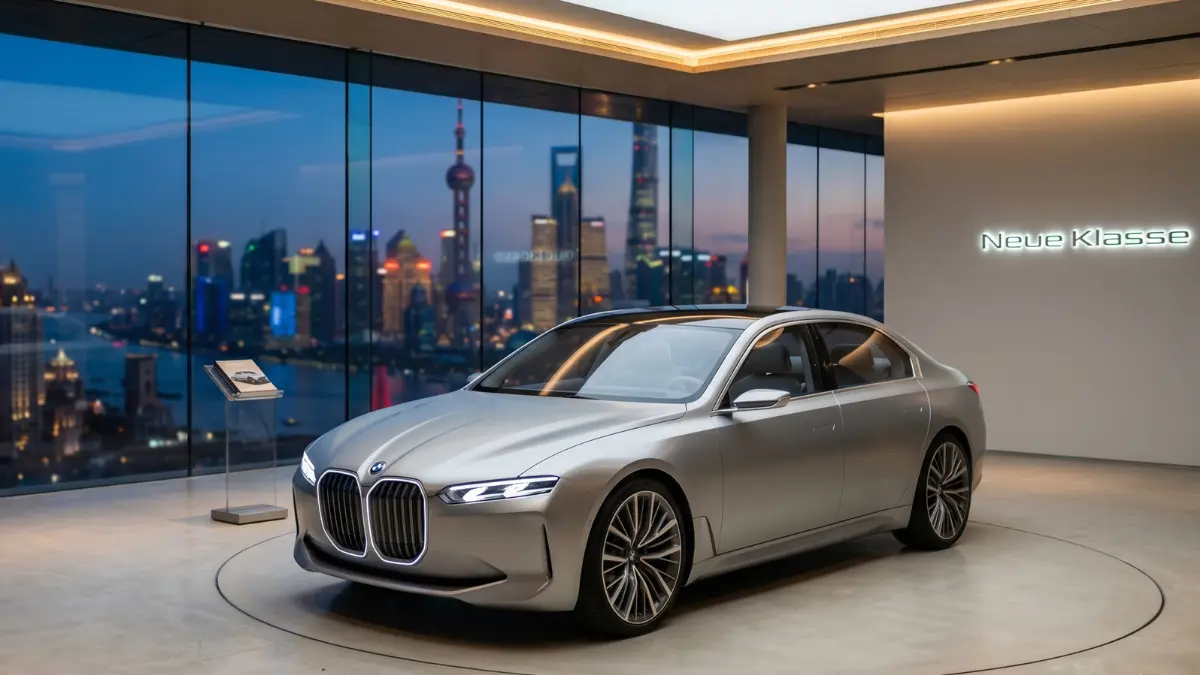


For years, the BMW roundel has been a symbol of aspirational success and engineering consistency. However, the latest Q1 delivery reports have sent a ripple of caution through the automotive world. With a 3.5% drop in global deliveries, the story isn’t just about cars; it’s a reflection of a world economy in flux.
BMW Slowdown
The China Crisis: A Cultural Shift in Luxury
The most striking figure in the report is the 10% decline in the Chinese market. For decades, China was the “golden goose” for German luxury. But something fundamental has changed.
Modern Chinese consumers—particularly the younger demographic—no longer value heritage and “exhaust notes” as much as they value digital integration. While BMW’s driving dynamics remain world-class, they are facing fierce competition from local tech-giants-turned-automakers. In Beijing and Shanghai, a car is now seen as a “mobile living room,” and the German giants are sprinting to catch up to the software-first approach of their Eastern rivals.
The U.S. Market: High Rates and Hesitation
In the United States, deliveries dipped by 4.3%. Here, the culprit is less about technology and more about the “cost of money.” With interest rates remaining stubbornly high, even the premium buyer is feeling the pinch.
The luxury market is often the “canary in the coal mine” for broader economic health. When the upper-middle class begins to delay their trade-ins or lease renewals, it suggests a broader cooling of consumer confidence across the Atlantic.
The EV Paradox: Why Electrification hit a Speed Bump
Perhaps the most sobering statistic is the 20.1% slump in Battery Electric Vehicle (BEV) sales.
For the past three years, EVs were the growth engine for BMW. However, we are entering the “Early Majority” phase of adoption, where consumers are more skeptical than the “Early Adopters.” Issues like charging infrastructure anxiety and the removal of government subsidies in several key markets have led to a temporary plateau. BMW is now tasked with a difficult balancing act: staying committed to an electric future while keeping their profitable combustion engines alive to satisfy a hesitant public.
Also Read: Why Indian Luxury Car Buyers are Ditching Petrol for BMW EVs
The Expert’s Take: Is the “Neue Klasse” Enough?
BMW is currently in a “bridge year.” They are transitioning toward the Neue Klasse—a complete reimagining of their vehicle architecture set to debut soon.
Why this matters for you:
- The Investment Perspective: Investors are looking past these quarterly dips, focusing instead on whether BMW can maintain its high profit margins despite lower volumes.
- The Consumer Perspective: If you are in the market for a luxury vehicle, expect more aggressive financing offers and dealership incentives as brands fight to regain their lost market share.
The Human Element: More Than Just Robots
Behind these cold percentages are thousands of workers in Munich, Spartanburg, and Shenyang. A 3.5% dip means production shifts are being recalibrated and supply chains are being tightened. BMW’s leadership has signaled that they will not engage in a “race to the bottom” price war, choosing instead to protect the brand’s prestige.
It is a high-stakes game of poker. BMW is betting that their brand power can survive a temporary downturn until their next generation of technology is ready to reclaim the throne.
Market Data Summary:
- Total Deliveries: 565,748 units
- Europe Growth: +3% (A lone bright spot)
- Stock Reaction: Minimal (Market had already priced in the China slowdown)