
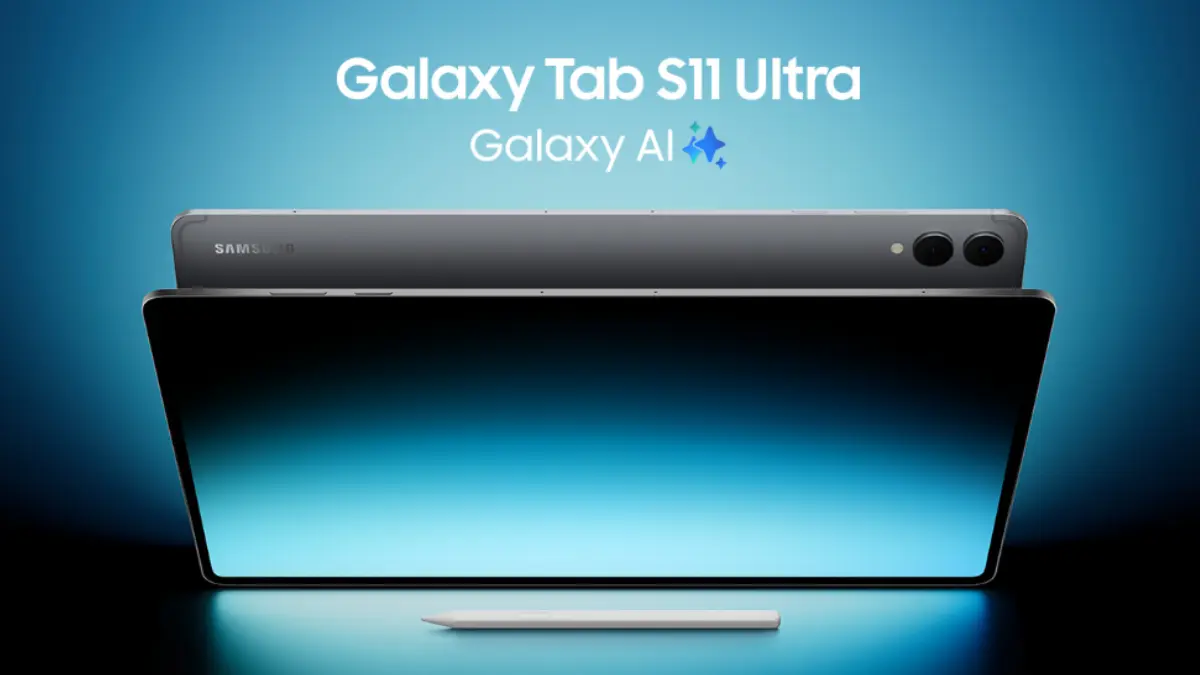
Galaxy Tab: For years, if you wanted a premium tablet experience without bowing to the “Apple Tax,” Samsung was the undisputed hero. You got the gorgeous OLED screen, the S Pen included in the box, and a file system that didn’t feel like a locked room.
But as we settle into 2026, something has changed. Samsung has quietly bumped the entry price of its flagship Galaxy Tab S11 to a staggering $900. Suddenly, the “Apple Tax” doesn’t look so expensive anymore. In fact, for the first time in a decade, Apple might actually be the better value.
Sticker Shock: Crunching the Numbers
$900 for a base-model tablet is a tough pill to swallow. While it’s true that Samsung still bundles the S Pen—a move we still applaud—the math no longer favors the Galaxy.
Apple’s 11-inch iPad Air starts at $600. Even if you factor in the $129 for an Apple Pencil Pro, you’re still walking away with nearly $170 in your pocket compared to the Samsung. If you’re a professional who needs the best of the best, the M4 iPad Pro starts at $1,000. For just $100 more than the Samsung, you’re getting a chip that can literally edit 8K video without breaking a sweat.
Performance: MediaTek Vs M-Series Giant
Samsung has opted for the MediaTek Dimensity 9400+ this year. Don’t get us wrong—it’s a fast chip. In daily use, you won’t notice a lag. But when you’re paying nearly a thousand dollars, “good enough” isn’t the standard.
Apple’s silicon, particularly the M2 in the Air and the M4 in the Pro, is in a different league. It’s the difference between a high-performance sports car and a jet engine. For heavy-duty tasks like professional illustration, video rendering, or high-end gaming, the iPad simply offers more “headroom” for the years to come.
Screen Savior: Samsung’s Last Stronghold
If there is one area where Samsung still makes the iPad look like a relic, it’s the display. The Galaxy Tab S11 features a Dynamic AMOLED 2X panel that is, frankly, breathtaking. The blacks are absolute, and the colors pop in a way that the iPad Air’s standard LCD simply cannot match.
If your primary use for a tablet is watching movies on a flight or editing high-contrast photos, Samsung still holds the crown. It’s also impressively thin at 5.5mm, making it feel like a piece of high-tech glass in your hand.
“Pro” Software Gap In Tab
Hardware is only half the story. The real value of a “Pro” tablet lies in what you can do with it. While Android has made strides, One UI 8.0 still feels like a giant phone.
Apple, meanwhile, has courted developers relentlessly. From Final Cut Pro to Logic and DaVinci Resolve, the iPad has a suite of “Desktop-class” apps that are optimized for touch. Samsung has DeX mode, which is great for productivity, but it often feels like a workaround for an OS that wasn’t built for a 11-inch screen.
Final Thoughts: Who is the S11 For?
We hate to say it, because competition is good for everyone, but the Galaxy Tab S11 is in a crisis of identity. It’s priced like a luxury professional tool but lacks the software ecosystem to back it up against the iPad.
- Buy the Tab S11 if: You are a media junkie who needs the best OLED screen possible, or you are deeply invested in the Samsung ecosystem and “DeX” is your primary way of working.
- Buy the iPad if: You want the best performance-per-dollar, a library of professional apps, and a device that will likely hold its resale value far longer.
Samsung used to be the “smart money” choice. In 2026, the smart money might just be going to Cupertino.