


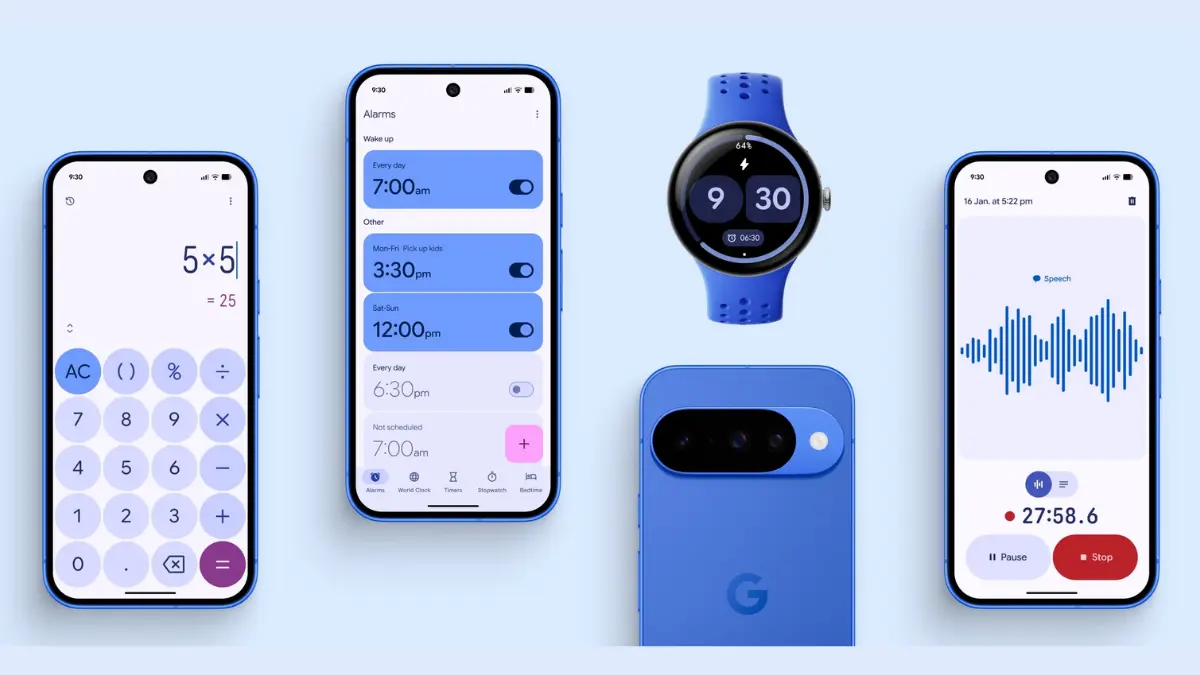


Google Pixel 11 Pro: Google is finally moving on from its niche thermometer experiment, replacing it with a new hardware feature that might actually be useful.
For the past few years, the back of Google’s flagship phones has featured a curious little circle that didn’t take photos. The infrared temperature sensor, first introduced on the Pixel 8 Pro, was a classic “Google-y” experiment: ambitious, slightly weird, and ultimately, a feature in search of a purpose.
According to a series of credible leaks detailing the Pixel 11 Pro design, that experiment is officially reaching its end of life. Google is reportedly stripping the sensor from its 2026 lineup to make way for a hardware pivot that feels far more in tune with what users actually want.
A Solution in Search of a Problem
When the thermometer debuted, it arrived in a post-pandemic world where health tracking was at the forefront of everyone’s mind. Google eventually jumped through the regulatory hoops to get FDA clearance for human skin temperature readings, but by the time the software caught up, the world had moved on.
In practice, the sensor was a novelty. Whether it was checking if a baby’s bottle was too hot or measuring the pavement before a dog walk, the use cases were niche. Most users simply forgot it existed. By removing it, Google isn’t just simplifying its supply chain; it’s admitting that internal space in a smartphone is too valuable to waste on “nice-to-have” sensors that don’t drive daily engagement.
Enter the ‘Pixel Glow’: A Flashy New Successor On Google Pixel 11 Pro
The space left behind in the iconic camera bar isn’t going to stay empty. Internal documentation suggests Google is replacing the sensor with “Pixel Glow.”

Unlike the invisible IR sensor, Pixel Glow is designed to be seen. Sources describe a ring of high-output LEDs surrounding the new sensor array. While it draws immediate comparisons to the “Glyph” interface found on Nothing’s handsets, Google’s implementation appears more focused on photography.
What Pixel Glow brings to the table:
- Adaptive Fill Light: A softer, more natural light source for macro and portrait photography than a standard harsh flash.
- Status Pulsing: Subtle light patterns for notifications, timers, or Google Assistant “listening” states when the phone is face-down.
- The “Pro” Identity: Early renders suggest this feature will be exclusive to the Pixel 11 Pro, Pro XL, and Pro Fold, further widening the gap between the standard and Pro models.
Why This Shift Matters
This move signals a refreshing shift in Google’s hardware philosophy. For years, the Pixel line felt like a playground for engineers to test quirky ideas. Now, we are seeing a more mature Google—one that is willing to kill off underperforming features in favor of “Lifestyle Tech.”
Pixel Glow is social. It’s visual. It’s something you can show a friend at a dinner table. In the hyper-competitive world of premium smartphones, “cool” often outsells “utility,” and Google seems to have finally accepted that.
Under the Hood: What Else to Expect?
While the removal of the sensor is the headline-grabber, the Pixel 11 Pro is shaping up to be a significant internal overhaul. The move to the Tensor G6 is the real story for performance nerds, as it marks a transition to a more efficient manufacturing process that should finally solve the Pixel’s long-standing thermal throttling issues.
We’re also hearing whispers of a refined “Satin Finish” glass and a display that could potentially set new records for outdoor visibility.
Bottom Line
The temperature sensor will likely go down in history alongside the Soli radar chip from the Pixel 4—a bold idea that never quite found its footing. If the trade-off for losing a thermometer is a more capable camera light and a more efficient processor, most Pixel fans will likely consider that a fair bargain.