


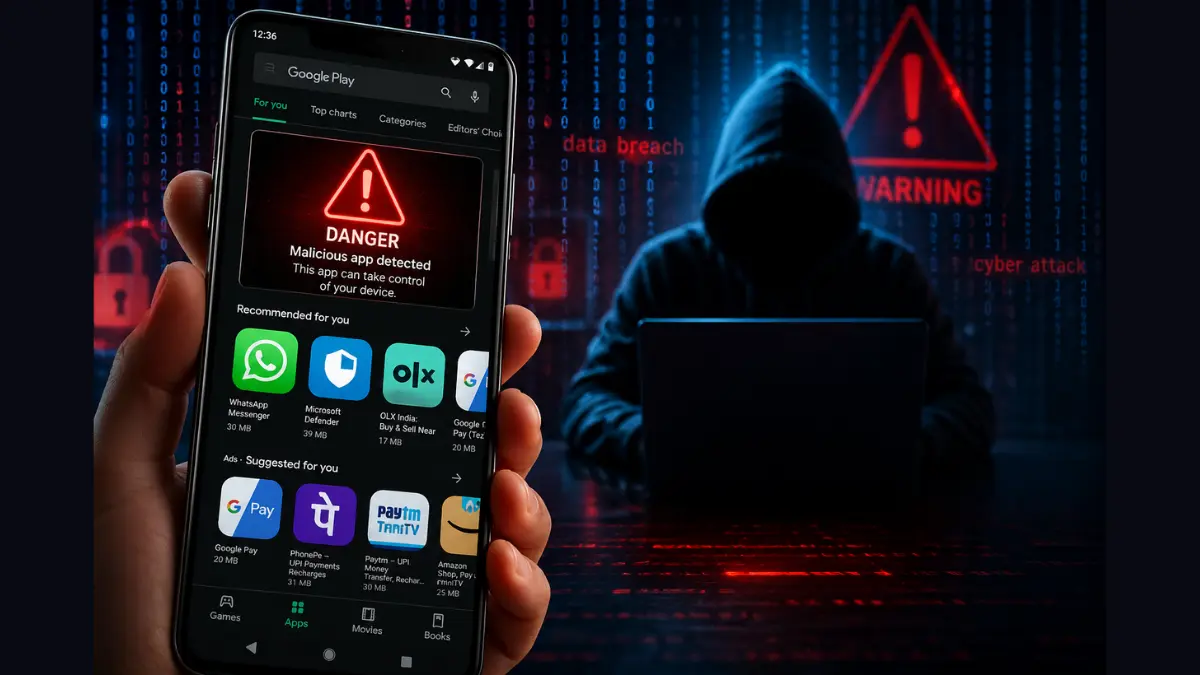


Introduction: A Growing Digital Danger
Google Play Store: In an era where smartphones manage everything from banking to personal communication, a new cyber threat is quietly spreading across India. Cybersecurity experts are warning about a dangerous malware often referred to as “Android God Mode”—a type of attack where just one APK file can give criminals complete control over your device.
What makes this threat especially alarming is its simplicity. There’s no complex hacking involved—just a moment of trust, one tap, and your digital life can be compromised.
What Exactly Is “God Mode” Malware?
“God Mode” malware is not a single app but a category of highly advanced Android malware designed to take advantage of user permissions. Instead of breaking into your phone, it asks for access—and relies on you to grant it.
These apps are often disguised as:
- Banking or financial service apps
- Government or KYC verification tools
- Courier tracking or delivery updates
- Urgent security alerts or app updates
Once installed, the app appears harmless on the surface but secretly begins its takeover.
How the Attack Works: From Install to Full Control
The process usually unfolds in a few subtle steps:
1. The Trap
You receive a message—via WhatsApp, SMS, or email—asking you to install an app urgently. It may look official or even mimic a trusted service.
2. The Permission Request
After installation, the app asks for Accessibility permissions. These permissions are meant for assisting users with disabilities, but in the wrong hands, they become incredibly powerful.
3. The Takeover
Once granted, the malware can:
- Read your SMS and capture OTPs
- Monitor everything on your screen in real time
- Perform actions like taps, swipes, and approvals
- Overlay fake banking or payment screens
- Access your contacts, files, and even camera
At this point, attackers can operate your phone remotely—almost as if they’re physically holding it.
Real Impact: When Trust Turns Costly
Several reported cases show victims losing significant amounts of money within minutes. The frightening part is that users often don’t realize what’s happening until it’s too late.
Also Read: Instagram’s New “Instants” App is Here, and Yes, It’s Basically Snapchat
Unlike traditional fraud, where hackers break security systems, this attack uses your own device permissions against you. It’s less about hacking technology—and more about manipulating human trust.
Why This Malware Is So Dangerous
This new wave of malware stands out because of its depth and stealth. It can:
- Bypass traditional antivirus detection
- Operate silently in the background
- Maintain control even after initial access
- Execute financial transactions without raising immediate suspicion
In short, it turns your smartphone into a remote-controlled device for cybercriminals.
Warning Signs You Should Never Ignore
Being alert can make all the difference. Watch out for:
- Apps asking for permissions that don’t match their purpose
- APK files sent through messages or unknown links
- Sudden phone slowdowns or unusual activity
- Random pop-ups or automatic clicks
- Unauthorized banking transactions or alerts
If something feels off, it probably is.
How to Stay Safe in a High-Risk Digital World
Smart Habits
- Download apps only from the Google Play Store
- Avoid installing APK files from unknown sources
- Double-check links before clicking
- Be cautious of urgent or fear-based messages
Security Practices
- Regularly update your phone’s software
- Review app permissions frequently
- Enable banking alerts and two-factor authentication
- Disable “Install from Unknown Sources” in settings
What To Do If You’re Affected
- Immediately uninstall suspicious apps (use Safe Mode if needed)
- Change all banking and important passwords from another device
- Contact your bank to secure accounts
- Call 1930 (India Cyber Crime Helpline)
- Report the incident at the official cybercrime portal
- Perform a factory reset if the issue persists
The Bigger Picture: A Shift in Cybercrime
Experts believe this trend marks a shift in how cybercriminals operate. Instead of targeting systems, they are targeting people—their habits, trust, and urgency.
Your smartphone today isn’t just a device. It holds:
- Your financial identity
- Personal conversations
- Private documents
That makes it one of the most valuable—and vulnerable—targets.
Final Thoughts
The “One APK, Total Takeover” threat is a stark reminder that digital awareness is your first line of defense.
Before installing any app, ask yourself:
👉 Do I trust the source?
👉 Does this app really need these permissions?
Because in today’s digital world, a single tap can decide your security.