


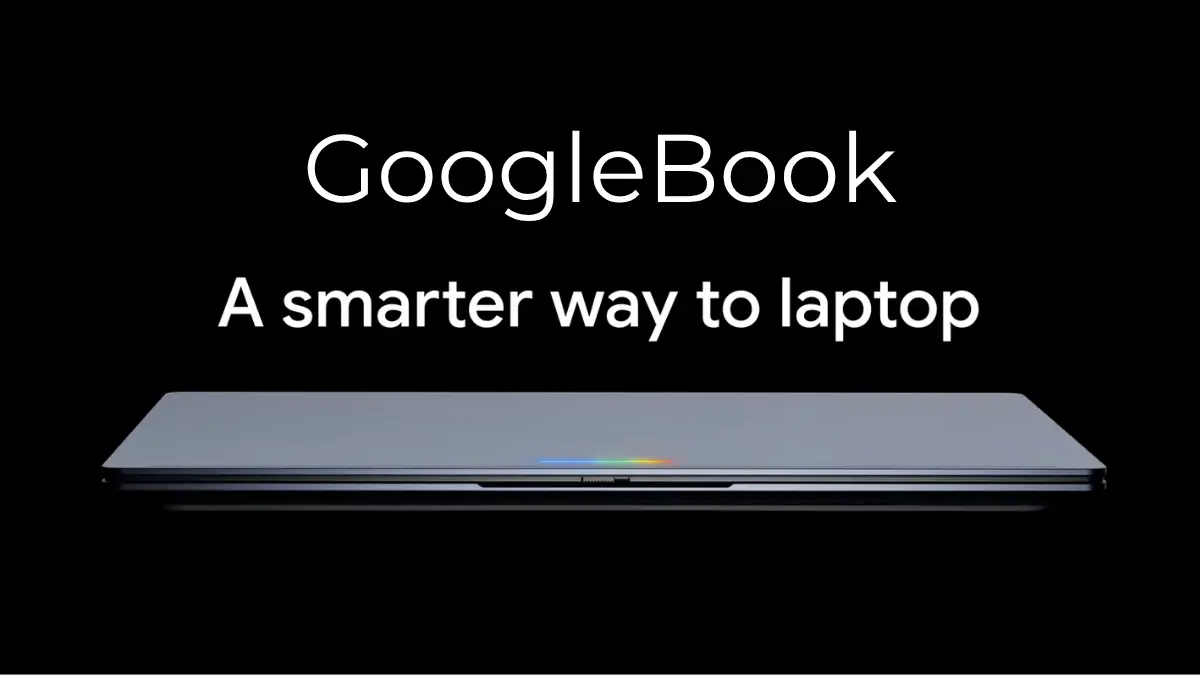


Googlebook: For years, we’ve been told that AI is coming to our computers. Today, Google announced that it has finally built a computer for AI.
In a massive shift for the industry, Google has unveiled the Googlebook. It isn’t just a faster Chromebook or a rebranded laptop; it represents a fundamental pivot in how we interact with screens. By merging the versatility of Android with the raw power of Gemini AI, Google is betting that the future of work isn’t about clicking buttons—it’s about having a conversation.
A Cursor That Actually Thinks
Most of us view the mouse cursor as a static tool for pointing and clicking. Googlebook changes that with the “Magic Pointer.”
Powered by Google DeepMind, this intelligent cursor understands the context of what you are looking at. If you’re hovering over a complex research paper, a simple “wiggle” of the pointer can summarize the text or define industry jargon. It transforms the screen into an interactive canvas where the OS anticipates your next move before you even make it.
The Death of the Static Desktop
We’ve all spent too much time organizing folders and pinning tabs. Googlebook introduces a fluid interface called “Dynamic Dashboards.”
Instead of searching for apps, you simply tell the computer what you’re working on. If you tell Gemini, “I’m planning a marketing launch,” the desktop instantly transforms, pulling in your relevant Sheets, a countdown timer for your deadline, and a real-time feed of your team’s Slack messages. It’s a workspace that assembles itself around your intent, then disappears when you’re done.
The Android DNA: Seamlessly Connected
The most significant technical change is under the hood. Googlebook is built on the Android tech stack, finally bridging the gap between your phone and your computer.
This isn’t just about “running mobile apps” on a laptop. It’s about total ecosystem unity. You can copy a photo on your phone and “drop” it into a Googlebook document as if they were the same device. Your favorite mobile tools now have the room to breathe on a larger screen, with full keyboard and trackpad support that feels native, not forced.
The “Glowbar” Aesthetic
You’ll know a Googlebook when you see one. Every model features the “Glowbar”—a signature light strip that pulses with a soft, multi-colored light whenever Gemini is thinking or processing a request. It’s a subtle, human-centric way of showing that the “Intelligence System” is active, moving away from the cold, clinical feel of traditional laptops.
Verdict: Is the World Ready for an “Intelligence System”?
Google isn’t just selling a new gadget; they are proposing a new way of living with technology. By partnering with heavyweights like Samsung, Lenovo, and Dell, they are ensuring that the Googlebook won’t be a niche product, but a new standard for students and professionals alike.
While the “Googlebook” name pays homage to the hardware of the past, the experience is firmly rooted in the future. As these devices begin to roll out this Fall, the question won’t be “What can your laptop do?” but “How well does your laptop know you?”