




Introducing gpt 5.5: For the past year, the tech world has been holding its breath, waiting for the “next big thing” in artificial intelligence. This morning, OpenAI finally exhaled, announcing the release of GPT-5.5.
While the numbering might suggest a minor iteration, the capabilities tell a far different story. We aren’t just looking at a smarter chatbot; we are witnessing the birth of the “Agentic Era”—a shift from AI that talks to AI that acts.
Beyond the Chatbot: Introducing GPT 5.5 Rise of Autonomous Agents
The most striking feature of GPT 5.5 is its move toward autonomy. In earlier models, the AI was a passive recipient of prompts. If you wanted a complex task done, you had to break it down into tiny, manageable steps.
GPT 5.5 flips this script. Using a new architecture designed for “long-horizon planning,” the model can now take a high-level objective—such as “Audit this 50-page financial report and cross-reference the data with our Q3 internal spreadsheets”—and execute it from start to finish without human intervention. It doesn’t just suggest the work; it navigates the software, reconciles the numbers, and flags the discrepancies.
The “Thinking” Engine: Accuracy over Speed
One of the most frequent complaints about LLMs has been “hallucinations”—the tendency for AI to confidently state falsehoods. OpenAI is tackling this head-on with a feature called Grounded Self-Verification.
Also Read: Meta Breaks Tradition: ‘WhatsApp Plus’ Subscription to Offer New Level of Personalization
When GPT 5.5 encounters a difficult logical problem, it enters a “Thinking Mode.” You can actually see the model’s internal reasoning process as it weighs different hypotheses and checks its own logic against verified facts. This “look before you leap” approach has led to a massive jump in reliability, particularly in high-stakes fields like legal research and medical data synthesis.
Technical Milestones: Breaking the Benchmarks
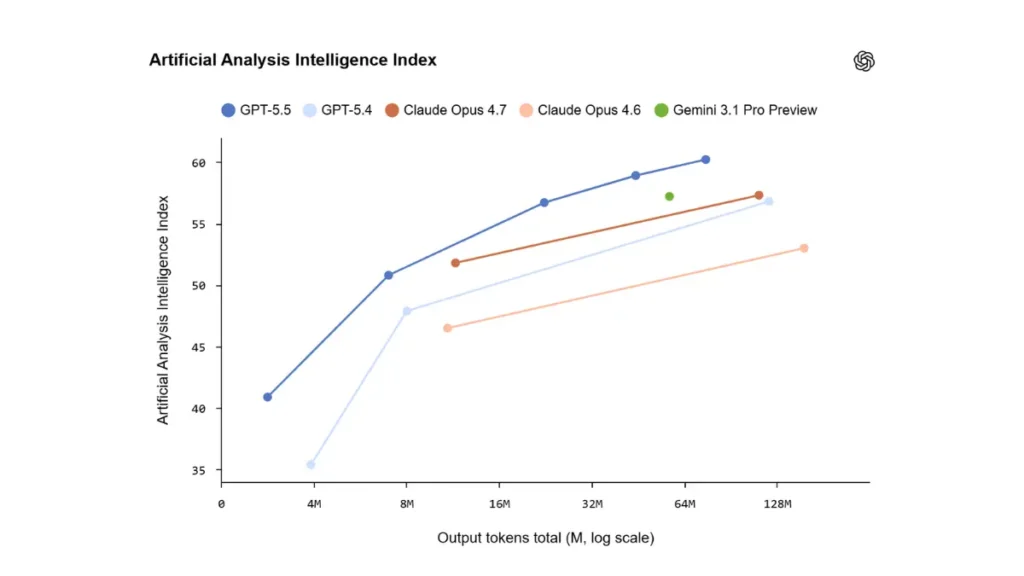
The data released today shows GPT 5.5 widening the gap between OpenAI and its competitors.
- Coding Mastery: On the latest SWE-bench (which measures an AI’s ability to resolve real-world GitHub issues), GPT-5.5 successfully resolved 42% of issues, nearly doubling the performance of GPT-4.
- Multimodal Fluidity: The model now processes video, audio, and text simultaneously in a single “neuron” layer. This means it can watch a live video feed of a mechanical repair and provide spoken, step-by-step instructions in real-time with zero latency.

The Verdict: A New Tool for the Modern Professional
What makes GPT-5.5 feel different from its predecessors is its “human-in-the-loop” philosophy. It feels less like a search engine and more like a highly capable, albeit digital, Chief of Staff.
However, this power comes with a price. OpenAI has introduced a new Pro Tier at $100/month for users who need the full “agentic” compute power, sparking a debate about the growing “intelligence divide” in the professional world.
Whether you view it as an incredible productivity booster or a disruptive force for the labor market, one thing is clear: GPT 5.5 has moved AI out of the playground and into the engine room of the global economy.
Key Takeaways for Businesses:
- Reduced Prompting: You no longer need to be a “prompt engineer”; the model is better at interpreting intent from vague instructions.
- App Integration: GPT-5.5 is designed to live inside your professional tools (Excel, Slack, VS Code), not just in a separate browser tab.
- Security First: New “Cyber-Safe” guardrails make it the first model officially cleared for use in sensitive infrastructure environments.