
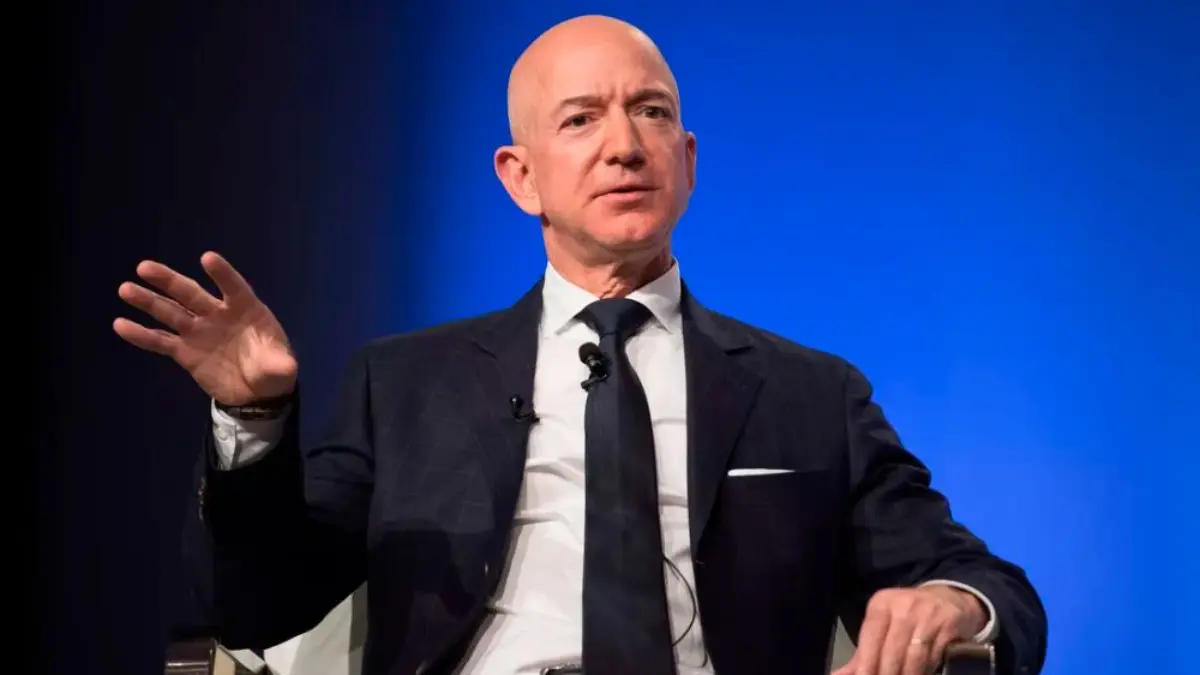
As the public conversation around artificial intelligence grows increasingly bleak, tech pioneer Jeff Bezos is stepping forward to inject a major dose of pragmatism—and optimism—into the debate. The Amazon founder has actively pushed back against the widespread narrative of an automated job apocalypse, flatly calling warnings of massive human displacement “dead wrong.”
In an expansive conversation with CNBC’s Andrew Ross Sorkin, Bezos threw his weight entirely behind the generative AI revolution. His comments target a vocal group of industry critics who argue that specialized, cutting-edge software tools are on the verge of replacing the tech industry’s core asset: its engineers and developers.
Shovels vs. Bulldozers: Transforming How We Work
Rather than orchestrating a mass layoff of human talent, Bezos views sophisticated AI systems as evolutionary tools meant to liberate workers from tedious, low-level tasks. In his view, software developers will soon spend less time writing basic code or hunting down syntax errors and more time architecting complex systems.
- The Rebuttal: Amazon’s founder dismisses fears of an impending automated workforce collapse as “dead wrong.”
- The Analogy: Jeff Bezos argues AI acts like a “bulldozer” replacing a “shovel”—elevating, rather than eliminating, human potential.
- The Policy Warning: Premature regulations risk choking economic progress and halting the deflationary benefits of AI.
- A Lesson in Corporate Survival: Jeff Bezos defends controversial cuts at The Washington Post, revealing why “following the data” is necessary for legacy institutions.
“What’s really going to happen is that it’s going to elevate all of these people,” Bezos explained. “It’s just that the work is going to be done at a higher level. It’s going to be done with a bulldozer instead of a shovel, and that’s going to be a good thing.”
This shift alters the fundamental value proposition of a knowledge worker. When basic execution becomes automated, human creativity, system-level design, and critical thinking become more valuable than ever.
The Anxiety Gap: Executive Optimism vs. Public Fear
Despite the confident outlook of Silicon Valley, regular citizens remain highly skeptical. Data from the Pew Research Center reveals a sharp contrast to Bezos’s enthusiasm:
- 50% of American Adults express significantly more concern than excitement about the speed of AI deployment.
- Primary Triggers: Loss of stable employment, uncertainty over educational integrity, and the mounting energy demands of massive data infrastructure.
Why Premature Rules Will Stifle Progress
Jeff Bezos’s optimism isn’t just about corporate efficiency; he believes AI possesses massive economic utility. He anticipates that widespread adoption will naturally drive deflation across multiple consumer goods and services, lowering the cost of living.
However, he issued a sharp warning to lawmakers currently drafting tight AI boundaries. Over-regulating software models before they mature could hamstring the market and freeze these potential economic benefits. Bezos strongly advocates for a free-market approach to tech development, allowing the infrastructure to grow naturally without being tangled in premature red tape.
Corporate Reality Check: The Data-Driven Case of The Washington Post
The conversation turned raw when Sorkin pushed past theoretical optimism to look at Bezos’s actual corporate choices. Sorkin asked why a media tycoon with a net worth hovering around $270 billion would allow The Washington Post to aggressively cut its workforce by 30% rather than simply funding the business himself.
Jeff Bezos offered a candid defense, framing the restructuring not as a choice of passion, but as a rigid exercise in data-driven survival. Legacy media outlets must adapt to changing digital landscapes, or they will cease to exist.
“Guess what I told them when we were planning those layoffs,” Jeff Bezos remarked. “I didn’t pick who was going to get laid off or which departments. I said, ‘Follow the data.'”
Crucially, Bezos noted that there was one distinct line he refused to cross: investigative reporting. Calling it the undisputed “heart of the Post,” he insulated the investigative teams from the sweeping cuts. That human-centric gamble clearly paid off; the publication recently took home the 2026 Pulitzer Prize for Public Service for its aggressive, unmatched coverage of the executive branch.