


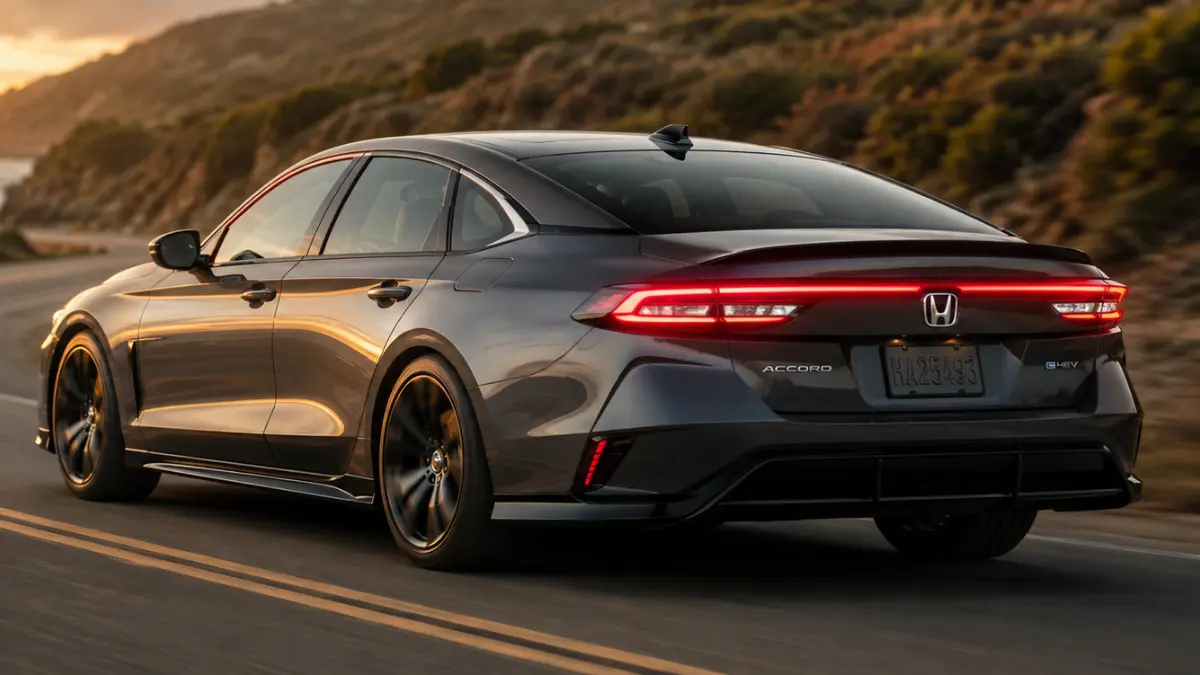


The global automotive landscape is undergoing a massive reality check. While the long-term future might belong to pure electric vehicles, the immediate present belongs to drivers who want electrification without the headaches of charging infrastructure and premium pricing. Recognizing this shift, Honda Motor Co. has just thrown down a massive gauntlet at its 2026 Global Business Briefing in Japan.
The star of the show? A sleek, fastback-styled Next-Generation Hybrid Sedan Prototype that isn’t just a design exercise—it’s the vanguard for 15 new hybrid models Honda plans to deploy globally by 2030.
As automakers worldwide scramble to adjust their timelines amid stabilizing EV demand, Honda’s strategy looks less like a compromise and more like a masterclass in reading the room.
Cracking the Efficiency Code: 30% Cheaper, 10% Better
The real story of this prototype lies beneath its sculpted sheet metal. Instead of taking an existing internal combustion platform and stuffing batteries into it, Honda’s engineers have built an entirely dedicated, ground-up architecture for its next-generation twin-motor e:HEV system.
The engineering team focused heavily on widening the thermal efficiency sweet spot of the combustion engine. By optimizing how the gas engine and electric motors interact, Honda claims a 10% boost in fuel economy over its current, already impressive hybrid tech.
But the real breakthrough is on the balance sheet: Honda has managed to slash production costs for this system by a staggering 30%. For the everyday consumer, this is a massive win. It means Honda can realistically price these next-gen hybrids on par with traditional gasoline cars, removing the “hybrid tax” that has historically kept budget-conscious buyers away.

Electric AWD and a Fastback Silhouette
Visually, the prototype leans heavily into a premium, athletic aesthetic that borrows the best elements of a classic grand tourer. It features a low, wide stance, aggressive flared arches, and a striking split-headlamp design that gives the front fascia a sharp, technical gaze. The roofline slopes dramatically into a clean, connected rear LED light bar, giving it a commanding highway presence.
But it’s not all for show. The prototype debuts a newly developed Electric All-Wheel Drive (E-AWD) system. By ditching heavy, mechanical linkages in favor of independent, millisecond-level motor control at the wheels, the vehicle promises razor-sharp torque vectoring. Whether you’re navigating a rain-slicked highway or pushing through a tight corner, the power goes exactly where it needs to be, instantly.
A Sneak Peek at Level 3 Autonomous Driving
Honda is also using this sedan as a rolling laboratory for its upcoming AI-driven ADAS (Advanced Driver Assistance System) suite, which is scheduled to hit production cars by 2028.
While current lane-keep systems are mostly restricted to designated expressways, Honda’s next-gen setup is designed for end-to-end autonomous navigation. By deeply integrating onboard AI with the cloud-based navigation system, the vehicle will be capable of handling acceleration, braking, and steering across both complex urban surface streets and highways, guiding you seamlessly from your driveway to your final destination.
Global Strategy: Where Do We See This Tech Next?
| Feature/Metric | Honda Next-Gen Hybrid System (2027+) |
| Fuel Efficiency | > 10% Improvement |
| Manufacturing Cost | 30% Reduction |
| Global Rollout | 15 New Models by 2030 |
| Initial Production Hubs | Marysville & East Liberty, Ohio (USA) |
Honda is backing this prototype with serious capital. The brand is actively reallocating major development and factory retooling resources to scale up its hybrid capacity. Over in North America, manufacturing hubs like the Marysville and East Liberty plants in Ohio are being heavily upgraded to ensure they can churn out these high-efficiency powertrains at scale before the end of the decade.
Indian Perspective
While this specific premium D-segment fastback is initially optimized for markets like North America, the trickle down effect of this technology will be felt globally—especially in regions like India, where strong hybrids are experiencing a massive surge in popularity due to tax advantages and real-world practicality.
While we wait for this exact architecture to mature, Honda Cars India is executing its own aggressive roadmap to keep the momentum going:
- The Immediate Pipeline: The highly anticipated Honda City Facelift and the premium ZR-V Hybrid SUV are slated to make their official local bows on May 22, 2026.
- The SUV Offensive: To capture a larger market share, Honda plans to introduce 10 new models to the Indian market by 2030. Seven of these will be SUVs, including a highly anticipated sub-compact offering and a new mid-size SUV platform expected by 2028.
Final Verdict
With this prototype, Honda is proving that the transition to green mobility isn’t a zero-sum game between fossil fuels and full EVs. By driving down production costs by nearly a third while stretching fuel efficiency past the double-digit mark, Honda is making an incredibly strong case for the hybrid as the ultimate pragmatic choice for the next decade. It’s smart, it’s stylish, and most importantly, it’s exactly what the market is asking now.