


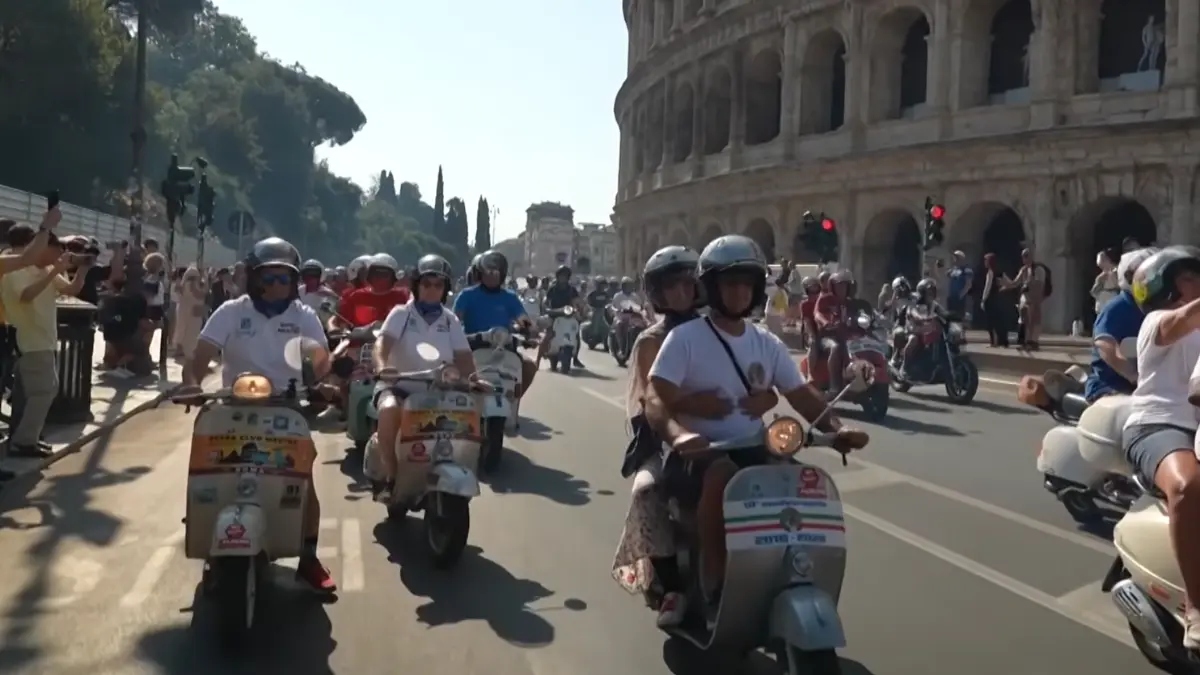


Scooter: If you closed your eyes in Rome this weekend, you would have heard a sound deeply woven into the fabric of Italian history: the unmistakable, high-pitched buzz of thousands of vintage scooter engines.
More than 20,000 passionate Vespa enthusiasts—affectionately known as Vespisti—swarmed the sun-drenched streets of the Italian capital. They gathered from all corners of the planet to celebrate the 80th birthday of the world’s most famous two-wheeler. For four days, the city’s ancient monuments served as the ultimate backdrop for a rolling museum of mid-century style.
When Rome Became a ‘Vespa Village’
The massive event completely transformed the city. Rome’s historic Foro Italico and the Stadio dei Marmi were converted into a sprawling “Vespa Village.” It became a paradise for design lovers, featuring timed heritage races, open-air concerts, and museum-grade exhibitions charting the scooter’s evolution from a basic utility vehicle into a global luxury brand.
For the attendees, this was much more than a simple bike rally. It was a pilgrimage. Riders spent months shipping their beloved scooters across oceans, traveling from as far as the United States, Vietnam, and the Philippines, just to ride the historic cobblestones of Rome in a massive, synchronized convoy.
From Post-War Survival to Hollywood Royalty
It is hard to overstate how deeply the Vespa is tied to Italy’s identity. When the manufacturer Piaggio launched the scooter in 1946, it wasn’t trying to create a style icon. The company was trying to survive. Italy lay in ruins after World War II, its roads destroyed and its economy shattered.
An aeronautical engineer named Corradino D’Ascanio was tasked with creating an affordable, reliable vehicle for the masses. He hated traditional motorcycles—he thought they were bulky, dirty, and difficult to ride.
Also Read: Apple Design Awards 2026: The 12 Global Winners Redefining the App Store
His solution was genius:
- He moved the engine to the back to keep oil away from the rider.
- He designed a front shield to protect clothing from mud and rain.
- He gave it a low, step-through frame so women in skirts could ride it comfortably.
When company founder Enrico Piaggio saw the prototype’s wide rear and narrow waist, he famously exclaimed, “Sembra una vespa!” (It looks like a wasp!). A legend was born.
The machine quickly transitioned from a blue-collar necessity to a global symbol of freedom and romance. In 1953, Hollywood cemented its status forever when Gregory Peck and Audrey Hepburn zip-lined through Roman traffic on a pastel green Vespa in the romantic comedy Roman Holiday. Suddenly, everyone in the world wanted a piece of the Italian Dolce Vita.
An Eight-Decade Legacy in Numbers
Unlike so many automotive trends that burn bright and fade away, the Vespa has never stopped production. In fact, it has enjoyed a massive resurgence over the last decade.
| Years of Continuous Production | 80 Years (1946–2026) |
| Total Global Sales | Roughly 20 million units and counting |
| Modern Resurgence | Over 2 million new units sold in the last 10 years alone |
| Global Reach | Sold in approximately 100 countries worldwide |
| Manufacturing Footprint | Built across three major hubs: Italy, Vietnam, and India |
The Buzz Continues
The weekend culminated in a spectacular, miles-long parade that temporarily ground Rome’s notoriously chaotic traffic to a halt—though this time, local drivers didn’t seem to mind, waving and cheering from the sidewalks instead.
As the sun set over the Colosseum and the thousands of scooters began their long journeys back home, one thing became abundantly clear: even at eighty years old, the world’s favorite little wasp hasn’t lost an ounce of its sting.