
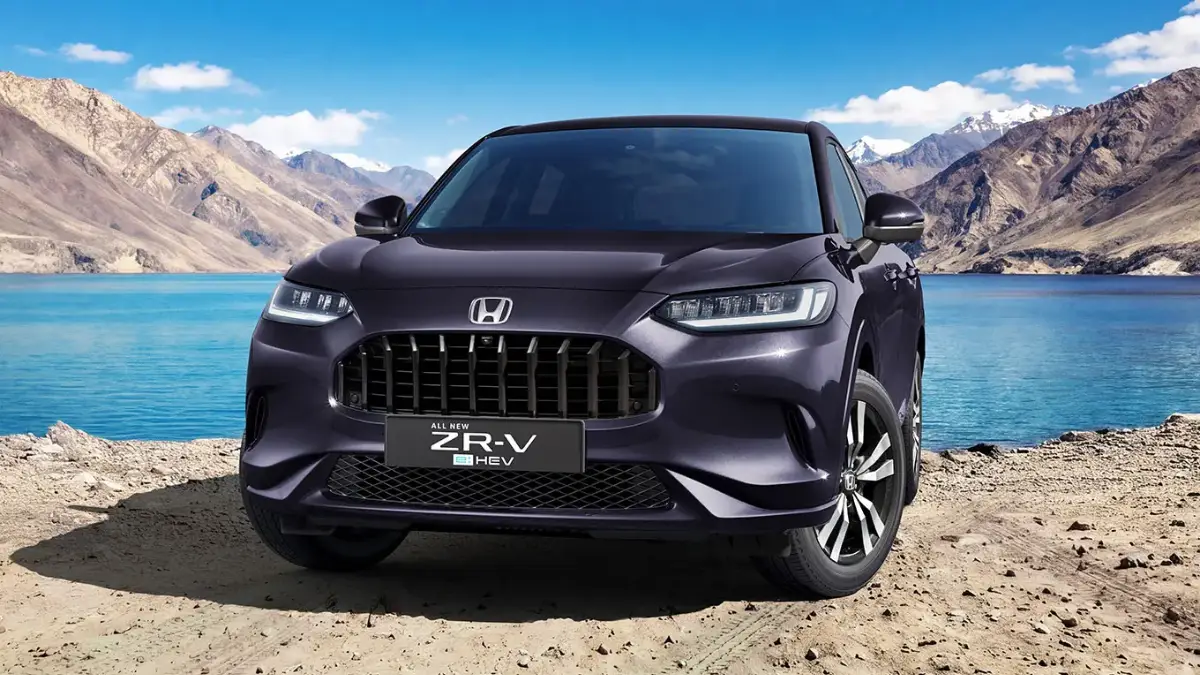
Honda ZRV: In a bold bid to shake up its image as a maker of sensible everyday sedans and compact family crossovers, Honda Cars India has officially pulled the wraps off its new crown jewel: the All-New Honda ZR-V e:HEV.
Positioned explicitly as a premium flagship, this sophisticated sports hybrid crossover arrives via the Completely Built-Up (CBU) route under the government’s relaxed 2,500-unit annual import rule. Honda has opened the order books today, with initial deliveries slated to hit Indian streets by the second half of July 2026.
Rather than chasing pure mass-market volume, Honda is targeting a distinct breed of enthusiast buyers—those looking to distance themselves from boxy, truck-like design language in favor of specialized, high-efficiency mechanical engineering.
Design Philosophy: A Curvaceous Rebellion Against the Box
Look at the Honda ZR-V from any angle, and it is immediately clear that Honda’s design team threw out the traditional SUV playbook. While models like the locally made Elevate emphasize upright, imposing ruggedness, the ZR-V is all about fluid aerodynamics and low-slung athleticism.
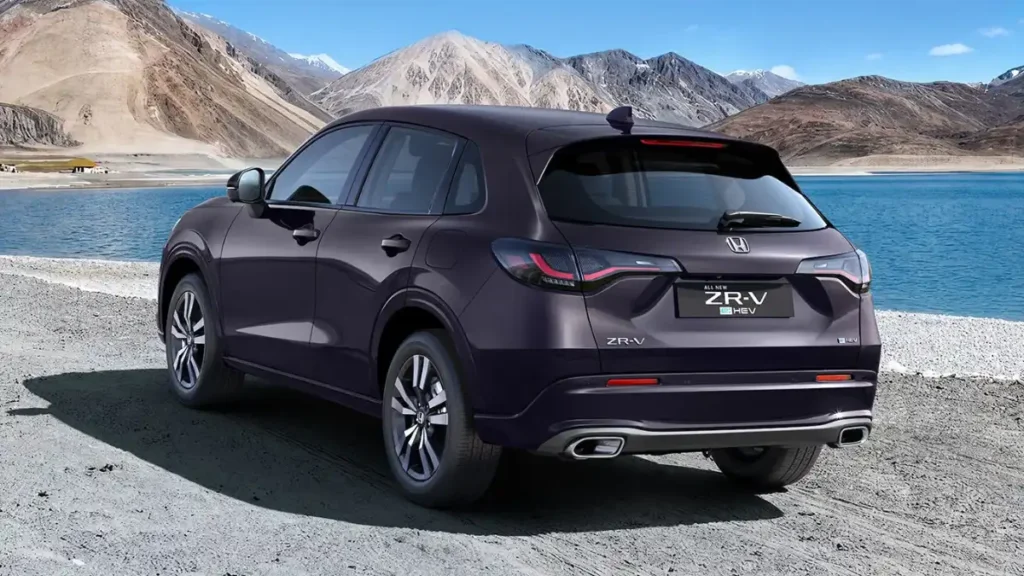
- The Stance: Measuring 4,568 mm in length with a long 2,657 mm wheelbase, it trades excessive vertical height for a planted, coupe-like posture. It sits closer to a muscular, high-riding executive hatchback than a conventional boxy off-roader.
- The Front Fascia: It features a unique, vertically slatted glossy black grille instead of horizontal chrome bars, bookended by ultra-slim LED headlamps with integrated L-shaped DRLs and sequential turn signals.
- The Silhouette: Smooth, uninterrupted sheet metal flows into a gently sloping roofline, anchoring wide, wraparound U-shaped LED taillights, a raked rear windshield, and prominent dual chrome exhaust tips built directly into the lower bumper. Sporty 18-inch diamond-cut alloy wheels pull the entire urban-centric look together.
The Heartbeat: Frugal Hybrid Meets Instant Torque
The real magic of the Honda ZR-V lies hidden beneath its sculpted bonnet. Honda is introducing its highly sophisticated, self-charging 2.0-litre, four-cylinder Atkinson-cycle petrol engine paired with a dual-motor strong hybrid system (e:HEV).
Unlike mild-hybrid setups that merely assist the engine, Honda’s e:HEV powertrain functions more like an electric vehicle with an on-board generator.
| Performance Metric | Official Specification |
| Combined System Output | 181 bhp |
| Peak Electric Motor Torque | 315 Nm |
| Transmission Type | Advanced e-CVT (Electronic Continuously Variable) |
| 0 to 100 km/h Sprint Time | 7.9 Seconds |
| Top Speed | 173 km/h |
| Certified Fuel Economy | 22.80 kmpl |
How the System Thinks on the Move
The car intelligently cycles through three distinct, seamless driving modes without any driver intervention:
- EV Drive Mode: Draws power solely from the lithium-ion battery for a near-silent, zero-emissions start in heavy bumper-to-bumper city traffic.
- Hybrid Drive Mode: The petrol engine kicks in to spin the generator motor, which directly feeds electricity to the electric traction motor for quick overtaking maneuvers.
- Engine Drive Mode: At high-speed highway cruising, an engine-linked clutch locks in, connecting the petrol engine straight to the front wheels where it operates at its peak thermodynamic efficiency.
The Interior: Tactile Luxury Over Blind Screen-Clutter
Step inside, and the cabin feels decidedly premium, favoring rich textures over flashy gimmicks. The layout features an all-black color scheme broken up by contrast stitching, plush leatherette upholstery, and a high-deck floating center console utilizing an electronic button gear selector instead of a traditional lever.
Thankfully, Honda has resisted the urge to bury every control inside a sub-menu. Critical functions—like the dual-zone climate control, the drive mode selector (Eco, Normal, Sport), and audio volume—retain heavily weighted, tactile physical dials and buttons.
Audiophiles will appreciate the inclusion of a premium 12-speaker Bose surround sound system, a panoramic sunroof, wireless phone charging, and a gesture-controlled power tailgate. The cargo area handles a respectable 380 litres, expanding to a massive 1,312 litres with the 60:40 rear seats folded perfectly flat.
Safety: The Invisible Shield
Because it is a full import, Honda has thrown their complete safety architecture at the ZR-V. The SUV is built on the proprietary Advanced Compatibility Engineering (ACE) body structure and comes standard with a class-leading 8 airbags (including dedicated front knee protection).
It also introduces the comprehensive Honda SENSING (Level 2 ADAS) suite, utilizing a high-performance camera system to run:
- Collision Mitigation Braking System (CMBS)
- Adaptive Cruise Control with Low-Speed Follow
- Lane Keeping Assist System (LKAS) & Road Departure Mitigation
- 360-degree Surround View Camera & Driver Attention Monitor
Market Outlook: Honda ZRV India Price and Premium Rivals
Because the Honda ZR-V bypasses local assembly, it faces hefty CBU import duties. While official localized pricing will drop in June, industry insiders peg the premium crossover in the ₹45 lakh to ₹50 lakh (ex-showroom) bracket.
At this zrv pricing tier, it will bypass traditional mass-market options to wage war against premium, European-flavored monocoque five-seaters and mid-size executive haulers:
- Volkswagen Tiguan / Tayron R-Line (For the German driving dynamic purist)
- Skoda Kodiaq (For those prioritizing European luxury styling)
- Hyundai Tucson (The tech-loaded Korean rival)
The Takeaway
The Honda ZRV Hybrid isn’t built to top the sales charts, and Honda knows it. Instead, it serves as a statement piece—a demonstration of what the brand can achieve when combining bulletproof Japanese reliability with silky-smooth hybrid performance and elegant, head-turning design. If you are looking for a highly refined urban commuter that sips fuel like a hatchback but accelerates like a sports sedan, your patience is about to reward you this July.