


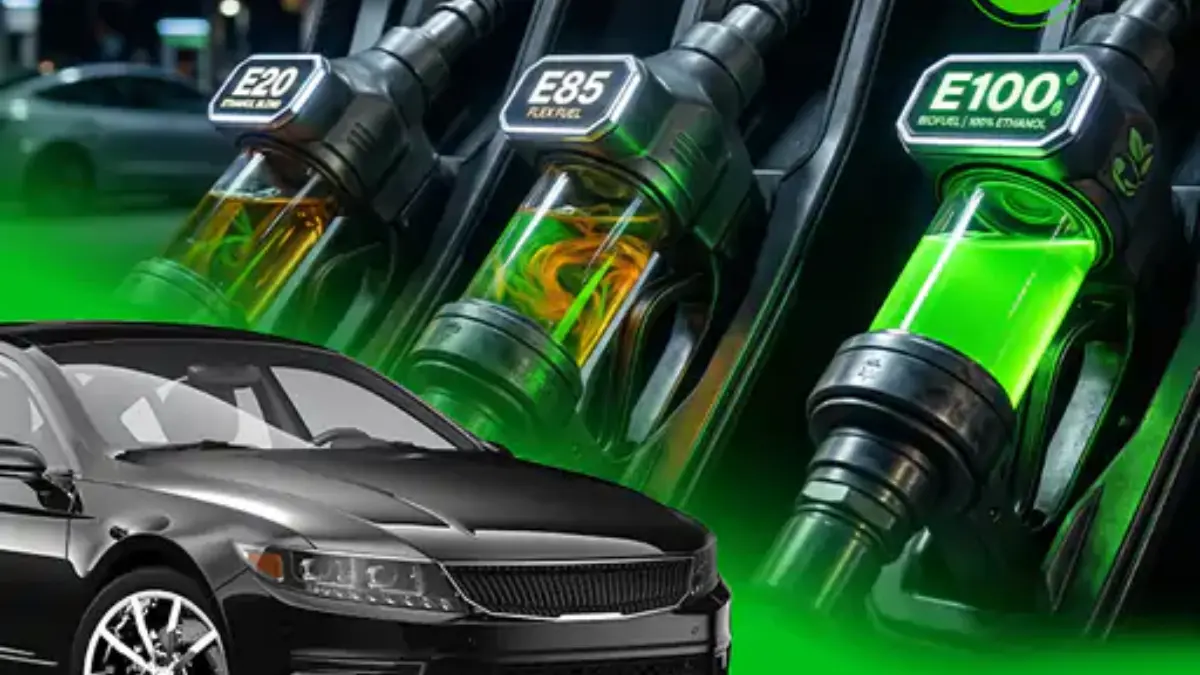


Ethanol Kit Price: Imagine pulling up to a fuel station, bypassing the expensive petrol dispenser, and filling up your regular everyday car with dirt-cheap, eco-friendly ethanol instead.
Right now, that sounds like a pipe dream for most Indian car owners. If you want to convert your current petrol car into a flex-fuel vehicle (FFV) that can handle high biofuel blends, you have to shell out serious cash. Imported conversion kits bought on international retail websites will easily set you back anywhere between ₹40,000 and ₹60,000.
But that is about to change.
The Indian Sugar & Bio-energy Manufacturers Association (ISMA) has announced that if these clever conversion kits are manufactured locally right here in India, the price could plummet to an incredibly affordable ₹15,000.
Why This is a Massive Deal for Your Wallet
Ethanol Kit Price
The math makes a ton of sense. According to Deepak Ballani, the Director General of ISMA, localizing the production of these kits removes the heavy import duties and shipping friction that inflate current prices. At ₹15,000, the kit pays for itself within just a few months of commuting, given how much cheaper ethanol blends are compared to standard petrol.
The best part? These aren’t crude mechanical workarounds. They are smart electronic systems. The kit installs an advanced ethanol sensor into your car’s fuel line. This sensor reads the exact mix of fuel coming from the tank in real-time and tells the engine exactly how much fuel to inject. Whether you fill up with E15, E85, or pure E100, the system adjusts instantly. You never have to manually mess with your engine settings.
The Big Question: Will It Ruin Your Engine?
Naturally, car enthusiasts and everyday drivers are skeptical. Ethanol is notoriously hard on standard rubber hoses and fuel lines if an engine isn’t built to handle it.
To see if standard Indian cars could actually survive the switch, ISMA teamed up with the elite engineers at IIT Delhi for a brutal, real-world test. They imported top-tier eFlexFuel systems from Finland and retrofitted them onto two of India’s absolute favorites: a BS4 Maruti Suzuki Swift and a BS6 Maruti Suzuki Dzire.
Then, they drove them hard across thousands of kilometers using everything from low-blend fuel to 100% pure ethanol. The data speaks for itself:
| Evaluation Metric | BS4 Maruti Suzuki Swift | BS6 Maruti Suzuki Dzire |
| Total Distance Tested | 10,500 km | 14,250 km |
| Distance Run on Pure E100 | 1,000 km | 5,000 km |
| Blends Tested | E15 all the way to E100 | E15 all the way to E100 |
| Engine Health & Wear | Perfect. No structural anomalies. | Perfect. No structural anomalies. |
The engineering teams kept an eagle eye on everything—acceleration lag, cold-start struggles on chilly mornings, tailpipe emissions, and internal engine wear. The result? Both cars behaved completely normally. No stuttering, no mechanical degradation, and zero engine damage.
“After extensive study, ISMA submitted a report stating that BS4 and BS6 vehicles could be successfully converted into flex-fuel vehicles with such a kit. It can use any blend, whether E85 or E100, and runs smoothly without causing any damage to the engine mechanics.”
— Deepak Ballani, Director General of ISMA
So, When Can You Buy One?
Before you rush out to find a local mechanic to install one, there is a catch: you can’t legally buy them just yet.
Even though the engineering phase is a massive success, these kits still have to clear major bureaucratic hurdles. For a kit to become legally available for commercial purchase, it needs official stamp approvals from India’s automotive regulatory bodies, national testing agencies, and the car manufacturers themselves.
ISMA has already submitted their formal paperwork and reports to the government ministries. They are pushing for a streamlined regulatory framework that will allow Indian manufacturers to mass-produce these kits safely. If the government gives it the green light, it will offer a massive financial lifeline—allowing millions of current car owners to switch to cleaner, cheaper fuel without forcing them to buy an expensive new electric or hybrid vehicle.