


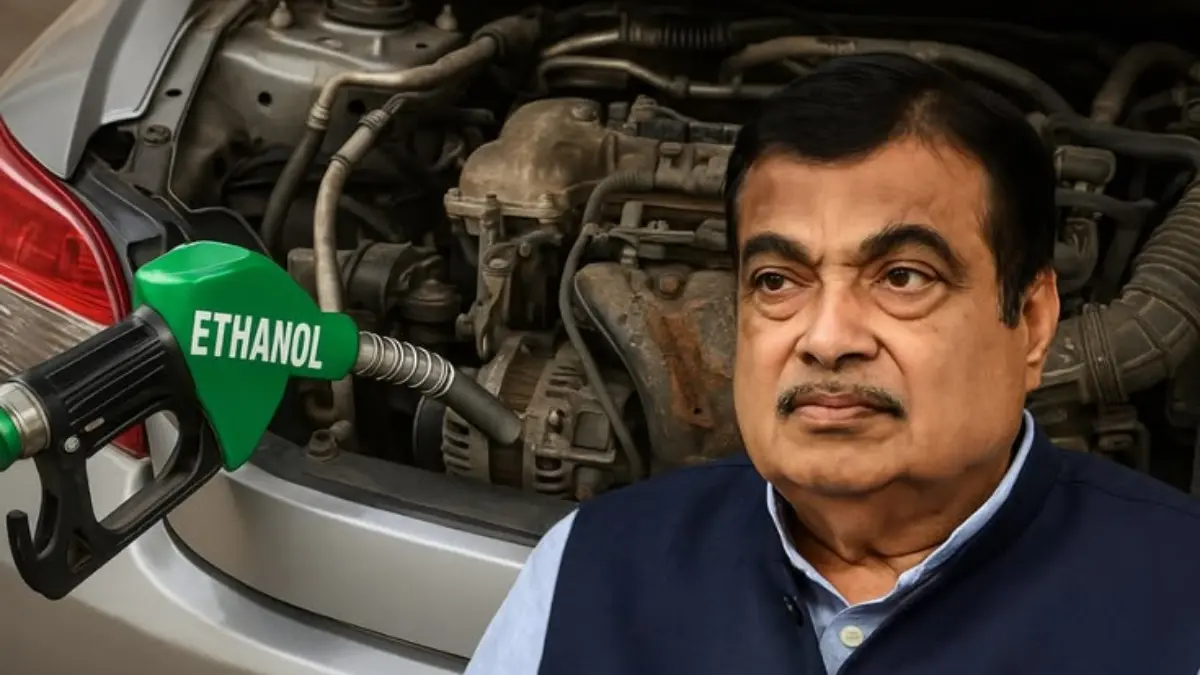


Nitin Gadkari: India’s rapid shift to E20 fuel (a blend of 20% ethanol and 80% petrol) have finally reached the top.
Addressing public fears, legal challenges in the Supreme Court, and viral social media posts claiming the new fuel ruins older engines, Union Road Transport and Highways Minister Nitin Gadkari has come forward with a staunch defense of the policy. Backed by hard data from India’s top car and bike manufacturers, the government is making one thing clear: the green fuel transition is here to stay, and the fears surrounding it are largely overblown.
Nitin Gadkari
Why the Government is Standing Firm on E20
For Minister Gadkari, the shift to E20 isn’t just an environmental checkbox—it is a massive economic shield for the country. The government’s defense rests on three massive pillars:
- Massive Foreign Exchange Savings: India relies on imports for a staggering 88% of its crude oil. By mixing locally produced ethanol into petrol, the country has saved over ₹1.84 lakh crore ($22 billion USD) since 2014. This keeps the Indian economy insulated from sudden global oil price spikes caused by geopolitical conflicts.
- A Lifeline for Indian Farmers: Ethanol is made right here at home from sugarcane and maize. The E20 mandate funnels thousands of crores directly into the rural economy, supporting local farmers rather than foreign oil corporations.
- Protecting Massive Green Investments: Public banks and private entrepreneurs have poured nearly ₹1 lakh crore annually into setting up domestic ethanol distilleries and supply chains. Reverting to older, lower blends would cause a catastrophic collapse of this newly built domestic infrastructure.
The Big Question: Does E20 Actually Ruin Engines?
The single biggest worry for Indian motorists is material degradation—specifically, whether E20 will corrode fuel lines, rust tanks, and damage older engines that were only certified to handle E10 fuel.
Instead of dismissing these fears, the Ministry threw down hard numbers from real-world service center data, completely challenging the viral panic:
The Manufacturing Reality: In official findings, Maruti Suzuki highlighted that out of 2.84 crore vehicles serviced across their network—including 1.5 crore older, pre-2023 models not originally built for E20—there was not a single verified case of engine corrosion or premature fuel-pump failure linked to the fuel blend. Hero MotoCorp reported a similarly spotless record for its massive fleet of two-wheelers.
The Truth About Mileage and Performance
To keep things transparent, the government did acknowledge a slight mechanical trade-off, though it’s far less dramatic than rumors suggest:
- The Mileage Drop: Because ethanol carries slightly less energy than pure petrol, you might notice a tiny drop in fuel economy—roughly 3% to 5%. In the real world, factors like aggressive driving, low tire pressure, or blasting the air conditioning will reduce your mileage far more than the fuel itself.
- The Performance Boost: On the plus side, ethanol has a much higher octane rating than regular petrol. This actually improves your engine’s anti-knock behavior, leading to cleaner combustion and noticeably smoother acceleration.
Why You Can’t Just Buy ‘Pure Petrol’ Anymore
A frequent demand from vehicle owners has been simple: Why can’t the government just offer a choice at the pump? Let those who want E20 buy it, and let older car owners buy pure petrol or E10.
Logistically, the government says that is a flat-out impossibility for India.
Managing three completely separate fuel streams all the way from base refineries, through country-wide pipelines, and down to over 100,000 retail pumps would break the supply chain. It would skyrocket fuel handling costs, wiping out any economic benefits. The Ministry pointed out that while premium, high-octane fuels exist, they are niche products enhanced with chemical additives—not entirely separate national fuel streams that require their own massive infrastructure.
The Price Paradox: Why Domestic Fuel Isn’t Cheaper
Many drivers feel cheated that a fuel mixed with 20% locally grown plant matter costs the exact same at the pump as expensive, imported pure petrol.
The government explained that this is an intentional economic choice. To make ethanol production viable for Indian farmers, the government buys it at a premium (around ₹71.86 per liter for maize-ethanol before taxes). Because of these fair-pay agricultural protections, E20 actually costs slightly more to manufacture right now than raw, unblended petrol.
However, Minister Gadkari pointed out a built-in safety net: if global tensions cause international oil prices to skyrocket past $120 a barrel, domestically anchored E20 fuel will instantly become significantly cheaper for Indian consumers than regular oil.
Look Ahead: E30 and the Future of Indian Fuel
Anyone hoping the government will back down under pressure is looking at the wrong map. The Ministry has already officially laid out the quality standards for the next phases: E22, E25, E27, and E30 blends, backed by central excise tax exemptions to incentivize car makers.
Furthermore, plans are already underway to introduce an isobutanol-diesel blend later this year. The government is fully committed to replicating the economic and environmental wins of the petrol transition across the heavy commercial trucking and diesel sectors next.