


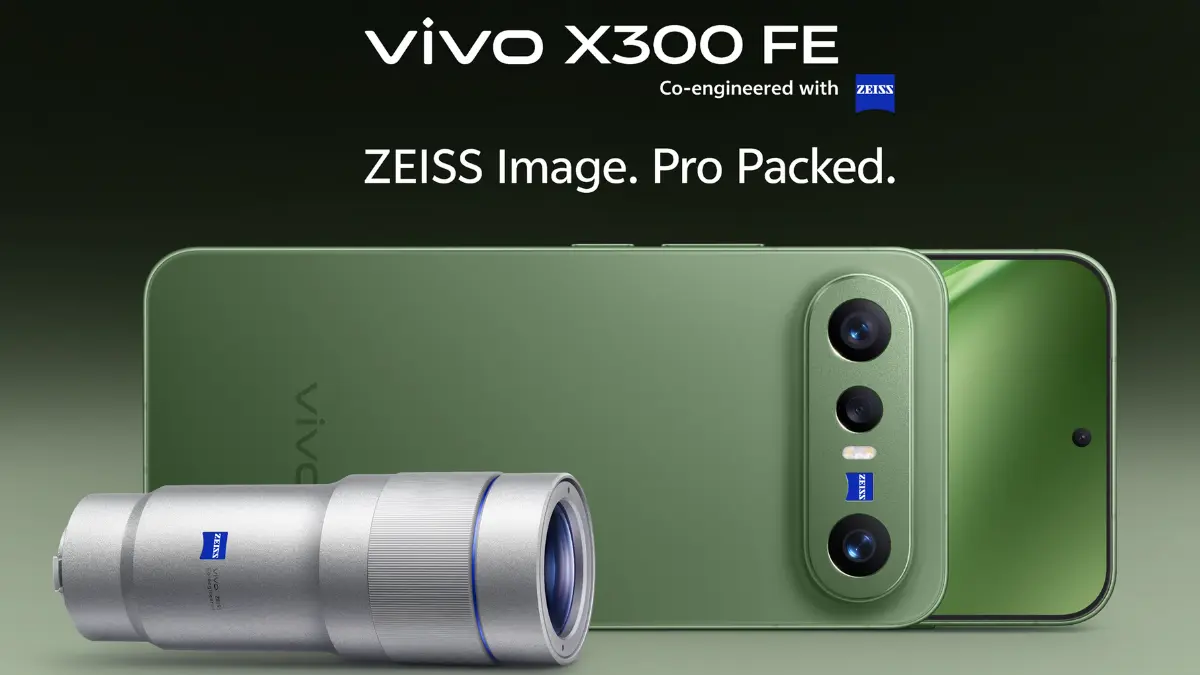


Vivo X300: Finding the sweet spot between an eye-watering flagship price tag and a compromise-heavy budget phone is the ultimate goal for most buyers today. Two heavy hitters have landed on our desks aiming for exactly that target, but they take completely different paths to get there.
On one hand, we have the OPPO Reno14—a device that focuses heavily on sleek ergonomics, striking design, and a camera setup custom-tailored for the social media generation. On the other hand, the Vivo X300 FE (Fan Edition) targets the power users who crave flagship-level performance and incredible battery resilience without the usual bulk. It is a classic battle of lifestyle refinement versus raw hardware power.
Specs Sheet Comparison
Before breaking down how these devices feel in everyday use, let us look at the raw numbers powering both smartphones to understand where your money is actually going.
| Feature | OPPO Reno14 | Vivo X300 FE |
| Display Size | 6.59-inch LTPS OLED (120Hz) | 6.31-inch LTPO AMOLED (120Hz) |
| Peak Brightness | 1,200 nits | 5,000 nits |
| Processor | MediaTek Dimensity 8350 (MT6897) | Qualcomm Snapdragon 8 Gen 5 (3nm) |
| Base Storage/RAM | 8GB RAM / 256GB UFS 3.1 | 12GB RAM / 256GB UFS 4.1 |
| Rear Camera Array | 50MP Main + 50MP Telephoto (3.5x) + 8MP UW | 50MP Sony IMX921 + 50MP Periscope (3x) + 8MP UW |
| Front Camera | 50MP (4K at 60fps support) | 50MP (Zeiss Optics calibration) |
| Battery & Charging | 6,000 mAh Silicon-Anode / 80W Wired | 6,500 mAh Silicon-Carbon / 90W Wired |
| Wireless Charging | Not Supported | 40W Wireless FlashCharge |
| Water Protection | IP68 & IP69 Certification | IP68 & IP69 Dual Certification |
| Est. Price (INR) | ₹36,999 | ₹79,999 |
Design, Feel, and Everyday Ergonomics
Holding these two devices side-by-side immediately reveals who they were built for. The OPPO Reno14 is remarkably svelte. Despite carrying a massive battery, OPPO managed to keep the chassis incredibly thin at just 7.3mm and light at 187 grams. The subtle curves on the back glass make it feel premium, effortless to hold, and easily slide into a pocket. It is a beautiful design statement that punches far above its price tag.
Vivo, meanwhile, goes in a completely different direction with the X300 FE by embracing the rare and highly requested compact flagship form factor. At just 150.8mm tall, it is a dream for anyone tired of two-handed smartphone gymnastics. It feels structural, solid, and incredibly durable. Vivo even went out of its way to secure a dual IP68 and IP69 rating, meaning it can survive not just a drop in the pool, but high-pressure, hot water jets. It feels like a miniature tank built to survive anything.
Vivo X300 Performance: Daily Fluidity vs. Overkill Power
If you are looking at long-term longevity, the processors here tell two very different stories. The OPPO Reno14 relies on the MediaTek Dimensity 8350 platform. In day-to-day operations—scrolling through media feeds, multitasking between chat apps, and streaming high-definition video—it performs beautifully. It runs efficiently, stays cool, and handles moderate gaming without breaking a sweat.
However, the Vivo X300 FE crosses over into true flagship territory. Packed with the cutting-edge 3nm Snapdragon 8 Gen 5 chip and paired with faster UFS 4.1 storage, it handles heavy tasks with absolute ease. Whether you are rendering 4K video files on the fly or running resource-heavy games at maximum graphics settings, the Vivo does not flinch. To make the deal even sweeter for long-term owners, Vivo offers an extended software commitment, giving it an incredibly long shelf life.
Camera Performance: Capturing the Details
Both brands have poured massive engineering efforts into their camera arrays, making this a tight race. The OPPO Reno14 positions itself as a portrait master. Its 50MP main sensor and 50MP dedicated telephoto lens (3.5x zoom) capture stunning human subjects with remarkably natural skin tones and a soft, realistic background blur. For content creators, the front-facing 50MP selfie camera steals the show, offering crisp 4K recording at a smooth 60fps.
Vivo counters with its legendary Zeiss partnership on the X300 FE. The main 50MP Sony IMX921 sensor features an ultra-wide f/1.57 aperture that draws in massive amounts of light, making it a spectacular performer in low-light environments. Instead of a standard telephoto lens, Vivo packs a 50MP Periscope setup. This allows for incredibly clean, sharp architectural and landscape shots even when zooming in from a significant distance, holding onto structural details that standard lenses lose.
Battery Innovation: Rewriting the Rules
In the past, buying a slim or compact phone meant you had to accept mediocre battery life. Thankfully, modern battery chemistry has completely eliminated that compromise. The Reno14 sports a massive 6,000 mAh silicon-anode battery that easily delivers over 12 hours of continuous screen-on time, backed by blazing-fast 80W wired charging.
Yet, Vivo manages an engineering miracle inside the X300 FE. Despite its compact footprint, it crams an even larger 6,500 mAh silicon-carbon cell inside. Because the screen is smaller and highly efficient, this battery easily pushes past a day and a half of heavy use. Combined with 90W wired charging and the convenience of 40W wireless charging, the X300 FE sets a brand-new standard for compact device endurance.
Final Verdict: Which Belongs in Your Pocket?
Go with the OPPO Reno14 if…
You prefer a larger, incredibly sleek display, care deeply about high-quality front-facing video and portrait photography, and want a gorgeous phone that feels premium without pushing your budget to its absolute limits.
Go with the Vivo X300 FE if…
You have been searching for a powerful, truly one-handed compact phone that doesn’t compromise on specs. If you want cutting-edge processing power, elite durability, wireless charging convenience, and long-term software support, the Vivo is worth every penny.