


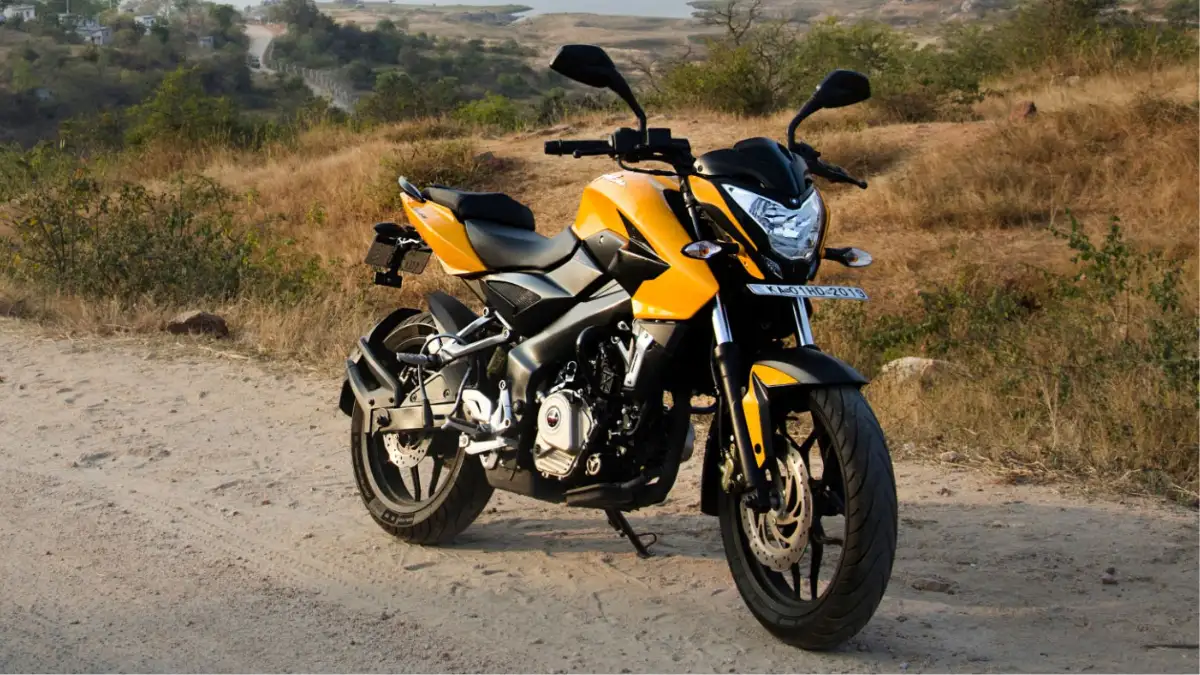


Bajaj: Indian two-wheeler market is telling a fascinating story right now. Consumers are moving away from basic, budget-friendly commuter bikes and putting their money toward premium performance and electric tech instead.
Bajaj Auto’s latest sales report for April 2026 highlights this trend perfectly. The Pune-based manufacturer kicked off the new financial year on a high note, dispatching 1,97,417 vehicles to domestic dealerships. This represents a solid 9.87% increase compared to the 1,79,676 units sold during the same month last year.
While the year-on-year numbers look bright, sales did cool down slightly from March 2026, when the company hit 2,06,663 units. This small month-on-month dip suggests a standard post-holiday stabilizing period across the industry.
The Pulsar Dynasty: Holding Two-Thirds of the Market
It is impossible to talk about Bajaj without mentioning the Pulsar. Decades after its debut, this single brand identity continues to anchor the company’s retail success, making up an incredible 66.37% of all Bajaj vehicles sold domestically.
In April alone, the Pulsar family brought home 1,31,031 sales, a 5.66% bump over last year. However, the real story lies in which Pulsars people are buying. A clear premiumization wave is sweeping through the data:
- 111cc – 125cc: 71,350 units (Down 9.91%) – The entry-level option is losing traction.
- 126cc – 150cc: 11,992 units (Down 20.20%) – Traditional executive commuters saw the sharpest drop.
- 151cc – 200cc: 36,198 units (Up 45.55%) – Mid-capacity performance bikes are booming.
- 201cc – 250cc: 10,494 units (Up 138.50%) – High-end quarter-liter models more than doubled their numbers.
Buyers are clearly willing to skip the economy tier if it means getting more power, better styling, and sharper tech.
The Chetak EV Phenomenon: Nearly 80% Growth
If the Pulsar is Bajaj’s reliable anchor, the Chetak electric scooter is its runaway rocket ship.
Sales for the stylish EV surged by an astonishing 78.52%, climbing from 19,216 units last April to 34,304 units this month. The Chetak now commands more than 17% of Bajaj’s total domestic volume. This leap comfortably cements it as the company’s second most vital product line, easily outpacing long-standing internal combustion favorites.
Deep Dive: April 2026 Domestic Scorecard
While premium models thrived, budget-conscious brands faced a tougher road. The dependable Platina dropped double digits, and the entry-level CT lineup slipped into the red. Even the pioneering Freedom CNG motorcycle experienced a temporary slowdown as infrastructure catches up to demand.
| Model / Sub-Brand | April 2026 Sales | April 2025 Sales | Yearly Growth (YoY) | Overall Share |
| Pulsar Range | 1,31,031 | 1,24,012 | +5.66% | 66.37% |
| Chetak EV | 34,304 | 19,216 | +78.52% | 17.38% |
| Platina | 24,737 | 29,689 | -16.68% | 12.53% |
| CT Range | 3,711 | 3,948 | -6.00% | 1.88% |
| Avenger | 1,756 | 1,020 | +72.16% | 0.89% |
| Dominar | 1,234 | 798 | +54.64% | 0.63% |
| Freedom (CNG) | 644 | 993 | -35.15% | 0.33% |
| Total Domestic | 1,97,417 | 1,79,676 | +9.87% | 100.00% |
What This Means for the Indian Rider
This shift highlights a changing consumer mindset. The urban Indian rider is no longer just looking for a tool to get from point A to point B at the lowest possible cost. Instead, factors like design, digital features, performance, and environmental impact are steering buying decisions.
Legacy brands that rely solely on basic 100cc-110cc commuter platforms are feeling the squeeze. Meanwhile, Bajaj’s heavy investments in updating the high-end Pulsar platforms and expanding the Chetak EV dealer network appear to be paying off exactly when the market wants it most.