


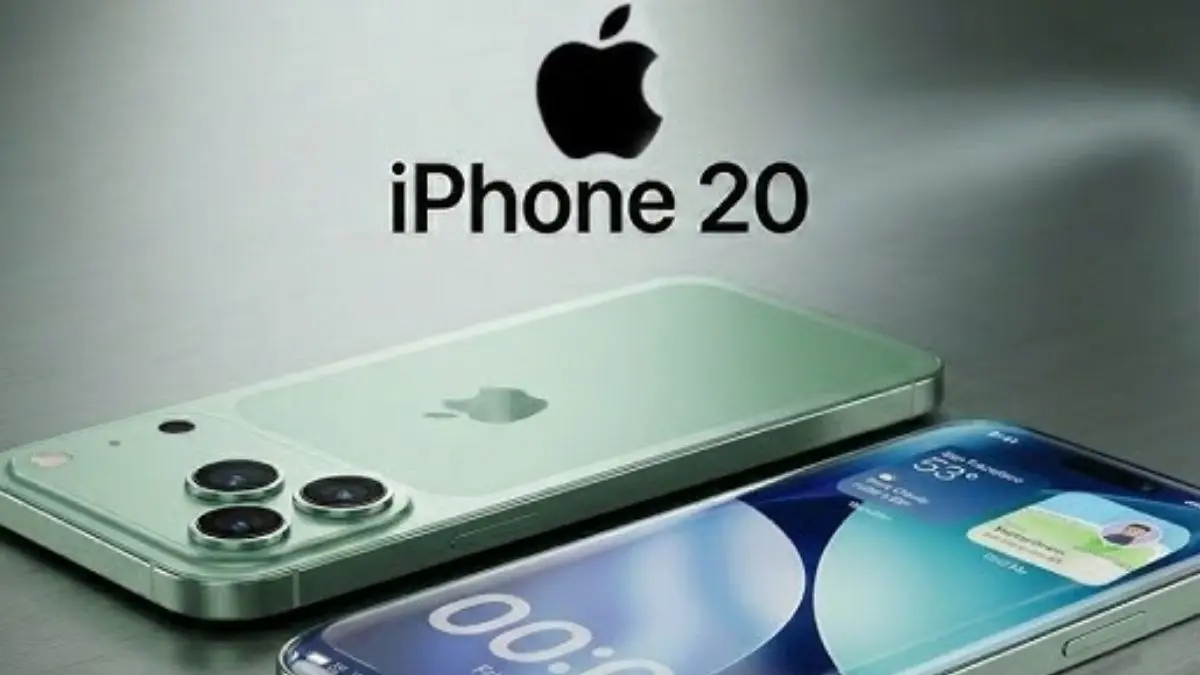


iPhone 20: Apple preparing to throw out its decade-old smartphone design playbook. Following a series of highly anticipated incremental updates, Apple is rumored to be planning a dramatic leap directly to a 20th-anniversary milestone device: the iPhone 20.
According to major industry leaks, Apple is skipping the “iPhone 19” naming convention entirely—reminiscent of how the company famously jumped from the iPhone 8 to the iPhone X in 2017 to celebrate a decade of hardware. This upcoming flagship represents Apple’s most radical design shift yet, aiming to finally fulfill Steve Jobs’ ultimate vision of a device that looks like a single, uninterrupted sheet of glass.
Here is a comprehensive breakdown of everything leaked so far about the groundbreaking changes coming to the iPhone 20.
The ‘Liquid Glass’ Quad-Curved Display
The most striking feature of the iPhone 20 is its heavily rumored quad-curved (or micro-curved) edge-to-edge display. Manufactured using advanced panel engineering, the glass seamlessly wraps around all four corners of the device, effectively eliminating visible bezels entirely.
To achieve this extreme aesthetic without sacrificing screen quality, Apple is reportedly leveraging Samsung’s Color Filter on Encapsulation (CoE) technology. By removing the traditional polarizing film layer, the screen becomes dramatically thinner and brighter while simultaneously reducing power consumption. To combat the added reflections inherent to all-glass edges, Apple is reportedly engineering a specialized anti-reflective coating similar to modern ultra-premium displays.
Goodbye Cutouts: Under-Display Face ID & Camera
Users have navigated around the physical interruptions on their screens, from the classic Notch to the interactive Dynamic Island. The iPhone 20 aims to finally clear the canvas.
Apple is aggressively testing completely hidden under-display Face ID and selfie camera systems. By hiding the complex facial recognition components and the front lens assembly beneath active pixels, the display remains entirely uninterrupted during normal use. The pixels directly above the sensors will seamlessly “turn off” or become transparent only when the camera or biometric sensors are actively engaged.
The Next-Gen LOFIC Camera and Custom HDR Sensor
On the rear camera bump, Apple is shifting the boundaries of mobile photography by incorporating a Custom HDR Sensor built alongside advanced LOFIC (Lateral Overflow Integration Capacitor) technology.
Combined with advanced variable apertures, this sensor architecture prevents pixel overexposure in extremely bright conditions while massively pulling details out of deep shadows. The result is a dramatic increase in dynamic range, giving mobile photographers near-DSLR parity in challenging lighting environments like sunsets or backlit portraits.
No More Buttons: Solid-State Haptics
The iPhone 20 is expected to be Apple’s first entirely buttonless device. The physical volume rocker and power keys will be completely replaced by capacitive touch-sensitive zones seamlessly integrated into the curved glass sides.
Driven by an upgraded, highly localized Taptic Engine, these touch targets will simulate a true physical “click” via haptic feedback. Eliminating moving parts not only streamlines the minimalist glass aesthetic but significantly elevates dust and waterproofing to unprecedented levels, reducing common points of hardware failure.
Silicon-Anode Batteries & Next-Gen Internals
Beneath the premium glass chassis, the iPhone 20 introduces critical engineering overhauls designed to sustain its power-hungry features:
- Silicon-Anode Batteries: Moving away from standard lithium-ion, this high-density battery technology allows Apple to pack significantly more energy capacity into a thinner footprint, resulting in extended runtimes without adding physical bulk to the sleek frame.
- The A21 Chipset: Built on an ultra-precise next-gen node, this silicon will drive the complex visual demands of the quad-curved display and handle thermal management efficiently.
- Mobile High-Bandwidth Memory (HBM): To support advanced on-device AI operations, the iPhone 20 will use high-bandwidth DRAM packaging, drastically accelerating on-device AI tasks like real-time translation and heavy computational photography.
The Verdict
The iPhone 20 is shaping up to be more than just an annual refresh; it is a declaration of the future of the smartphone industry. While engineering an entirely bezel-less, quad-curved glass device poses massive durability and manufacturing challenges, it represents the exact kind of high-stakes innovation required to redefine a maturing market.