


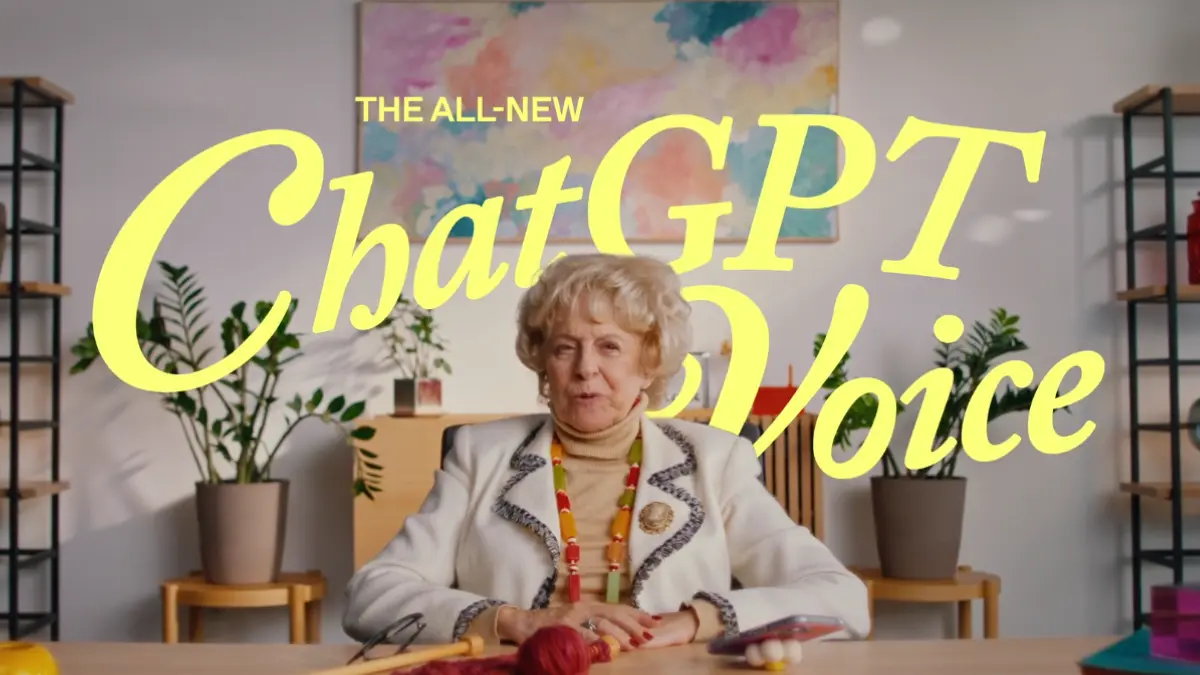


GPT Chat: The company has officially launched GPT-Live, a new generation of voice models powering ChatGPT Voice that fundamentally changes how we interact with machines.
Instead of treating conversations like a game of walkie-talkie, GPT-Live uses what engineers call a “full-duplex” architecture. In plain English? The AI can listen and talk at the exact same time. It can catch your interruptions, notice when you hesitate, and even throw in casual acknowledgments like “mhmm” or “got it” to let you know it’s following along.
GPT Chat
The Death of the Awkward Pause
To understand why this is a big deal, you have to look at how older voice systems worked.
The original ChatGPT Voice chained three separate models together: one to translate your voice to text, one to figure out an answer, and a third to turn that answer back into speech. It worked, but it was slow and stilted. Later updates made it faster, but the AI still had to wait for dead silence before it could respond. If a car honked in the background, the AI would cut you off.
GPT-Live throws that old playbook away. It continuously processes your audio stream stream-by-stream. It can decide multiple times per second whether it should keep talking, pause, or just stay quiet while you gather your thoughts.
Heavy Thinking in the Background
We’ve all had that moment where you ask a voice assistant a tough question, and everything freezes while it loads. GPT-Live fixes this by decoupling the conversation from the heavy research.
If you ask a question that requires a web search or complex reasoning, the voice model delegates that job to OpenAI’s powerhouse backend models—specifically GPT-5.5 at launch.
The clever part? While GPT-5.5 is busy digging through the web in the background, the voice front-end keeps chatting with you naturally. It doesn’t break the flow of the conversation just because it’s looking something up.
The Raw Data: A Massive Leap Forward
The performance jumps here aren’t subtle. In standard benchmarks testing expert-level scientific reasoning and complex web searches, the new model leaves the previous Advanced Voice Mode (AVM) in the dust.
| Capability / Test | Old Advanced Voice Mode | New GPT-Live-1 (High Effort) |
| GPQA Accuracy (Advanced Science) | 45.3% | 84.2% |
| BrowseComp Accuracy (Complex Web Search) | 0.7% | 75.2% |
| User Preference (Natural flow & feel) | Baseline | 75.7% of users prefer it |
Beyond the audio upgrades, the app is getting a visual facelift. If you ask for the weather forecast or sports scores, ChatGPT will pop up rich, clean visual cards right on your screen so you can glance at the data while continuing to talk.
Safety Formatted for Real-Time Speech
Fluid, real-time speech introduces unique challenges, especially when it comes to emotional reliance or inappropriate topics. OpenAI has integrated safety guardrails that function actively while the model is mid-sentence.
If the system catches the AI drifting toward unsafe or emotionally manipulative territory, it can instantly pivot the tone, offer crisis helpline resources, or end the call entirely.
To protect younger audiences, OpenAI direct-trained age-appropriate boundaries into the model. Parents also gain access to linked controls, allowing them to monitor high-risk signals, such as indications of self-harm. Furthermore, strict voice-cloning filters prevent the system from mimicking real public figures, keeping the conversation tied strictly to OpenAI’s native, remastered voice profiles.
How to Get It
The global rollout is happening right now across iOS, Android, and desktop browsers.
OpenAI is splitting the launch into two tiers. GPT-Live-1 is rolling out as the default voice engine for ChatGPT Plus, Team, and Pro subscribers. Meanwhile, free users will get access via GPT-Live-1 mini.
While the model has been highly optimized for popular global languages, OpenAI noted that some accents might sound a bit non-native at first as the software rolls out. Video and live screen-sharing features are missing from day one but are expected to arrive in an upcoming patch.